Summary: ISO 50001 is the international standard for energy management systems, providing organizations with a systematic framework to optimize energy performance, reduce costs, and meet sustainability targets. By applying the Plan-Do-Check-Act cycle to energy use, organizations can achieve measurable reductions in consumption while maintaining compliance with environmental regulations. Implementing ISO 50001 alongside quality standards like […]

10 Things to Consider When Selecting a Layered Process Audit Tool
Summary: Layered Process Audits (LPAs) are a proven quality management technique where audits are conducted at multiple management levels to verify that standardized processes are followed consistently. Selecting the right LPA tool is critical for reducing audit fatigue, ensuring cross-site comparability, and driving down non-conformance rates across manufacturing operations. The ideal tool should support mobile […]
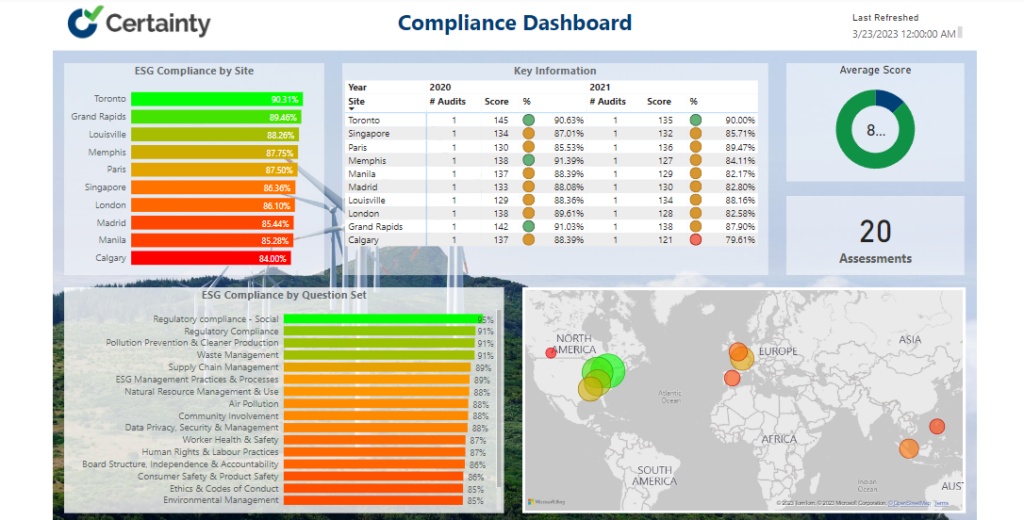
Announcing Certainty’s Compliance Mapping & Performance Benchmarking Dashboard
We’re excited to share with you our new Compliance Mapping & Performance Benchmarking dashboard. The dashboard provides a single, real-time picture of your company’s global compliance footprint and performance benchmarks and is easily configured for any checklist-based audit or inspection protocol. […]

Bridging the Gap: 10 Strategies for Closing Communication Gaps During Internal Audits and Inspections
Effective communication is crucial for the success of any business, and ensuring that all team members are on the same page and understand their roles and responsibilities is vital for achieving compliance and improving overall organizational performance. However, communication breakdowns can occur in any organization, and they can be particularly damaging when it comes to internal audits and inspections. […]
Social Audit: How Companies Can Improve Their ESG Transparency and Accountability
The effects of commercial operations on society and the environment have come to light in the wake of recent international events. Customers, employees, investors, and members of civil society are among the stakeholders who are no longer satisfied with businesses just declaring their sustainability initiatives. Public interest is putting pressure on businesses to be more socially responsible by demanding accountability and transparency. […]
Internal Audits and Inspections System: A Guide to Change Management
This blog is intended to serve as a guide for those leading their organizations through the changeover process. From project planning to ongoing support, we will discuss the key steps necessary in change management. You’ll learn how to successfully implement your new system while minimizing your risk of negative consequences […]
5 Certifications That Will Help Improve Your Business’s ESG Performance
Are you looking to improve your business’s ESG performance? Have you considered the benefits of ESG certification? In today’s world, where sustainable and socially responsible practices are increasingly important to stakeholders, ESG certification can help your business stand out as a leader in environmental, social, and governance responsibility. […]
The 6-Step Process to Supply Chain Sustainability Management: Reducing Human Rights and Environmental Risks in Your Supply Chain
Businesses in today’s market are under greater pressure to make sure that their entire supply chain is managed in a socially and environmentally sustainable manner. This pressure is driven by a number of factors. Some of these include increasing reputational awareness of the environmental and social impact of business operations from customers, investors, stakeholders, and regulatory bodies, and the volatility of supply chain disruptions. […]
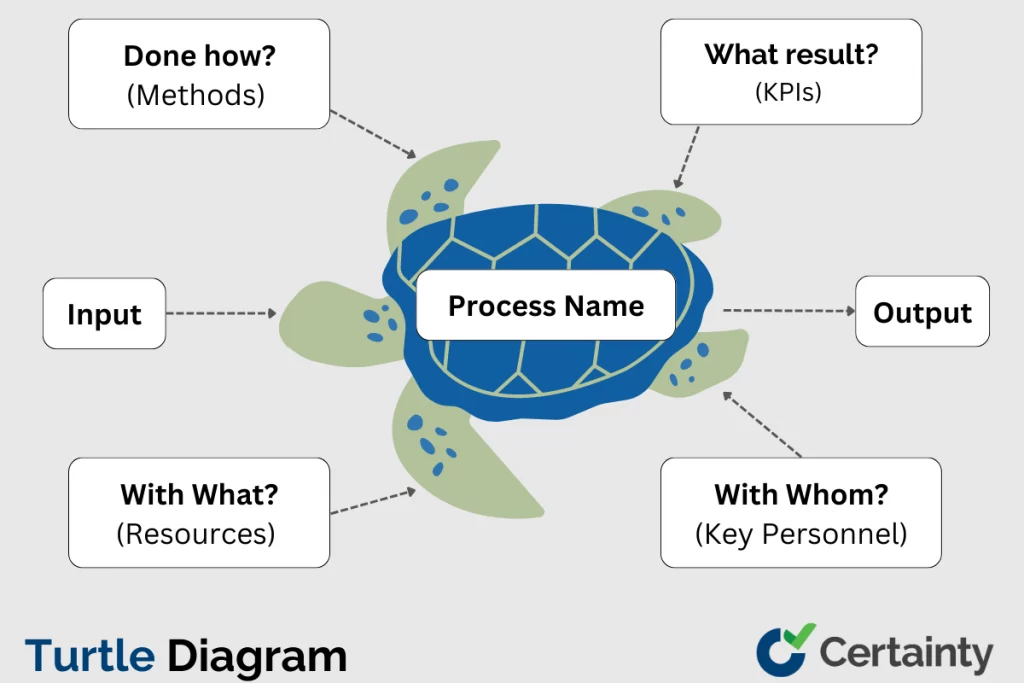
Turtle Diagram: Simplifying Your QMS Processes
Summary: A Turtle Diagram is a visual quality management tool that maps the inputs, outputs, resources, and controls of any process in a simple, intuitive format. It is widely used during ISO 9001, IATF 16949, and VDA 6.3 process audits to evaluate whether processes are adequately defined, resourced, and performing as intended. By breaking complex […]
ESG Metrics: A Guide to Sustainable Decision Making
The world of business is constantly evolving, and in recent years, there has been a shift toward sustainability and responsible investing. Companies are recognizing that their operations have an impact on the environment, society, and governance, and are taking steps to ensure that they are conducting their business in a more sustainable manner. As a result, more and more companies are turning to ESG metrics to measure their sustainability performance, identify risks, and make better decisions. But with so many metrics out there, are you tracking the right ones? […]