
What’s in Our Guides
Certainty Software publishes in-depth practitioner guides for the audiences our platform serves: quality leaders, safety and EHS leaders, and supply chain, sustainability, and compliance leaders. The guides cover regulated, multi-site organizations across manufacturing, automotive, electronics, aerospace, pharma, medical devices, food and beverage, FMCG, construction, energy and utilities, healthcare, retail, and logistics. Each guide is written by practitioners and checked against the standards and regulations that govern the discipline.
Why These Disciplines Are Connected
Quality, safety, supplier due diligence, and corrective action are not separate compliance silos. Instead, they are different views of the same risk surface — and they share the same evidence requirements. A finding raised by a layered process audit on the production line, a safety inspection on the floor, a supplier audit at Tier 1, or a CSDDD due-diligence review at Tier 2 all need the same thing to hold up under scrutiny: a timestamped, signed, photographed record with a logged corrective action and verified closure.
Quality is the umbrella for the work that proves products and processes are conforming. Quality Management Software (QMS) consolidates audit management, document control, training, supplier quality, and corrective action under one roof. CAPA software runs the closed-loop discipline that turns findings into verified closure. Layered process audits verify that the controls hold up shift after shift on the line.
Safety & EHS is the umbrella for the work that proves the workplace is safe and the environmental controls are working. EHS software consolidates incident reporting, hazard identification, audit and inspection management, training, contractor management, and regulatory reporting. Safety inspection software is the operational tool that runs the scheduled and ad-hoc checks under that umbrella.
Supply Chain & Due Diligence is the umbrella for the work that proves third-party risk is being identified and managed. Supplier Risk Management (SRM) covers the four risk categories — quality, ESG, financial, and operational — and the seven-step assessment workflow. CSDDD compliance covers the specific EU regulatory regime (and its peers — LkSG, devoir de vigilance, UFLPA, the Modern Slavery Acts, and Canada’s Bill S-211) that puts a directive-level mandate on top of voluntary best practice.
One Continuous Defensible Audit Trail
Run together, these disciplines produce one continuous defensible audit trail. The chain runs from the supplier qualification record, through the inspection finding on the floor, to the corrective action verified by a follow-up audit. As a result, evidence flows through the same chain of custody no matter which discipline raised the finding. In practice, that is the risk framework Certainty Software is built to support. These guides are the practitioner-level reference for each layer.
Browse the Certainty Guides

CAPA Software
The closed-loop corrective and preventive action handbook. Covers the seven-step CAPA workflow, the 8D / 5-Why toolset, what “Verified Closure” means under ISO 9001 Clause 10.2 and IATF 16949 Clause 10.2.3, and the evidence pack that holds up in audit.
Read the CAPA guide
CSDDD Compliance
The deep-dive guide to the EU Corporate Sustainability Due Diligence Directive — post Omnibus I. Covers the 5,000+ EE / €1.5bn scope, the 26 July 2028 transposition deadline, the 26 July 2029 first application, the 3% fine ceiling, and the OECD six-step framework.
Read the CSDDD guide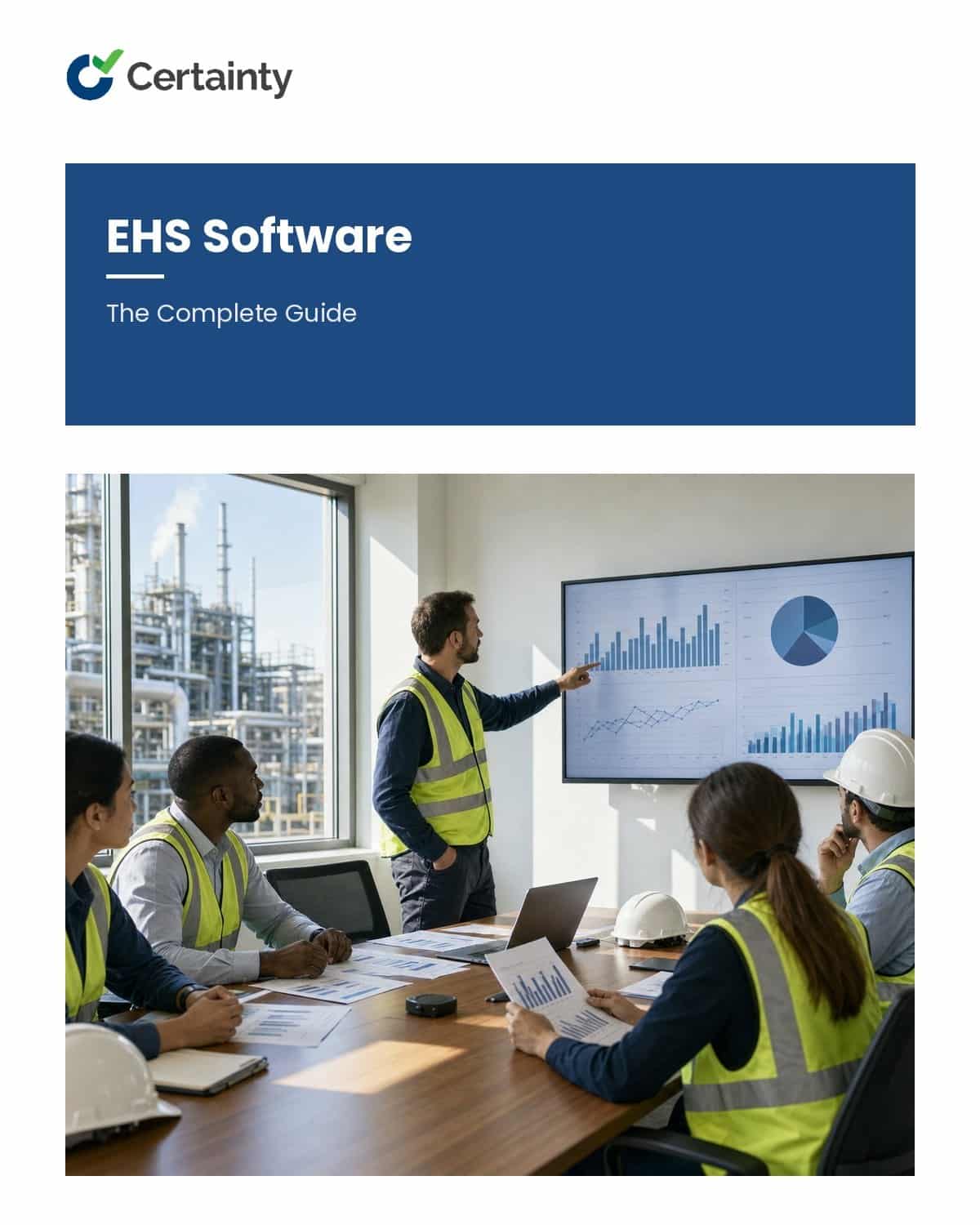
EHS Software
The umbrella handbook for EHS programs — incident reporting, hazard identification, audit and inspection management, training, contractor management, and regulatory reporting. Covers ISO 45001, OSHA 29 CFR 1904, and EPA reporting.
Read the EHS guide
Layered Process Audits
The complete guide to designing and running an LPA program. Covers the four audit layers, the frequency cadence, the escalation paths, and how to build IATF 16949-aligned scorecards that drive defect reduction.
Read the LPA guide
Quality Management Software
The full handbook for QMS as the umbrella platform for quality. Covers ISO 9001, IATF 16949, AS9100D, ISO 13485, the FDA QMSR (effective 2 February 2026), 21 CFR Part 11, HACCP/GFSI, and the CAPA-forward platform pattern.
Read the QMS guide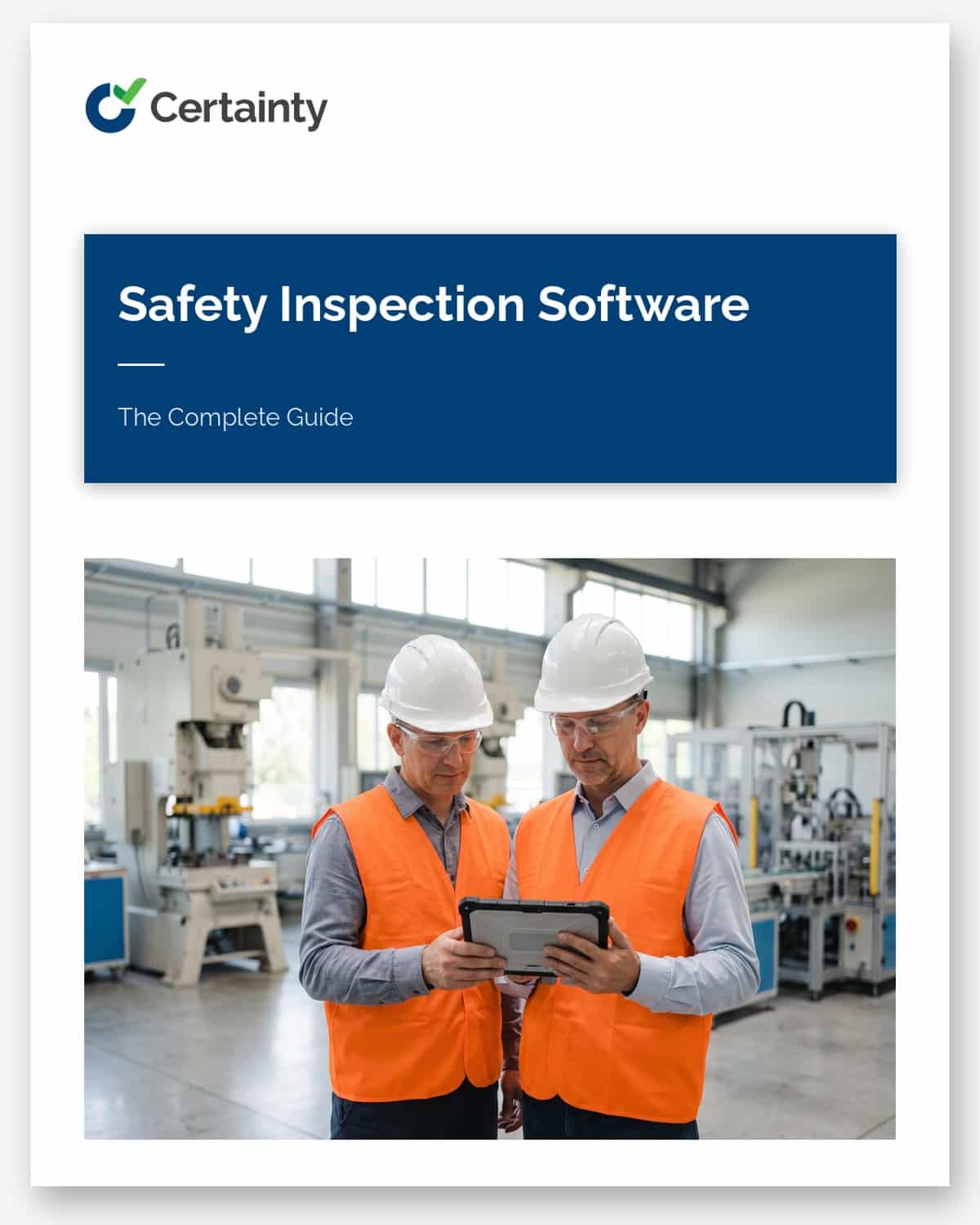
Safety Inspection Software
A practitioner’s guide to running a digital safety inspection program. Covers configurable checklists, mobile capture, corrective action closure, and the ISO 45001 and OSHA-aligned reporting EHS leaders are accountable for.
Read the Safety Inspection guide
Supplier Risk Management
How to build a defensible SRM program. Covers the four risk categories and the seven-step assessment workflow. The guide also walks through the regulatory drivers — EU CSDDD, Germany’s LkSG, UFLPA, the modern slavery acts — and supplier qualification practices.
Read the SRM guideWho These Guides Are For
These guides are written for the practitioners who own audit, inspection, and supplier risk programs at multi-site organizations. They are not for general business audiences. In short, if you are accountable for any of the roles below, these QHSE guides are for you.
Quality & Manufacturing Leaders
Quality Managers, Plant Managers, Continuous Improvement Leaders, and Operations Directors.
Typical sectors: automotive, electronics, aerospace, pharma, medical devices, food and beverage, and FMCG. Typical drivers: ISO 9001, IATF 16949, AS9100, ISO 13485, the FDA QMSR, 21 CFR Part 11, HACCP, or GFSI.
Primary guides: QMS, CAPA, LPA.
EHS & Safety Leaders
EHS Directors, Safety Managers, Compliance Officers, and Site Safety Leads.
Typical sectors: manufacturing, construction, oil and gas, utilities, and logistics. Typical drivers: OSHA 29 CFR 1910/1926, ISO 45001 certification, or large contractor populations.
Primary guides: EHS, Safety Inspection Software.
Supply Chain & Procurement Leaders
Chief Procurement Officers, Supplier Quality Directors, Sustainability and ESG Leads, and Compliance Counsel.
Typical drivers: EU CSDDD, Germany’s LkSG, UFLPA, and the UK and Australian Modern Slavery Acts. Customer-driven, Sedex, or EcoVadis programs also apply.
Primary guides: SRM, CSDDD.
Frequently Asked Questions
Discipline Basics
What is a layered process audit?
A layered process audit (LPA) is a structured quality check at the point of work. Multiple levels of an organization run it — from line supervisors to senior managers. In practice, each layer takes 5–15 minutes. As a result, LPAs catch process drift before it produces defects.
How does supplier risk management software help manufacturers?
SRM software brings supplier qualification data, audit results, corrective actions, and compliance certificates into one place. As a result, procurement and quality teams can spot high-risk suppliers early. It also automates scorecard distribution. Together, these features keep multi-tier supply chains compliant.
What should organizations look for in safety inspection software?
Good safety inspection software supports four core needs. First, configurable checklists and mobile data capture. Second, real-time corrective action tracking. Third, automatic escalation of critical findings. Finally, integration with EHS dashboards and ISO 45001 or OSHA-aligned templates. Together, these features set the leaders apart in regulated sectors.
How the Disciplines Connect
How are these QHSE and supply chain disciplines related?
All of these disciplines are linked risk management practices. Quality work (QMS, CAPA, layered process audits) verifies process control on the line. EHS work (EHS software, safety inspections) covers the workplace itself. Supply chain work (Supplier Risk Management, CSDDD compliance) extends oversight upstream to suppliers and across the value chain. Together they form one risk framework for QHSE and supply chain leaders.
What is the difference between a safety inspection and a quality audit?
A safety inspection checks workplace conditions against hazard-prevention rules. For example, OSHA 29 CFR 1910/1926, ISO 45001, and internal HIRA registers all apply. EHS staff or trained supervisors usually run them.
By contrast, a quality audit checks that process controls and product specs are being followed. Quality engineers or certified internal auditors run those, against a process-control plan. In practice, both share the same evidence rules: timestamped, photographed, signed, with a logged corrective action and verified closure. However, they answer different questions: is the workplace safe? versus is the process producing conforming product?
Standards & Regulations
How do layered process audits relate to ISO 9001 and IATF 16949?
ISO 9001 and IATF 16949 both require internal audits of the quality system. However, neither standard says how to run those audits on the floor. In practice, layered process audits fill that gap at the line level.
For example, IATF 16949 — the auto sector’s quality standard — expects proof that process controls are checked across management layers at set frequencies. That is exactly what an LPA program produces. As a result, in a mature QMS, LPA records become the main evidence pack for ISO 9001 and IATF 16949 surveillance audits.
Which industries need a supplier risk management program?
Any company that buys from third-party suppliers and faces supply-chain due-diligence rules needs a written SRM program. In particular, several sectors carry heavy exposure.
- Automotive firms face IATF 16949 supplier qualification and customer-specific requirements.
- Aerospace and defense face AS9100 and controlled-goods rules.
- Pharma and medical devices face FDA supplier-controls and ISO 13485.
- Food, beverage, and FMCG face GFSI and customer-driven ESG audits.
- Electronics face RBA and conflict-minerals rules.
- Retail and apparel face modern slavery acts and UFLPA.
- Any firm with EU operations faces CSDDD and LkSG.
In short, if a customer or regulator can demand proof of how you qualified, watched, and corrected supplier risk, you need an SRM program.
Mapped Standards by Discipline
What standards and regulations do these disciplines map to?
Each discipline maps to a clear stack of standards.
- LPA: IATF 16949 and ISO 9001 (Clause 9.2 internal audit). Customer-specific requirements such as Ford Q1, GM CQI, and Stellantis SQ also apply.
- SRM: EU CSDDD, Germany’s LkSG, the U.S. UFLPA, the UK and Australian Modern Slavery Acts, ISO 20400 (sustainable procurement), Sedex, and EcoVadis qualification frameworks.
- Safety Inspections: OSHA 29 CFR 1910 (general industry) and 29 CFR 1926 (construction). ISO 45001 Clause 9 (Performance Evaluation) and CSA Z45001 in Canada. The UK Health and Safety at Work Act 1974 also applies.
Platforms & Audit Trail
Can one platform support all these disciplines together?
Yes — that is the core design premise of an audit-and-inspection platform like Certainty. In practice, the data model is the same across every discipline the library covers.
A configurable checklist runs on a mobile device. The record carries a timestamp, photo, GPS, and signature. A corrective action workflow tracks owner, target date, and verified closure. A multi-site dashboard surfaces leading indicators across the program.
By contrast, only the template library and the regulatory frame change from one discipline to the next — not the platform. As a result, running them on one platform is what makes the cross-disciplinary audit trail possible.
What is a defensible audit trail, and why does it matter?
A defensible audit trail is documentation built to hold up under scrutiny. For example, regulators, certification bodies, customers, and courts may all review it.
In Certainty’s standard, it has six parts at every step: timestamp, photo, GPS location, digital signature, a logged corrective action, and verified closure. As a result, the same standard applies to LPA findings, supplier non-conformances, and safety findings.
By contrast, paper records and ad-hoc spreadsheets often fail the test — not because the work was not done, but because the evidence chain cannot be rebuilt under scrutiny.
See Certainty in action
Book a 30-minute walkthrough with our team to see how Certainty supports audits, supplier risk, and safety inspections in one platform.
Book a demo