Table of contents Summary: Digital inspections help teams replace paper forms with faster, more consistent, and easier-to-report inspection processes. While the transition can involve change management, training, device costs, and security concerns, those challenges can be managed with the right rollout plan. Digital inspections help organizations replace slow, error-prone paper processes with faster data capture […]

ISO 9001: an Overview of the Quality Management System Standard
Summary: ISO 9001 is the internationally recognized standard for quality management systems, certified by over one million organizations across 170+ countries. It provides a framework for building consistent, customer-focused processes through a Plan-Do-Check-Act cycle of continuous improvement. Organizations that achieve ISO 9001 certification can reduce non-conformance rates, lower the cost of poor quality, and demonstrate […]

ISO 14001: Environmental Management System Standard
Summary: ISO 14001 certification provides organizations with a structured framework for building an effective Environmental Management System (EMS) that identifies environmental impacts, improves operational efficiency, and demonstrates commitment to responsible manufacturing. For Quality Managers and Plant Managers pursuing ISO 14001 alongside ISO 9001 and other quality certifications, the standard's plan-do-check-act approach to environmental performance integrates […]

On-site vs Remote Audits: Their Advantages and Disadvantages
The Covid-19 pandemic quickly pushed businesses to remote work and to digitize previously manual processes. The same was said for the business’s external and internal auditing processes. As health and safety risks of the global pandemic increased, the traditional way of auditing primarily on-site needed adjusting towards remote auditing. This is only magnified for businesses involved in a globalized supply chain that regularly audits their suppliers. […]
What is VDA 6.3?
Summary: VDA 6.3 is a process audit standard developed by the German Association of the Automotive Industry (VDA) that evaluates manufacturing and service processes across the automotive supply chain for quality compliance. For Quality Engineers, QA Managers, and Lead Auditors in the automotive sector, VDA 6.3 builds on ISO 9001 and IATF 16949 requirements to […]
ISO 45001: the Occupational Health and Safety Standard
Workplace injuries are a prevalent problem for companies and a costly one at that. The International Labor Organization (ILO) estimates approximately 340 million workplace accidents annually. From a cost perspective, these accidents can result in potential lawsuits, incurring medical expenses, increased insurance premiums, and an overall loss in productivity. Equally important is the damage to your company’s reputation with your customers or clients. […]
OSHA Recordable vs Reportable: What are the Differences?
OSHA filing and report submissions can be a daunting task for the 8 million US OSHA-compliant worksites. Confusion about whether a work-related incident is recordable or reportable is a challenge for many businesses. However, it’s important to get it right or face the risk of being penalized.
To help simplify the processes, we’ll clarify what separates an OSHA recordable incident from an OSHA reportable incident. […]
The COSHH Risk Assessment: What it is and How to Complete it
The Control of Substances Hazardous to Health regulations (COSHH) requires employers to monitor and manage the use of any substances that are potentially hazardous to health. According to the UK’s Health and Safety Executive (HSE), these substances may include (but are not limited to) chemicals and products containing hazardous chemicals […]
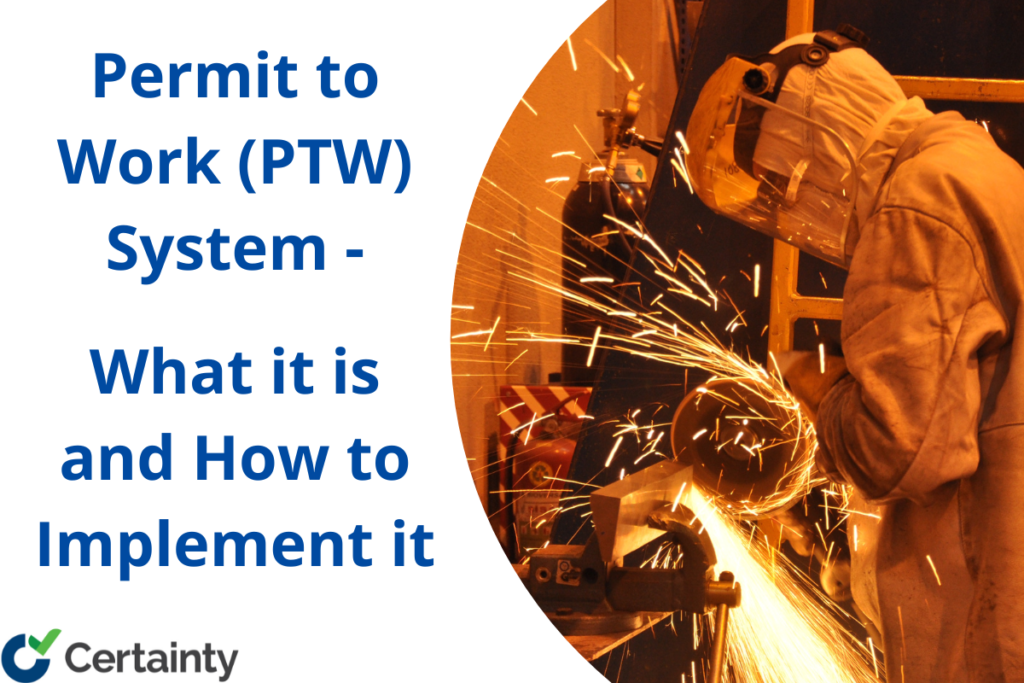
Permit to Work (PTW) System — What it is and How to Implement it in Your Business
From 2018 to 2021 an average of 88,000 workers in the UK suffered from ill health, and there were 57,000 non-fatal injuries each year.
And while these numbers have been steadily decreasing over the last few decades, there’s always room for improvement […]

Considering COSHH — What’s Covered and Who’s Impacted
Hazardous substances in the workplace pose potential health risks. Consider a manufacturing plant with an excess of dust and vapors. Not only could these substances harm workers after prolonged exposure, but could lead to even more significant hazards such as unexpected and uncontrolled fire or explosions. This isn’t just an academic risk — as noted by World-Grain, the United States experiences eight-grain dust explosions every year on average. […]