Effective communication is crucial for the success of any business, and ensuring that all team members are on the same page and understand their roles and responsibilities is vital for achieving compliance and improving overall organizational performance. However, communication breakdowns can occur in any organization, and they can be particularly damaging when it comes to internal audits and inspections. […]
Supply Chain Management

Internal Audits and Inspections System: A Guide to Change Management
This blog is intended to serve as a guide for those leading their organizations through the changeover process. From project planning to ongoing support, we will discuss the key steps necessary in change management. You’ll learn how to successfully implement your new system while minimizing your risk of negative consequences […]
The 6-Step Process to Supply Chain Sustainability Management: Reducing Human Rights and Environmental Risks in Your Supply Chain
Businesses in today’s market are under greater pressure to make sure that their entire supply chain is managed in a socially and environmentally sustainable manner. This pressure is driven by a number of factors. Some of these include increasing reputational awareness of the environmental and social impact of business operations from customers, investors, stakeholders, and regulatory bodies, and the volatility of supply chain disruptions. […]
What are Supply Chain Risks and How to Manage and Mitigate Them
Supply chain disruptions and risks are becoming increasingly common, affecting businesses of all sizes and across various industries. The data speaks for itself – recently released by Resilinc’s EventWatchAI monitoring database, supply chain disruptions in Europe increased by 38% in 2022. To ensure business continuity and success in today’s global market, it’s crucial for companies to understand the various types of supply chain risks and implement effective risk management strategies. […]
Uncovering Hidden Risks in Your Supply Chain: The Importance of Supply Chain Due Diligence
Supply Chain Due Diligence is a critical process that companies must undertake to ensure that their sourcing, procurement, and supplier management practices align with responsible business standards and regulations. With the increasing focus on environmental, social, and governance (ESG) issues, the practice has become a vital aspect of risk management for companies of all sizes. […]
What is Supply Chain Sustainability and How to Manage it?
As consumers become more conscious of the impact their choices have on the environment and society, businesses are increasingly being held accountable for the sustainability of their global supply chain. With companies allocating upwards of 80% of their budget to procurement, supply chain sustainability has become a crucial aspect of corporate social responsibility. […]
What is a Supplier Risk Assessment – Why it’s Important
The general purpose of a supplier risk assessment is to ensure that a business is working with reliable and trustworthy suppliers. This is important because a company’s suppliers play a critical role in its overall operations, as they provide the raw materials, components, and services that are necessary to produce and deliver products and services to customers. […]
5 Challenges When Switching From Paper-based Inspections to Digital Inspections
Table of contents Summary: Digital inspections help teams replace paper forms with faster, more consistent, and easier-to-report inspection processes. While the transition can involve change management, training, device costs, and security concerns, those challenges can be managed with the right rollout plan. Digital inspections help organizations replace slow, error-prone paper processes with faster data capture […]
On-site vs Remote Audits: Their Advantages and Disadvantages
The Covid-19 pandemic quickly pushed businesses to remote work and to digitize previously manual processes. The same was said for the business’s external and internal auditing processes. As health and safety risks of the global pandemic increased, the traditional way of auditing primarily on-site needed adjusting towards remote auditing. This is only magnified for businesses involved in a globalized supply chain that regularly audits their suppliers. […]
10 Supplier Management Best Practices
The supply chain management landscape has changed significantly over the past two years. As noted by Supply Chain 24/7, 84% of enterprise CFOs now see supply chain disruptions as moderate or severe risks. And even if suppliers don’t experience shortages or work stoppages, getting goods where they’re going is more expensive.
Transportation costs may increase by 600% compared to pre-pandemic levels. This increase is dependent on the origin and destination of goods, as well as the mode of transportation used.
The result? Supplier diversification. Companies, large and small, now understand the danger of relying on one supplier and have started using multiple suppliers. With more suppliers, however, comes more complexity, in turn creating a need for more robust supplier management. […]
Managing Human Rights and Environmental Impacts in Supply Chains: The Proposed EC Directive on Corporate Sustainability Due Diligence and What it Means for Businesses with Global Supply Chains
Summary: The EU Corporate Sustainability Due Diligence Directive, or CSDDD, requires large companies to identify, prevent, mitigate, and address human rights and environmental harms across their value chains. For procurement and supply chain leaders, CSDDD makes supplier due diligence a legal requirement rather than a voluntary ESG initiative, which raises the need for better risk […]
What is a SMETA Audit and Why You Need One
Summary: A SMETA audit is a practical way to evaluate supplier labor practices, health and safety, environmental controls, and business ethics within one widely accepted framework. For supply chain and procurement teams, SMETA audits create documented due diligence, improve supplier transparency, and support compliance with growing ESG and global supply chain regulations such as CSDDD, […]
Tier 1, 2, and 3 Suppliers: What They Are and Why They Matter for Your Supply Chain
Summary: Understanding tier 1, tier 2, and tier 3 suppliers is no longer optional because supply chain due diligence obligations increasingly extend beyond direct vendors. Familiarity with lower-tier suppliers improves continuity of supply, exposes hidden human rights or environmental risks, and strengthens compliance with CSDDD, LkSG, CSRD, and UFLPA expectations. For procurement teams, multi-tier supplier […]
The Global Impact of The German Supply Chain Act (GSCA)
Summary: The German Supply Chain Act affects not only large German companies but also the global suppliers that support them, making human rights and environmental performance a direct business requirement. For supply chain managers, LkSG means supplier risk now includes documented due diligence expectations that can cascade across tiers and borders. Companies selling into Germany […]
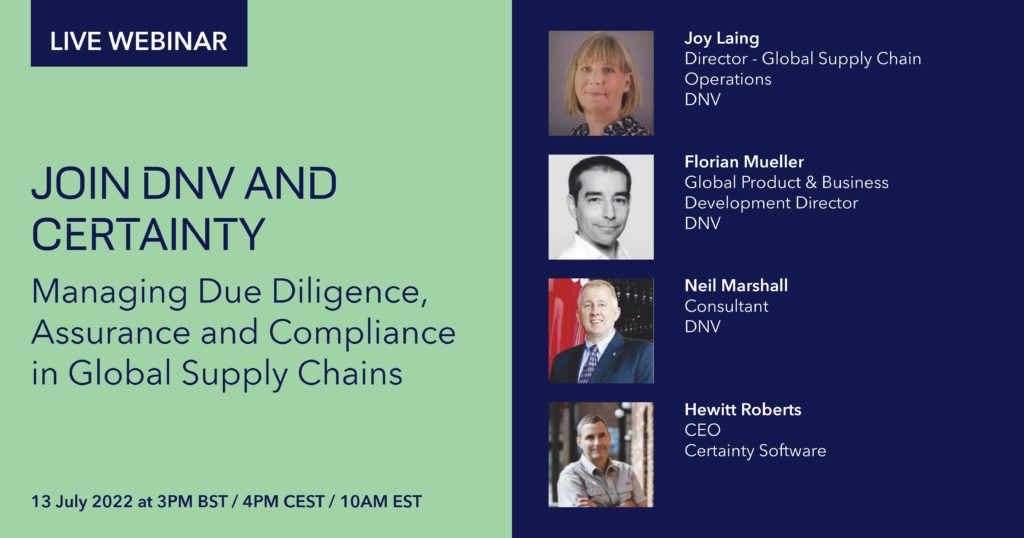
Certainty and DNV Webinar: The importance of supplier due diligence, quality assurance, and compliance management
Summary: The due diligence process has become a critical quality management challenge as regulations including Germany's Supply Chain Act, the EU CSDDD, and the EU CSRD now require companies to document active due diligence across their entire value chains. For QA Managers and Quality Engineers, this Certainty and DNV webinar addresses the intersection of supplier […]