Safety Inspection Software for Audit-Ready, Defensible Evidence.
Offline + mobile capture • Evidence attachments • Actions & workflows • Power BI reporting • SSO & enterprise governance
































What Does “Audit-Ready” Mean for Safety Inspections?
In practice, audit-ready safety programs require:


The Cost of “Spreadsheet Risk”
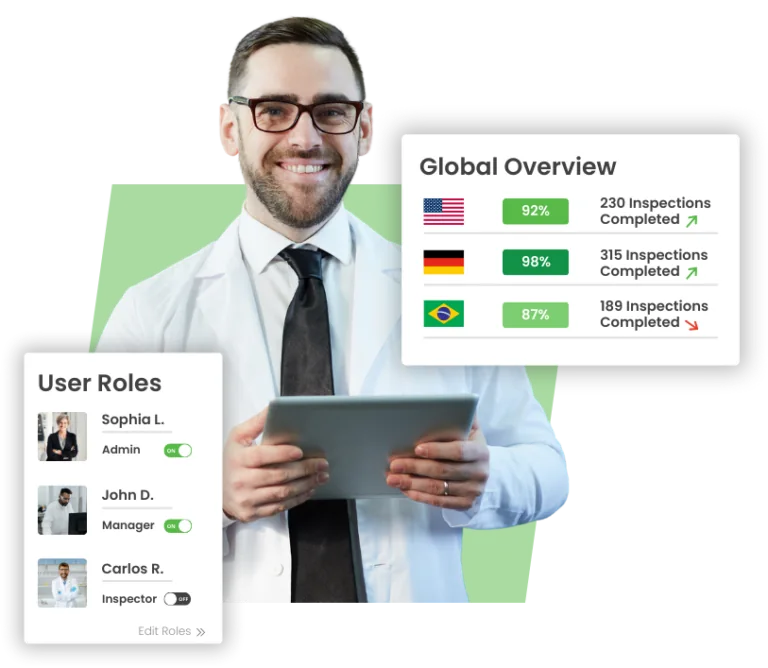
As a Safety Director, your worst nightmare isn't the hazard you know. It's the one you think was fixed but actually wasn't. Relying on spreadsheets, shared folders, and email chains creates a “Trust Gap” that leaves you exposed:
Regulatory Exposure
The “Trust Gap”
Data Fragmentation
How Does Certainty Turn Inspections into Verified Closure?
Digitize
Standardize
Act
Optimize
How Do You Capture Defensible Evidence in the Field (Even Offline)?

“Certainty is appreciated by our supervisors because it is user-friendly and it saves them reporting time. Certainty allows us to easily customize our inspection forms and integrate our old paper forms.”
— Simon-Pierre Lessard, Director of Quality/Compliance & Environment, St. Johns Packaging
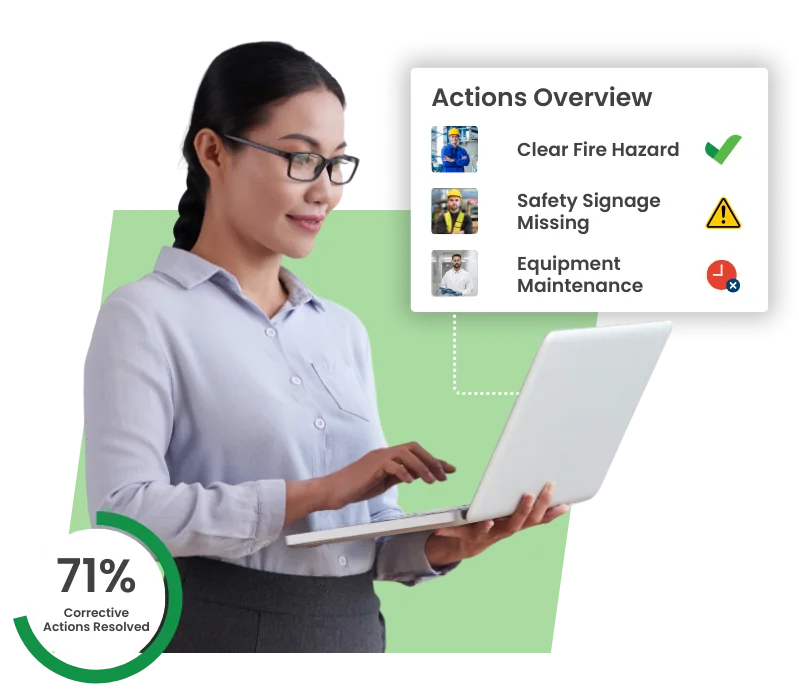
How Do You Eliminate the CAPA “Trust Gap” and Prove Closure?
What Certainty Enables:
How Do You Standardize Inspections Across Sites, Shifts, & Languages?
How Do You Report Comparable Safety Metrics Leadership Trusts?

What Makes Certainty Different from a Checklist App?
Certainty is built as an enterprise-level system of record — capturing evidence in context, routing findings into CAPA-forward actions, and driving verified closure with audit-ready reporting.
Features at a Glance
Everything You Need to Govern Safety at Scale
Which safety inspection programs does this support?

Behaviour Based Safety Observations
Explore solution

Jobsite Safety Inspections
Explore solution

PPE Inspections
Explore solution

Near Miss Reporting
Explore solution

Facility Safety Inspections
Explore solution
Where Teams Typically See ROI
Less re-typing and spreadsheet consolidation
Faster visibility into open findings and overdue actions
Fewer repeat issues due to closure verification
Cleaner audit prep because evidence and action history are already organized
No more consolidating safety data from spreadsheets & emails. Get reports on what's going on--in real-time.
How Safety Leaders Use Certainty
How Kellogg’s Reduced Work-Related Incidents
The Result: By digitizing their safety observations with Certainty, Kellogg’s improved their safety culture and reduced work-related incidents by turning data into prevention.
Read case study
Set it so you don't forget it.
More automation features
Frequently Asked Questions About Certainty Safety Inspection
Certainty is built as an evidence-grade system of record, not a checklist app. It captures evidence in context, routes findings into CAPA-forward actions, and produces audit-ready reporting that supports defensibility and verified closure.
Yes. Certainty supports offline and field data capture so inspectors can complete inspections and attach evidence without connectivity. Data syncs when a connection returns, preserving the evidence trail.
Certainty routes findings into CAPA-forward actions with ownership, deadlines, and evidence requirements. Actions are tracked through to verified closure so teams can prove what was fixed, not just what was found.
Use governed templates that deploy consistently across sites and shifts. Standardization creates comparable data so leaders can benchmark performance, identify patterns, and govern programs consistently.
Verified closure means a finding is not considered closed until the corrective action is completed and supported with the required evidence. It reduces repeat issues by ensuring closure is provable and auditable.
Look for comparable, exportable reporting that supports benchmarking, trend analysis, and audit packages. Certainty is designed to support enterprise reporting patterns, including BI and governed data outputs.
Audit defensibility comes from evidence capture, standardization, and action history in one system of record. Certainty is designed to help teams prove verification and closure when auditors or leadership ask.
Certainty supports configurable templates for OSHA 300 logs, BRC, ISO 45001, and other regulatory frameworks. Deep-logic questionnaires handle compliance-specific requirements without enterprise bloat, and templates can be updated and pushed to all devices instantly.
Certainty includes automated escalation: if a high-risk issue is not resolved by its deadline, the system automatically notifies leadership. This ensures no hazard is left unresolved and provides an auditable trail of accountability.
Audit-Ready. Always.

Certainty Software is a proven solution for any audit/inspection based performance improvement program in virtually all sectors of the economy from global Fortune 500 multinationals in food manufacturing to leading national companies in the hospitality sector.
Email: info@certaintysoftware.com
Tel (Canada): + 1 888 871 0027
Quick Links
Download the app