The main distinctions between manual and automated safety evaluations are explored in this blog article as we set off on a voyage of exploration. We’ll examine the effects of these tactics on various workplace safety management practices, highlighting their advantages and potential drawbacks. […]

Certificate of Conformity: The Ultimate Guide for Manufacturing Companies
Summary: A Certificate of Conformity (CoC) is an official document that verifies a product meets all specified quality, safety, and regulatory requirements before it enters the market or crosses borders. For manufacturers operating under ISO 9001, IATF 16949, or other regulatory frameworks, maintaining accurate and traceable CoC documentation is essential for audit readiness, customer satisfaction, […]

What is a Cold Work Permit and How to Use It Effectively
Do you work in an industry that involves hazardous activities or environments? If so, you need to know what a cold work permit is and how to use it effectively. In this blog post, we will explain everything you need to know about cold work permits and how Certainty Software can help you with your safety needs. […]

OEE Meaning in Manufacturing: How to Optimize Overall Equipment Efficiency
Summary: Overall Equipment Effectiveness (OEE) is a manufacturing metric that measures the percentage of planned production time that is truly productive, combining availability, performance, and quality into a single score. The average manufacturing plant operates at only 60% OEE, meaning 40% of capacity is lost to breakdowns, slowdowns, and defects. Improving OEE directly reduces the […]
TPRM in Manufacturing: Strengthening Business Resilience and Supply Chain Integrity
Third-party risk management (TPRM) is a critical imperative for the manufacturing industry, as it can help mitigate potential risks associated with third-party relationships, such as quality issues, delivery delays, regulatory non-compliance, cybersecurity breaches or reputational damage. In this blog post, we will discuss the key components, benefits and best practices of an effective TPRM program, and how Certainty Software can help you streamline your TPRM processes and improve your vendor performance and compliance. […]
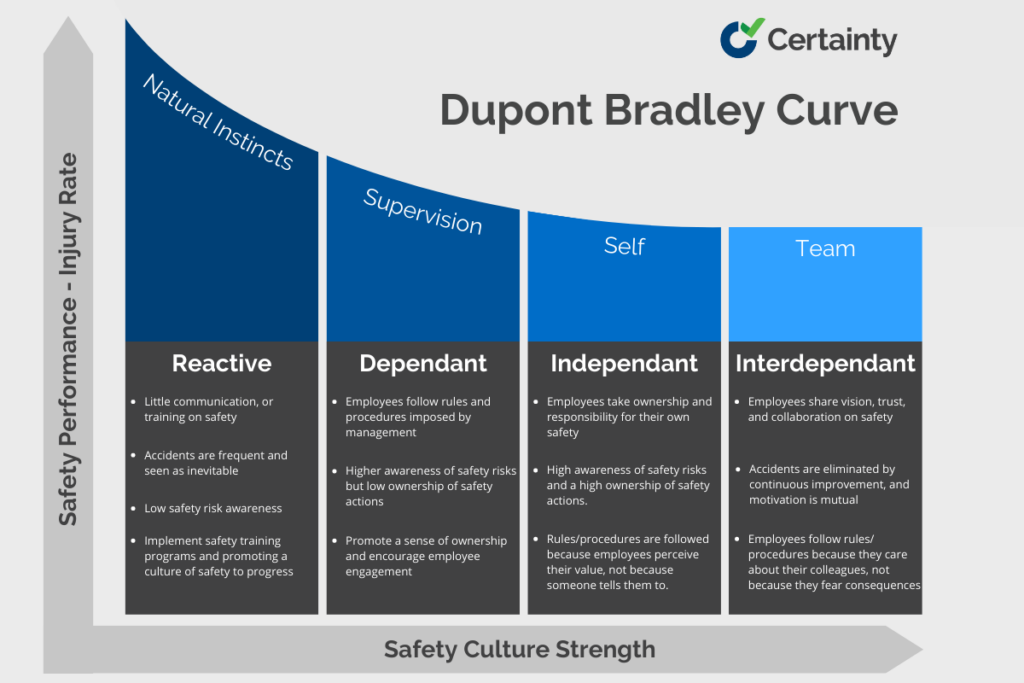
The DuPont Bradley Curve: The 4 Stages of Safety Culture
The Bradley Curve is a framework that illustrates the relationship between safety culture and operational performance. It shows how improving safety culture leads to better outcomes in other aspects of performance, such as quality, efficiency, and profitability. In this blog post, we will delve into the fundamentals of the Bradley Curve, exploring its significance, applications, and how it can help businesses streamline their operations. […]

Unlocking Efficiency: A Guide to Identifying and Eliminating Muda in Your Business Processes
Summary: Muda refers to any activity or process that consumes resources without adding value to the customer, and eliminating it is a core principle of Lean manufacturing and quality management. The seven types of Muda — overproduction, waiting, transport, overprocessing, inventory, motion, and defects — directly impact quality KPIs like first pass yield, cost of […]
Navigating CSRD: A Comprehensive Guide to Streamlined Corporate Sustainability Reporting
CSRD is a game-changer for corporate sustainability reporting in the EU and beyond. In this blog post, we provide you with a comprehensive guide to CSRD and how it can help you achieve your sustainability goals. […]
Version 4.4 Certainty Software Ready for Release
Explore all the new features and improvements available in version 4.4 of Certainty Software. […]
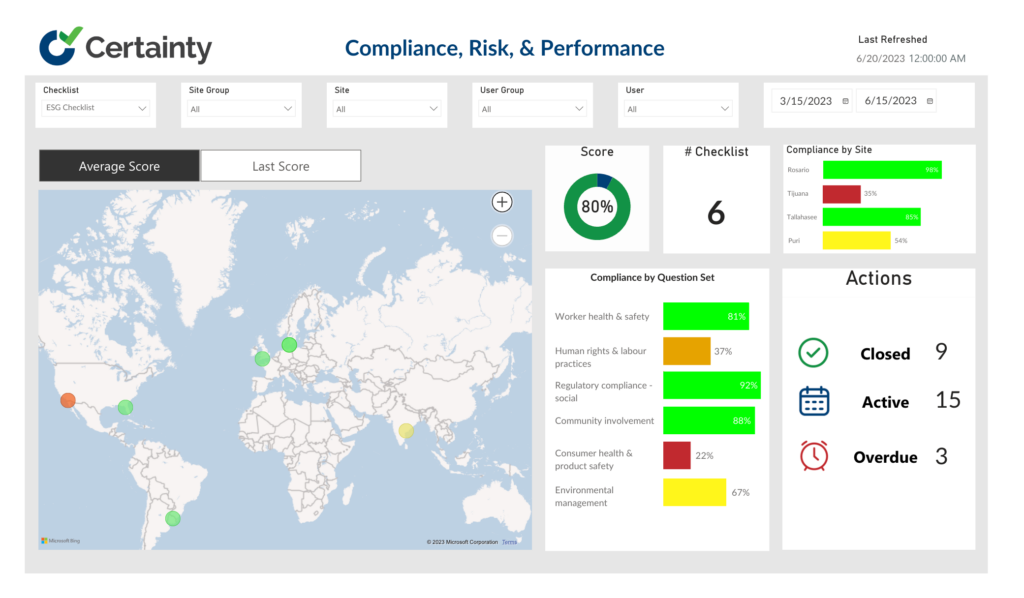
Managing the Regulatory Requirements of Supplier Sustainability Due Diligence in Global Supply Chains
Discover how global corporations can effectively manage the regulatory requirements of supplier sustainability due diligence in complex global supply chains. Explore strategies for compliance, collaborative engagement, and continuous improvement. Learn how cloud-based software solutions can streamline the process, empowering organizations to drive positive change and shape a sustainable future. […]