Summary: A 65-year HVAC operator gave field supervisors a 50% increase in available time for complex technical work and made every safety inspection record defensible — by digitizing inspections, pushing QC to front-line technicians, and automating the workflow. Deployment took about two months. The playbook scales: enterprise EHS programs running across hundreds of sites face the same four problems, and the same four moves apply.
The Bob’s Heating outcomes — by the numbers
- 50% increase in field-supervisor time available for complex technical work, after shifting QC ownership to front-line technicians (Bob’s Heating, 2026).
- 100% of inspections moved off paper forms to mobile capture, with unlimited photo and data evidence per job (Bob’s Heating, 2026).
- ~2 months from first field test to full deployment — about one month of field testing plus one month of onboarding (Bob’s Heating, 2026).
- 5/5 rating the Bob’s Safety Director gave the Certainty team — “kind, responsive, helpful” (Bob’s Heating, 2026).
The Bob’s Heating story in 60 seconds
Bob’s Heating & Air Conditioning is a Bryant Factory Authorized Dealer that has served greater Seattle since 1957. Every day, its technicians install and service heating, cooling, water-heating and indoor-air-quality systems inside customers’ homes. Before Certainty, most of that job information lived on paper. Moreover, an earlier audit app added limited reporting and hard caps on data and photos per inspection. As a result, the inspection record was hard to standardize, hard to report on and hard to defend.
Safety Director Clark Bussell evaluated Certainty against the alternatives. Ultimately, he chose it for five things that mattered in a field-service operation: detail, reporting flexibility, app structure, secure data storage and flexible user-profile options. The rollout took about one month of field testing, followed by one month of onboarding. By the two-month mark, supervisors had a 50% time gain back for skilled technical work. In addition, the inspection record was defensible and the company’s risk posture had visibly improved. For the operational details, read the full Bob’s Heating case study.
Four lessons at a glance
Lesson 1 — Push QC to the front line (without losing rigor)
Field supervisors at Bob’s used to absorb the quality-control work. Specifically, they reviewed paperwork after the fact, drove back to recheck jobs and spent time on tasks that should have been handled at the source. However, once technicians captured the inspection on a mobile device — with photos, structured data and the right prompts at the right step — supervisors stopped being the bottleneck. As a result, their time went back to complex technical troubleshooting, which is what supervisors are scarce for.
At enterprise scale, the same move recovers the most expensive hour in your EHS org. The risk people worry about — “won’t we lose rigor?” — is the wrong question. The right question is “what makes the front-line record more rigorous than paper?” The answer is structured prompts (so nothing gets skipped), required photo evidence (so claims are testable), and an automatic escalation path (so the supervisor sees what they need to, not what they don’t). For a deeper look at how front-line capture works at scale, see our safety inspection software guide and the safety inspections solution page, or our facility safety inspections use case.
Lesson 2 — Make every record defensible
Paper records age badly. For example, a binder of inspection forms from three years ago is hard to search, hard to verify and easy to argue with — by a plaintiff, an OSHA inspector, an insurer or a customer auditor. By contrast, Bob’s replaced that with time-stamped, photo-backed, mobile-captured records held in a tamper-evident system. As a result, the data describes the actual job: when it happened, who did it, what they saw, what they did about it.
For enterprise EHS, that’s a liability control. Specifically, every multi-site organization eventually faces a question that hinges on whether the inspection record from a specific shift, on a specific date, at a specific site, can be defended. Notably, time-stamped digital evidence is the answer that scales. Moreover, it is what the company’s legal, insurance and risk functions will increasingly require. Ultimately, the discipline maps to verified closure in audit and inspection — every finding has evidence, every closure is testable.
Still on paper or spreadsheets? Take the 9-question Digital Audit & Inspection Readiness Quiz to see whether your safety and quality processes have outgrown manual tools — in just a few minutes.
Lesson 3 — Automate the workflow
The least glamorous part of the Bob’s rollout — and the part with the biggest scale leverage — was workflow automation. Specifically, findings auto-routed to the right owner. In parallel, due dates auto-tracked. Furthermore, escalations fired automatically when something was overdue. As a result, nobody had to maintain a spreadsheet, send a follow-up email or remember to close out a job after the technician left. Ultimately, the cycle time on findings collapsed because the friction did.
At enterprise scale, this is what makes a standardized program possible without flattening every business unit. Different regions, sites and lines can have different inspection cadences and different escalation owners — the automation routes correctly because it knows the role and the site, not because someone hand-built a workflow for each. The result is a consistent EHS pattern that respects local operating reality.
Lesson 4 — Deploy in ~2 months
Bob’s full deployment ran roughly two months: one month of field testing followed by one month of onboarding. Notably, that cadence is achievable for enterprise EHS programs too — with one caveat. Specifically, the right unit of deployment is a site (or a small wave of sites), not the whole network. First, run one site to working state. Then capture what worked, and replicate. Typically, the next site is faster. The third is faster still. However, most enterprise rollouts stall — not because the technology can’t handle scale, but because the program tries to onboard 80 sites simultaneously and loses the feedback loop that made the first site succeed.
The team matters too. The Bob’s Safety Director rated the Certainty team 5/5 — “kind, responsive, helpful.” That responsiveness is what compresses a six-month deployment into two months. Pick a partner that shows up the same way at site 50 as at site 1.
From paper to verified closure at multi-site scale
The deeper lesson behind the four is the one the case study didn’t say explicitly. Bob’s didn’t just digitize inspections. It changed the operating model: front-line capture, automated routing, evidence-backed closure. Every multi-site EHS program faces the same inflection. Paper produces an inspection. The combination of front-line capture, automation and evidence produces a system of record that survives legal discovery, regulatory inspection and customer audit. The vocabulary we use for that — verified closure — applies whether the inspection is a residential HVAC service call or a confined-space entry at a chemical site. The discipline travels.
Key Takeaways:
- Push QC to the front line — structured prompts and required photos make front-line capture more rigorous than supervisor review of paper.
- Make every record defensible — time-stamped, photo-backed digital capture is the only audit trail that scales.
- Automate the workflow — routing, due dates and escalations remove the friction that breaks paper programs.
- Deploy in waves of about two months per site — replicate the pattern, don’t try to flip 80 sites simultaneously.
- The deeper shift is to verified closure — every inspection produces a defensible record, every finding has tested evidence.
You might also be interested in
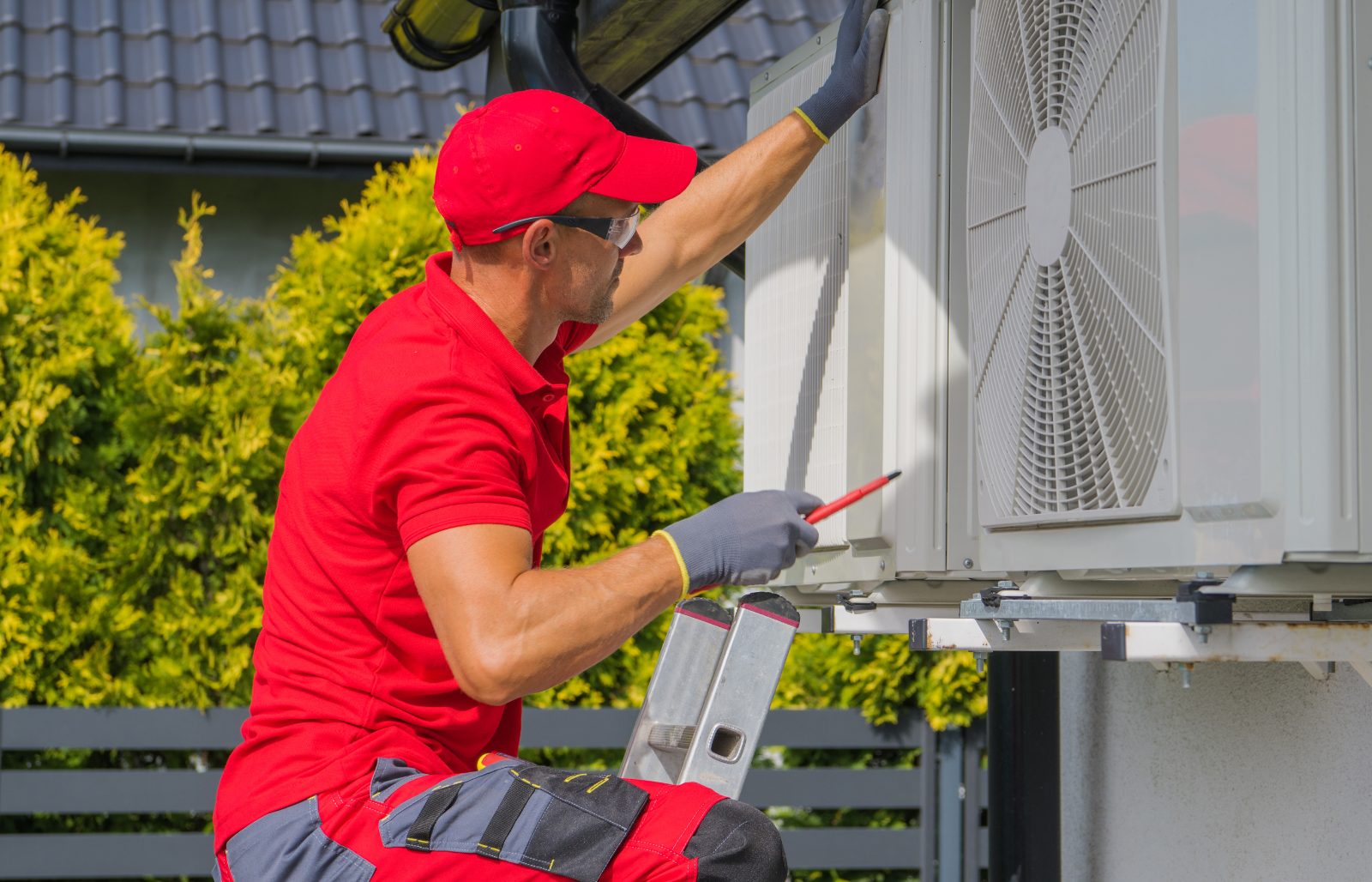
Bob’s Heating & Air Conditioning
The full case study — how Bob’s gave supervisors 50% more time and made every safety inspection defensible.

Safety Inspection Software Guide
The full enterprise guide to selecting, deploying and scaling safety inspection software across multi-site operations.

What Is Verified Closure?
Why marking an inspection “complete” isn’t closure — and what verified closure actually requires.
Frequently Asked Questions (FAQs)
How can field-service and multi-site teams digitize safety inspections?
The most reliable path is mobile capture by the technician at the job, structured prompts to ensure nothing is skipped, photo-backed evidence on critical checks, and automated routing of findings to owners. That is the operating model Bob’s Heating used; the same model scales to multi-site manufacturing, distribution and field-service networks.
What’s the ROI of mobile safety inspections?
The largest financial benefit usually shows up as reclaimed supervisor capacity. Bob’s saw a 50% increase in supervisor time available for skilled technical work. At enterprise scale, that recaptured capacity is the most expensive hour in the EHS org. Liability reduction and faster cycle time on findings add to the case but are harder to quantify upfront.
How long does deployment usually take?
About two months per site is a realistic anchor: one month of field testing and one month of onboarding. Enterprise rollouts work best when sites are run in waves rather than simultaneously — each wave faster than the last as the team learns the pattern.
Can enterprise EHS teams apply the same playbook as smaller operators?
Yes — the four moves are structurally identical. Push QC to the front line, make every record defensible, automate the workflow, deploy in roughly two-month waves. The scale only changes how many waves there are; the pattern at each site is the same.
What makes an inspection record legally defensible?
Three things: it is time-stamped (you can prove when it was created), it is evidence-backed (photos or measurements support the claims), and it is held in a tamper-evident system of record (changes are auditable). Paper forms fail one or more of those tests in nearly every case.
Spend time on prevention, not paperwork
See how Certainty digitizes safety inspections at enterprise scale — and gives your supervisors their time back.