Summary: Quality Assurance (QA) and Quality Control (QC) are complementary but distinct disciplines within a quality management system — QA focuses on preventing defects through process design and standardization, while QC detects defects through testing and inspection of finished outputs. Together, they form a comprehensive approach to quality that drives first pass yield improvements, reduces […]
Quality Management
[Podcast] Compliance Talks Episode 1: The Cost of Enterprise Non-Compliance (How Automation Prevents These Steep Costs)
In this debut episode of Compliance Talks, we dig into the true cost of non-compliance—financial penalties, operational disruptions, and reputational damage—and explore how Certainty Software’s automation is changing the way enterprises tackle these challenges. […]
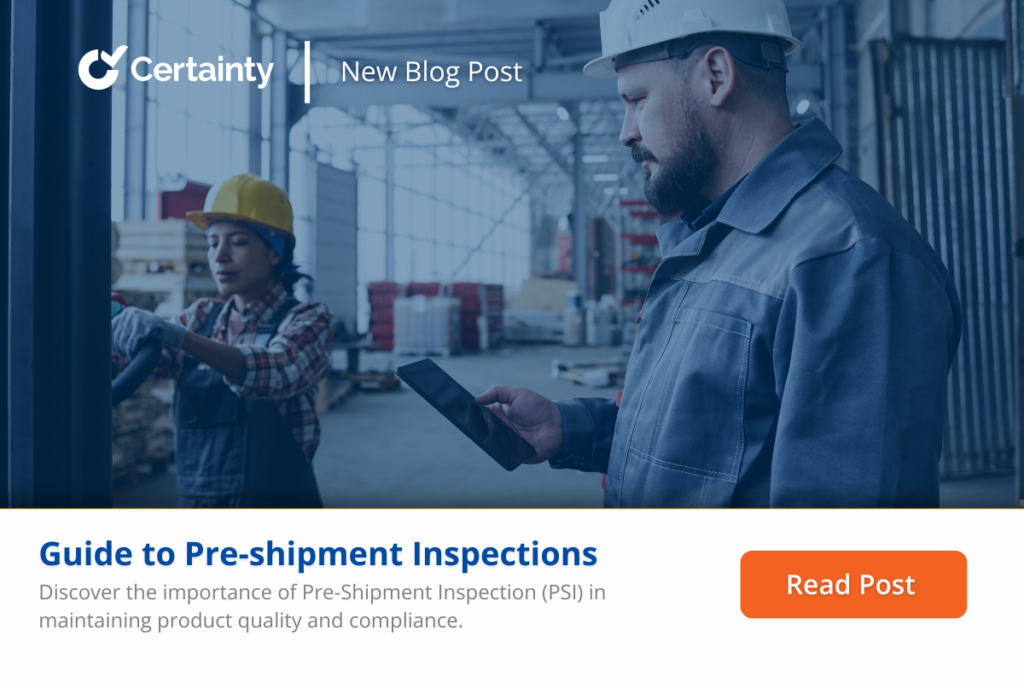
Guide to Pre-Shipment Inspections
Summary: Pre-shipment inspections (PSI) serve as a critical final quality gate that verifies products meet all specifications, standards, and contractual requirements before they leave the facility. When integrated with quality frameworks like ISO 9001 and ISO 2859-1 sampling standards, PSI provides systematic, evidence-based verification that protects both the manufacturer and the customer. Implementing digital pre-shipment […]
How Risk-Based Thinking Aligns with ISO 9001:2015 Requirements and Other Global Quality Assurance Regulations
Summary: Risk-based thinking is a foundational principle of ISO 9001:2015 that requires organizations to identify, assess, and address risks and opportunities throughout their quality management system. Rather than treating risk management as a separate activity, ISO 9001:2015 embeds it into every process — from planning and operations to performance evaluation and improvement. Adopting risk-based thinking […]
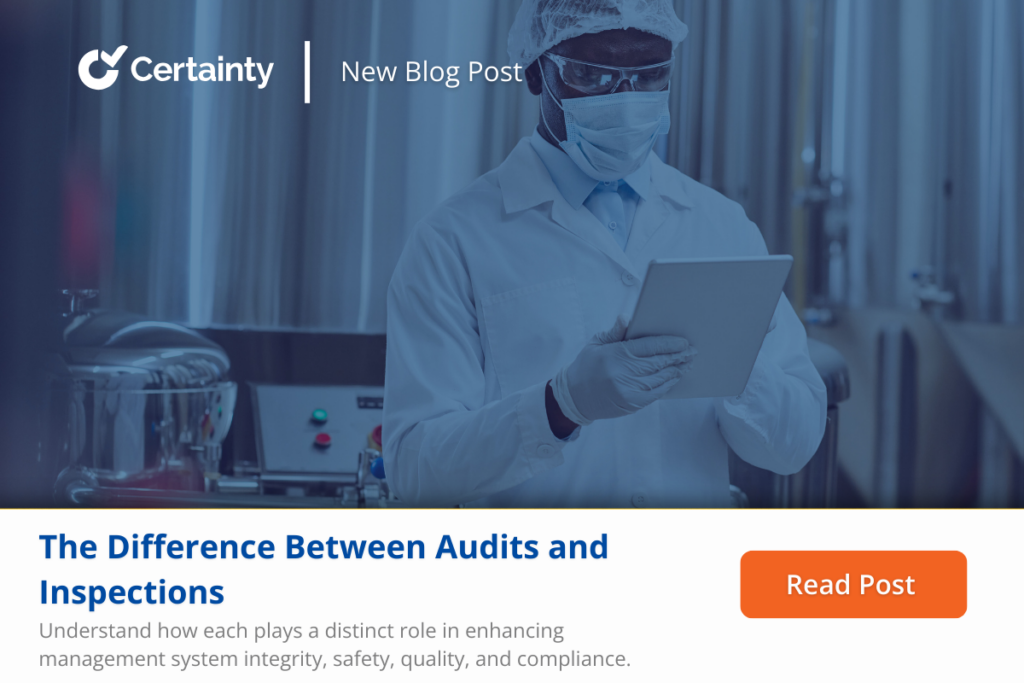
Audit vs. Inspection: Learn Their Key Differences
Summary: Audits and inspections are both essential quality management activities, but they serve fundamentally different purposes within a quality management system. Audits evaluate the effectiveness of management systems and processes against standards like ISO 9001, while inspections verify that specific products or operations meet defined requirements on the production floor. Understanding when to deploy each […]
How to Make an Audit and Inspection Checklist in Microsoft Excel
How to Make an Audit and Inspection Checklist in Microsoft Excel […]
EU Passes Nature Restoration Law: A Milestone for Biodiversity and Climate Action
The European Union has made history by passing a landmark law to restore and protect nature across its land and sea areas. The Nature Restoration Law, which was approved by the European Parliament on February 27, 2024, is the first continent-wide, comprehensive law of its kind. It is a key element of the EU Biodiversity Strategy, which aims to halt and reverse the loss of biodiversity and ecosystem services by 2030. […]

A Comprehensive Guide to Root Cause Analysis
Root Cause Analysis (RCA) is a systematic and rigorous process that helps you to find and solve the underlying causes of problems in your organization. In this comprehensive guide, you will learn what RCA is, why it matters, and how to perform it in five easy steps. […]
Inspection Management Software Solutions: Build or Buy?
To guarantee quality, safety, and compliance in a variety of sectors, inspection management software is an essential tool. It assists with automating processes, managing corrective actions, data collection, report generation, and workflow streamlining. However, many enterprises struggle with which direction is better: purchasing a pre-built solution from a vendor or creating your own unique one. To help you choose the best solution for your needs, we will weigh the advantages and disadvantages of each option in this blog post. […]

4 Tips to Preventing Non-Conformances
Summary: Non-conformances represent deviations from established quality standards, specifications, or procedures, and they are among the most costly quality failures an organization can face. Preventing non-conformances requires a proactive approach that combines robust process controls, effective training, thorough root cause analysis, and continuous monitoring of quality KPIs. Organizations that shift from reactive correction to systematic […]

Corrective Action Examples: 5 Scenarios and Solutions
In this blog article, we will examine a few hypothetical scenarios that show the necessity of taking corrective action in several business areas. We’ll also talk about potential tactics and methods that could be used to stop or lessen the consequences of these hypothetical outcomes. […]
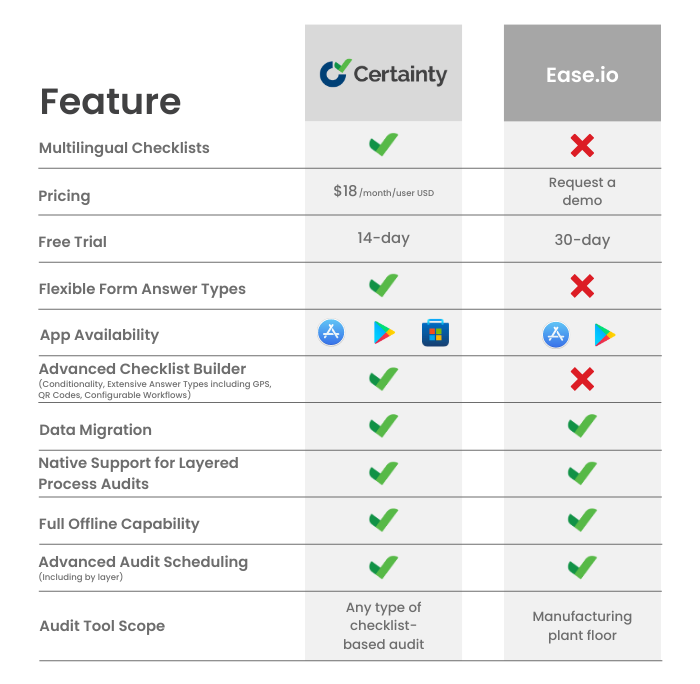
Ease.io vs. Certainty Software: Which Audit and Inspection Management Software is Right for You?
Overview If you are in charge of carrying out audits and inspections for your company, you are aware of how crucial it is to have dependable and effective software to handle your procedures. We at Certainty Software are aware that you want a tool that enables you to make and distribute checklists, gather and analyze […]

What is a BRC Audit and How to Perform One
Summary: A BRC (BRCGS) audit evaluates whether a food, packaging, or storage facility meets the British Retail Consortium's Global Standards for safety, quality, and operational compliance. Passing a BRC audit demonstrates to retailers and supply chain partners that your organization maintains rigorous controls over product safety, traceability, and continuous improvement. Structured preparation — including gap […]

SMED: Streamlining the Lean Manufacturing Process
Summary: Single-Minute Exchange of Die (SMED) is a Lean manufacturing methodology that reduces equipment changeover times to under ten minutes, dramatically increasing production flexibility and throughput. By separating internal and external setup activities and systematically converting or streamlining each step, SMED minimizes downtime losses that directly impact OEE, first pass yield, and cost of poor […]

Certificate of Conformity: The Ultimate Guide for Manufacturing Companies
Summary: A Certificate of Conformity (CoC) is an official document that verifies a product meets all specified quality, safety, and regulatory requirements before it enters the market or crosses borders. For manufacturers operating under ISO 9001, IATF 16949, or other regulatory frameworks, maintaining accurate and traceable CoC documentation is essential for audit readiness, customer satisfaction, […]