Summary: Supply chain auditing matters because it is now a core method for proving compliance, managing supplier risk, and validating human rights and environmental performance across increasingly complex networks. For procurement and ESG leaders, strong supply chain audits do more than satisfy regulations like CSDDD, LkSG, and UFLPA; they create the documented visibility needed to prevent disruptions, prioritize remediation, and scale due diligence efficiently.
Table of contents

Streamlining supply chain audits is one of the most pressing operational challenges facing compliance, procurement, and ESG teams in 2025 and 2026. Supply chain audits are now legally mandated — not merely best practice — under the EU Corporate Sustainability Due Diligence Directive (CSDDD), Germany’s Supply Chain Act (LkSG), the Corporate Sustainability Reporting Directive (CSRD), the UK and Australian Modern Slavery Acts, and the Uyghur Forced Labor Prevention Act (UFLPA). Yet despite their growing importance, supply chain audits remain resource-intensive: depending on the complexity of the supply chain, a single comprehensive audit cycle can take several weeks to several months to complete. This article examines why supply chain audits matter more than ever, what makes them difficult, and — most importantly — the strategies and tools that enable organisations to conduct audits faster, more consistently, and at the scale required by modern regulatory obligations.
Why Supply Chain Auditing Matters
Supply chain audits now sit at the intersection of legal obligation, financial risk management, and corporate sustainability strategy. Under CSDDD and LkSG, companies must demonstrate that they have systematically assessed and addressed human rights and environmental risks across their supplier networks — and audits are the primary mechanism for generating the evidence that regulators and courts will scrutinise. The core functions that supply chain audits fulfil include:
1. Supplier Quality Assurance
Supply chain audits are the primary mechanism for verifying supplier quality and reliability. By systematically assessing supplier performance against defined quality standards — covering product specifications, manufacturing processes, and delivery reliability — audits protect product quality and customer satisfaction, and reduce the risk of costly supply chain disruptions caused by supplier non-performance. In industries with complex global supplier bases, quality assurance audits also detect systemic process weaknesses before they translate into product failures or regulatory violations.
2. Compliance Assurance
Supply chain audits are an essential component of compliance assurance under a growing suite of mandatory frameworks. CSDDD requires large EU and non-EU companies to implement risk-based due diligence across their supply chains, with audits providing the documented evidence of assessment and remediation that regulators require. Germany’s LkSG mandates systematic supplier assessments, corrective action management, and annual compliance reporting. Industry standards such as SEDEX/SMETA, BSCI, and SA8000 provide structured audit frameworks that align with these regulatory requirements. Compliance-grade audits are not just a legal safeguard — they demonstrate a credible commitment to ethical sourcing that protects brand reputation and strengthens customer and investor relationships.
3. Risk Mitigation
Systematic supply chain audits enable organisations to identify and manage the full spectrum of risks that can disrupt operations or create legal liability — including labour violations, environmental non-compliance, financial instability at key suppliers, geopolitical exposure, cybersecurity vulnerabilities, and natural disaster risk in sourcing geographies. Under CSDDD and LkSG, companies must conduct risk-based due diligence that prioritises audit intensity according to the severity and likelihood of adverse impacts — making structured risk assessment a prerequisite for effective audit programme design. Early identification of risks through audits allows companies to engage with suppliers on remediation before issues escalate into regulatory violations, supply disruptions, or reputational incidents.
4. Cost Efficiency
Well-designed supply chain audits consistently identify opportunities for operational improvement that deliver material cost savings. Audit findings expose inventory inefficiencies, process redundancies, waste and quality failure costs, and contractual non-performance by suppliers — all of which represent addressable cost reduction opportunities. Companies that invest in structured supplier performance audits report improvements in on-time delivery, reduction in defect and rework rates, and stronger contract negotiating positions — translating audit investment into measurable financial return.
5. Brand Reputation
Supply chain audits are a critical tool for building and protecting the culture of transparency and accountability that stakeholders — customers, investors, regulators, employees, and communities — increasingly expect and, under CSRD and CSDDD, legally require. Companies with robust, documented supply chain audit programmes are better positioned in ESG ratings, investor due diligence processes, and customer procurement evaluations. Conversely, supply chain failures that surface through media exposure, regulatory investigation, or litigation — rather than through proactive audit and remediation — carry disproportionate reputational and financial costs.

Challenges and Delays in Supply Chain Audits
Despite their critical importance, supply chain audits remain challenging to execute at the volume and quality required by CSDDD, LkSG, and CSRD. Understanding the root causes of audit delays and inefficiency is essential for designing improvement strategies that actually work:
Complexity of the Supply Chain
The structural complexity of modern global supply chains is the most fundamental obstacle to efficient auditing. Large corporations frequently operate with hundreds of Tier 1 suppliers, thousands of Tier 2 suppliers, and an often-unmapped Tier 3 and beyond. CSDDD and LkSG require companies to identify and engage with Tier 2 and Tier 3 providers — precisely the most difficult and time-consuming suppliers to assess. Each tier adds layers of geographic, legal, and operational complexity, with suppliers operating across multiple regulatory jurisdictions and reporting frameworks that must all be reconciled in the audit process.
A single product in a complex manufacturing sector — automotive, electronics, apparel — may involve thousands of components sourced from dozens of countries, each with its own regulatory requirements, languages, cultural norms, and risk profile. Mapping this complexity, identifying the right audit scope, and executing assessments consistently across the entire supplier network is a task that exceeds the capacity of manual, spreadsheet-based approaches — driving the shift to digital audit platforms and AI-assisted risk prioritisation.

Data Collection and Analysis Challenges
Many supply chain audit programmes still rely heavily on manual data collection — paper records, spreadsheets, and disconnected software tools — creating significant risks of inconsistency, error, and delay. Collecting comparable, verifiable data from suppliers across multiple geographies and organizational formats is labour-intensive. Under CSRD and CSDDD, the data quality requirements for supply chain sustainability reporting are materially higher than most existing manual systems can reliably deliver — creating both a compliance gap and an operational risk.
Validating the accuracy and completeness of supplier-submitted data adds further time and effort. Discrepancies between self-reported data and independent audit findings are common, particularly in high-risk sourcing contexts. AI-assisted data validation and anomaly detection are increasingly being deployed to accelerate this step — flagging suspicious patterns for human review rather than requiring auditors to manually verify every data point.
Lack of Transparency
Supplier transparency remains a persistent challenge, particularly in complex, multi-tier supply chains and high-risk sourcing geographies. Suppliers may resist disclosing detailed operational data due to confidentiality concerns, fear of exposing non-compliance, or limited internal reporting capabilities. Sub-suppliers — particularly at Tier 2 and beyond — often have no prior experience with sustainability audits and may lack the systems needed to provide the information requested.
CSDDD addresses this structural challenge by requiring companies to actively support supplier capacity-building, rather than simply demanding compliance from suppliers who lack the resources to deliver it. Building trust through transparent communication about audit purposes, protecting commercially sensitive information, and offering practical guidance on disclosure requirements are all essential elements of an effective transparency strategy.
Inefficient Communication
Effective audit execution depends on clear, timely, and structured communication between auditors, compliance teams, and suppliers across multiple time zones, languages, and organizational levels. Poor communication practices — fragmented email chains, delayed responses, unclear information requests, and manual follow-up processes — are consistently among the most common causes of audit delays. When auditors encounter potential non-conformances and require clarification or additional documentation from suppliers, delays in the information flow can bring the entire audit to a standstill.
Digital audit platforms with structured communication workflows, automated reminders, and real-time status tracking eliminate many of these bottlenecks — creating a single system of record for all audit-related communications that both parties can access and act on immediately, regardless of geography or time zone.
Addressing these challenges requires purpose-built strategies and technology solutions. The sections below outline proven approaches to accelerating and improving supply chain audit programmes.
Strategies for Efficient Supply Chain Audits
Overcoming the structural challenges of supply chain auditing — complexity, data quality, transparency, and communication — requires a combination of technology investment, process redesign, and supplier engagement strategy. The following approaches are delivering measurable improvements in audit efficiency and compliance quality for enterprise supply chain teams in 2025 and 2026:
1. Leveraging Blockchain Technology for Transparency
Blockchain technology provides a tamper-resistant, decentralised ledger for recording supply chain transactions and compliance events — offering a foundation for audit transparency that does not depend on the accuracy of individual supplier self-reports. Each transaction recorded on the blockchain is immutable and cryptographically verifiable, dramatically reducing the time required to trace product origins and verify supplier compliance claims, particularly in complex multi-tier supply chains. Key advantages when blockchain technology is integrated into supply chain audits include:
Immutable Records: Data recorded on the blockchain cannot be altered or deleted — providing an auditable, tamper-proof trail of compliance events that satisfies the evidence requirements of CSDDD and LkSG due diligence programmes.
Real-time Visibility: Authorised stakeholders gain real-time access to transaction and product movement data, eliminating manual data collection bottlenecks and enabling auditors to verify supplier performance continuously rather than only at scheduled audit intervals.
Smart Contracts: Automated smart contracts enforce compliance with predefined standards and contractual obligations, enabling the automation of audit trigger points and escalation processes — reducing manual oversight burden.
Supplier Verification: Blockchain provides a decentralised platform for verifying supplier credentials, certifications, and compliance history — supporting the risk-based supplier onboarding and assessment processes required by CSDDD and LkSG.
2. Applying AI Visibility and Optimization
Artificial intelligence is transforming the capacity and quality of supply chain audit programmes in 2025 and 2026, enabling compliance teams to assess larger supplier populations with greater depth and consistency than manual processes allow:

Predictive analytics
AI-driven predictive analytics identify potential supply chain compliance issues before they escalate into violations or disruptions. By processing historical supplier performance data, geopolitical risk indicators, and real-time operational signals, AI systems surface early warning indicators of human rights, environmental, or quality risks — enabling compliance teams to intervene proactively and focus audit resources on the highest-risk suppliers and issues, as required by CSDDD’s risk-based due diligence approach.
Demand forecasting
AI-powered demand forecasting analyses historical sales data, market signals, and external variables to generate materially more accurate demand projections than manual methods. Accurate demand forecasts enable optimised inventory positioning across the supply chain — reducing both stockout risk and excess inventory costs, while also informing audit scheduling to align with production cycles and supplier capacity commitments.
Supply Chain Visibility
AI-powered visibility platforms aggregate and analyse data from across the supply chain network in real time — providing compliance and operations teams with a comprehensive, continuously updated picture of supplier performance, inventory status, shipment progress, and compliance posture. Automated alerts when anomalies or threshold breaches are detected allow auditors to investigate and resolve issues rapidly, preventing them from delaying the wider audit programme or creating regulatory exposure under CSDDD or LkSG.
Automation
AI-powered automation tools handle the data collection, consolidation, and initial analysis tasks that previously consumed the majority of audit team bandwidth — eliminating manual data entry, reducing human error, and freeing compliance professionals to focus on supplier engagement, issue resolution, and strategic risk management. Automation is particularly critical for scaling compliance programmes to the hundreds or thousands of supplier assessments required by CSDDD and LkSG across global supplier bases.
Data-driven insights
AI analytics identify patterns and anomalies across supplier performance datasets that human analysts would be unlikely to detect at scale — flagging suppliers with recurring quality issues, lead time instability, or ESG performance deterioration for prioritised audit attention. This directs auditor time and expertise toward the highest-value activities, improving both audit efficiency and the quality of risk mitigation decisions under CSDDD’s risk-based framework.
Risk assessment
AI risk assessment models evaluate suppliers against a comprehensive range of risk dimensions — financial stability, geopolitical exposure, human rights risk by geography and sector, environmental compliance history, and cyber risk indicators — to generate dynamic risk scores that prioritise audit scheduling and resource allocation. This capability is directly aligned with CSDDD’s requirement for risk-based due diligence that focuses the most intensive scrutiny on the highest-risk suppliers and supply chain relationships.
3. Implementing Gamification Techniques
Gamification applies game design principles to the supplier audit process — using incentives, real-time feedback, competition, and interactive learning to drive supplier engagement and accelerate compliance improvement. For large supplier networks where audit participation and responsiveness are persistent challenges, gamification addresses the motivational and engagement barriers that cause audit delays:
Incentives for Compliance
Structured incentive programmes reward suppliers that meet or exceed audit standards with preferred supplier status, increased business allocation, public recognition within the supplier network, or financial benefits. By creating a positive commercial case for compliance participation, incentive-based approaches reduce resistance and delays — particularly with smaller or lower-capacity suppliers for whom compliance investment represents a significant burden. This approach also aligns with CSDDD’s expectation that companies support supplier improvement rather than simply penalising non-compliance.
Real-time Feedback
Gamification platforms create continuous feedback loops between auditors and suppliers — providing instant assessment results, guidance on non-conformances, and progress tracking against improvement targets. This real-time interaction replaces the traditional audit model of delayed reporting and sporadic follow-up with an ongoing engagement process that resolves issues faster and builds supplier capability more effectively.
Competition
Supplier scorecards and performance leaderboards create healthy competitive dynamics within the supplier network. When suppliers can see their ESG and compliance performance benchmarked against peers, competitive motivation drives proactive improvement efforts that go beyond minimum compliance thresholds. Well-designed competition elements significantly reduce audit delay rates by motivating suppliers to complete assessments promptly and to a high standard.
Training and Education
Gamified learning modules equip suppliers with the knowledge needed to understand audit procedures, ESG reporting requirements, and compliance standards — reducing non-conformances caused by misunderstanding rather than genuine non-compliance. Interactive training that includes simulations, quizzes, and scenario-based exercises is more engaging and better retained than static guidance documents, producing measurably better compliance outcomes across the supplier base.
4. Automation with Certainty Software
Certainty Software is a purpose-built enterprise platform for automating the data collection, management, analysis, and reporting workflows that underpin supply chain audit programmes — helping organisations execute CSDDD, LkSG, and CSRD-compliant due diligence at the scale and speed that modern regulatory obligations demand. Core capabilities include:
Streamlined Data Collection
Certainty Software eliminates manual data entry through intuitive digital forms and mobile applications that auditors and suppliers can use from any device, anywhere in the world — including in offline environments without internet connectivity. Structured data capture with built-in validation rules ensures that submissions are complete, consistent, and comparable across the supplier network, producing the data quality required by CSRD reporting standards and CSDDD documentation obligations.
Real-time Analytics
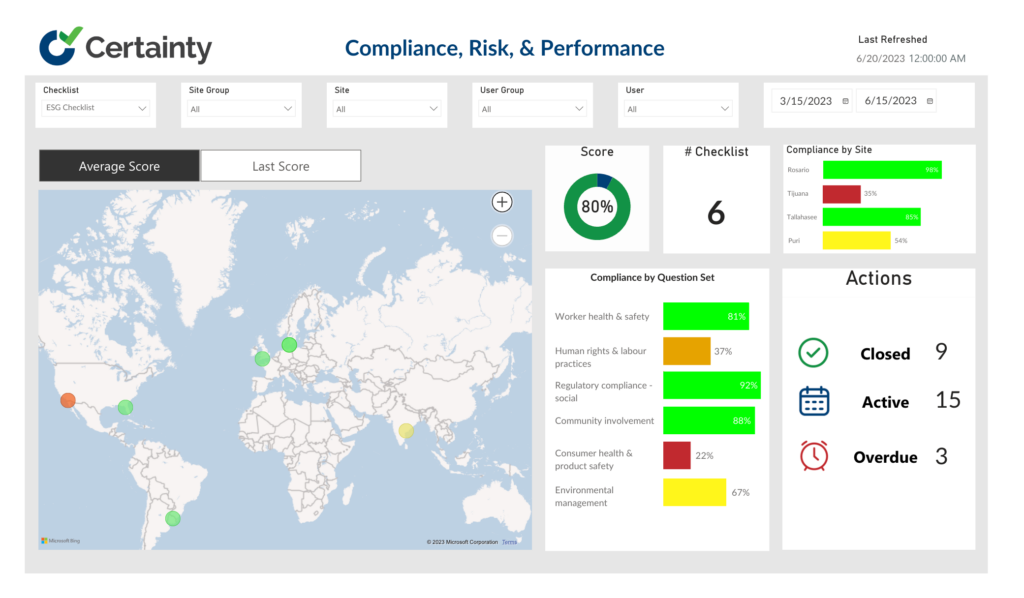
Certainty’s real-time reporting and analytics capabilities give compliance teams immediate access to current supplier performance data — enabling rapid decision-making when issues emerge, and ensuring that audit schedules are never delayed by slow data processing. Customizable dashboards present supply chain compliance data at the individual supplier level, by geography, by risk category, or across the entire supplier network — supporting the management reporting and regulatory disclosure requirements of CSDDD and CSRD.
Customizable Templates
Certainty Software provides fully customizable audit templates that can be configured to capture the specific data required for CSDDD human rights due diligence, LkSG risk assessments, CSRD sustainability disclosures, SEDEX/SMETA social audits, or bespoke supplier quality assessments. As regulatory requirements evolve — with CSDDD national transposition creating jurisdiction-specific obligations across EU member states — audit templates can be updated quickly without disrupting underlying data structures or reporting frameworks.
If you’re interested in digitizing and improving your supply chain audits to meet 2025–2026 CSDDD, CSRD, and LkSG requirements, book a call with our team to discover how Certainty Software can boost your supply chain audit success.
Frequently Asked Questions (FAQs)
Are supply chain audits legally required under CSDDD?
Yes. The EU Corporate Sustainability Due Diligence Directive (CSDDD) requires companies above specified thresholds to implement risk-based due diligence across their supply chains, including systematic supplier assessments that identify, prevent, and address adverse human rights and environmental impacts. While CSDDD does not mandate a specific audit format, regular supplier audits and documented assessment processes are the standard mechanism for demonstrating compliance. LkSG in Germany imposes equivalent requirements with direct legal liability for non-compliance.
How long does a supply chain audit take?
The duration of a supply chain audit varies significantly depending on supplier complexity, geographic location, scope of assessment, and the audit methodology used. Simple self-assessment questionnaires can be completed in hours. Comprehensive on-site audits of complex manufacturing facilities may take several days. Full supply chain audit cycles across large supplier networks — covering Tier 1, 2, and 3 suppliers — can take several months without the support of digital audit platforms and automation tools that compress data collection, analysis, and reporting timelines.
What is a risk-based approach to supply chain auditing?
A risk-based approach to supply chain auditing prioritises audit intensity, frequency, and scope according to the assessed level of human rights and environmental risk — focusing the most rigorous scrutiny on the highest-risk suppliers, geographies, and issue areas. This approach is explicitly required by CSDDD and LkSG, which mandate that companies focus due diligence resources where adverse impacts are most likely and most severe, rather than applying uniform audit standards across all suppliers regardless of risk level.
How does Certainty Software support CSDDD compliance?
Certainty Software supports CSDDD compliance by providing the digital infrastructure for systematic supplier risk assessment, audit execution, corrective action management, and compliance reporting. The platform enables companies to document their due diligence processes, generate the evidence records required by regulators, manage supplier non-conformances through to verified closure, and produce the management and regulatory reports needed for CSRD disclosure. Trusted by hundreds of thousands of users globally, Certainty helps compliance teams execute millions of audits annually with the consistency and traceability that CSDDD demands.