Summary: Warehouse safety encompasses the measures, procedures, inspections, and management systems implemented to protect workers in warehouse and distribution center environments from hazards including forklift collisions, falls, struck-by incidents, and ergonomic injuries. Investing in comprehensive warehouse safety programs — including regular inspections, proper training, clear traffic management, and digital safety tools — reduces injury rates, lowers workers' compensation costs, and ensures OSHA compliance.
Table of contents
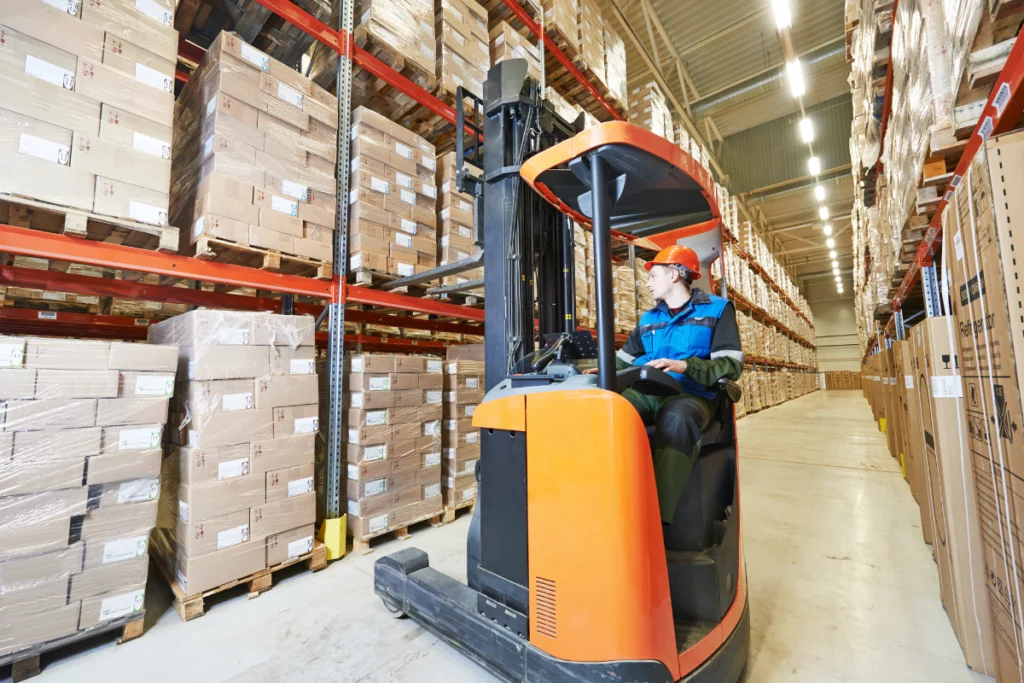
What is Warehouse Safety?
Warehouse safety refers to the comprehensive set of measures, procedures, inspections, and management systems implemented to protect the health, safety, and well-being of workers in warehouse and distribution center environments, as well as the integrity of the property, equipment, and inventory within those facilities. Effective warehouse safety programs are governed by OSHA’s General Industry standards (29 CFR 1910), including regulations covering powered industrial trucks, hazard communication, walking-working surfaces, fire protection, and personal protective equipment — and for facilities pursuing formal management system certification, ISO 45001:2018 provides the internationally recognized framework for occupational health and safety performance. According to the U.S. Bureau of Labor Statistics, fatalities in the warehousing and storage sector have been increasing in recent years — rising from 46 in 2021 to 50 in 2022 — underscoring the urgency of stronger hazard identification, risk controls, and safety inspection programs across the industry. With the continued growth of e-commerce and the associated intensification of warehouse operations, the need for systematic, proactive warehouse safety management has never been greater.
Why Investing in Warehouse Employee Safety is Important
Investing in warehouse employee safety is both a regulatory obligation and a sound business strategy. OSHA’s standards for warehousing operations create baseline legal requirements that, when not met, expose organizations to citations, penalties, and significant liability following incidents. But the business case extends well beyond compliance. According to OSHA’s Safety Pays analysis, for every $1 invested in injury prevention, employers can realize $2 to $6 in reduced costs and increased productivity through lower workers’ compensation premiums, reduced incident investigation costs, decreased absenteeism, better employee retention, and avoided OSHA penalty exposure. Organizations with strong warehouse safety programs also report measurable improvements in operational efficiency — safer, better-organized warehouses experience fewer work stoppages, less equipment damage, and higher throughput per worker-hour than facilities where safety is treated as secondary to production. Tracking safety performance through KPIs such as Total Recordable Incident Rate (TRIR), Days Away, Restricted, or Transferred (DART) rate, inspection completion rate, and corrective action closure time gives safety directors the data needed to demonstrate return on safety investment to executive leadership.
The Biggest Safety Issues in Warehouses
Effective warehouse safety management requires a clear understanding of the specific hazards that drive injury and fatality risk in warehouse environments. Before implementing controls, EHS managers and site safety professionals must conduct systematic hazard identification and risk assessments to understand which hazards are present, how severe the potential consequences are, and which worker populations are most exposed. The hierarchy of controls — elimination, substitution, engineering controls, administrative controls, and PPE — should then guide the selection and prioritization of risk mitigation measures.
Here are some of the most common causes of workplace injuries in warehouse environments:
Slips and trips:
- Slips and trips are among the leading causes of warehouse injuries, accounting for approximately 25% of OSHA’s reported injuries across industries. In warehouse environments, high foot traffic, vehicle movement, and the frequent presence of liquids and materials on floor surfaces make slip, trip, and fall prevention a top priority in any safety inspection program.
- Slips and trips occur due to wet or slippery floors, uneven or damaged surfaces, inadequate lighting, cluttered or obstructed walkways, loose wires and cords, and spilled liquids or bulk materials — all hazards that should be covered in routine warehouse safety inspections conducted under OSHA 29 CFR 1910.22 (walking-working surfaces).
Falling objects:
- Falling objects can cause severe injuries or fatalities to warehouse workers operating in racking aisles, near conveyor systems, or beneath elevated storage areas. Head injuries from falling materials are among the most serious outcomes, making hard hat compliance and overhead hazard identification critical elements of warehouse PPE programs.
- Falling object hazards arise primarily from improper stacking or storage of goods, overloaded or structurally compromised racks and shelves, unsecured loads on elevated platforms, and equipment malfunctions. OSHA 29 CFR 1910.176 addresses safe storage requirements for warehouse environments.
Overexertion:
- According to Liberty Mutual Insurance, overexertion with material handling is the leading cause of disabling workplace injuries, generating over $13 billion in direct workers’ compensation costs annually. In warehouses — where manual lifting, pushing, pulling, and carrying are core job tasks — ergonomic risk management is one of the highest-priority safety interventions available.
- Overexertion injuries result from lifting heavy or awkwardly shaped objects without mechanical assistance, working in sustained bent or twisted postures, performing highly repetitive manual tasks at high speed, and working extended shifts without adequate recovery breaks — all conditions that should be assessed through ergonomic risk evaluations and addressed through engineering controls before administrative measures and PPE.
Falls:
- Same-level falls — the second leading cause of disabling workplace injuries according to Liberty Mutual — generate approximately $10.58 billion in direct workers’ compensation costs annually. In warehouse environments, elevated fall risks also exist from mezzanines, loading dock edges, pallet rack climbing, and the use of ladders and order-picker equipment — all governed by OSHA’s fall protection requirements in 29 CFR 1910.28 and 1910.29.
Moving parts:
- Moving mechanical components — conveyor belts, rollers, drive gears, chains, and cutting blades — are essential to warehouse productivity and a significant source of amputation, crush, and entanglement injuries when not properly guarded and maintained.
- Common moving-part machinery in warehouses includes conveyor systems, palletizers, stretch wrappers, balers, and sortation equipment. OSHA’s machine guarding standard (29 CFR 1910.212) requires that all points of operation and power transmission components be guarded to prevent worker contact.
- Dynamic components possess the potential to cause serious injuries by entrapping, crushing, cutting, or entangling workers’ limbs, clothing, or hair, or by ejecting materials at high velocity — making regular machine guarding inspections and lockout/tagout (LOTO) compliance verification critical elements of warehouse safety audit programs.
Working with and around heavy equipment:
- Powered industrial trucks — forklifts, reach trucks, order pickers, and pallet jacks — are among the most dangerous pieces of equipment in warehouse operations and among the most frequently cited by OSHA in warehouse safety inspections.
- Heavy equipment used in warehouses includes forklifts, pallet jacks, cranes, dock levelers, and delivery vehicles. OSHA’s powered industrial truck standard (29 CFR 1910.178) requires formal operator certification, pre-shift inspections, designated traffic lanes, and pedestrian separation measures.
- Forklift-related incidents — including struck-by events, tip-overs, and fall-from-height on elevated forks — account for approximately 85 worker fatalities and 34,900 serious injuries annually in U.S. warehouses, according to OSHA estimates. Pedestrian-vehicle separation through physical barriers, designated walkways, and proximity warning systems is the most effective engineering control for reducing this risk.
Hazardous materials:
- Warehouses that store or distribute chemicals, flammables, corrosives, compressed gases, or other regulated substances must comply with OSHA’s Hazard Communication Standard (HazCom, 29 CFR 1910.1200), which requires Safety Data Sheets (SDS) for all hazardous chemicals, proper labeling, and worker training on chemical hazards.
- Hazardous materials present in warehouse environments include industrial cleaning chemicals, battery acid from forklift charging stations, aerosol products, flammable liquids, and dust from bulk materials — each requiring specific storage, handling, and emergency response controls.
- Exposure to hazardous materials in warehouses can cause burns, respiratory illness, poisoning, suffocation, explosions, or environmental contamination — making chemical hazard identification and SDS availability central elements of any warehouse safety inspection checklist.
Fire:
- Fire is a severe and recurring threat in warehouse environments, where high-density storage of combustible materials, flammable liquids, and cardboard packaging creates elevated ignition and fuel load risks. NFPA 13 governs automatic sprinkler system design and installation for warehouses, while NFPA 1 and OSHA 29 CFR 1910 Subpart L establish requirements for fire extinguishers, exit routes, and emergency plans.
- Inadequate fire safety controls — including obstructed sprinkler heads, blocked fire exits, missing extinguisher inspections, and inadequate hot work permitting for maintenance activities — can allow fires to spread rapidly, resulting in burns, smoke inhalation injuries, and catastrophic property and inventory loss.
- Fire safety inspections, including sprinkler system checks, extinguisher inspections, exit route assessments, and hot work permit reviews, should be included as standard elements of warehouse safety audit programs.
Ignorance:
- Safety knowledge gaps — resulting from inadequate onboarding, infrequent refresher training, poor hazard communication, or high workforce turnover — are a systemic root cause behind many warehouse incidents. Workers who do not know the hazards they face, the controls available to protect them, or the procedures they are required to follow cannot make safe decisions in dynamic warehouse environments.
- This lack of awareness drives injuries through disregard for safety rules, failure to identify and report hazards and near misses, mishandling of equipment and hazardous materials, and distraction-related incidents. Addressing knowledge gaps requires structured training programs, toolbox talks, safety observations, and a reporting culture where workers are encouraged and recognized for surfacing safety information.
Warehouse Safety Tips
Understanding the hazard landscape is the foundation — but sustained warehouse safety improvement requires the systematic implementation of controls, inspection programs, and safety culture practices that address risks before they result in incidents. Here are the most impactful warehouse safety tips and practices for EHS managers and site safety professionals:
Properly ventilate work areas
Adequate ventilation is a regulatory requirement and a direct worker health protection measure in warehouse environments. OSHA 29 CFR 1910.94 and NFPA 91 establish ventilation standards for facilities where airborne contaminants — dust, chemical vapors, exhaust from internal combustion equipment, and combustible dust — may accumulate to dangerous concentrations. Effective ventilation systems dilute and remove these contaminants, preventing respiratory illness, heat stress, and explosion risk from combustible atmospheres. Forklift charging areas require specific ventilation controls to manage hydrogen gas produced during battery charging. Warehouses storing volatile chemicals must maintain ventilation systems rated for the specific chemical hazards present and verified through industrial hygiene air monitoring.
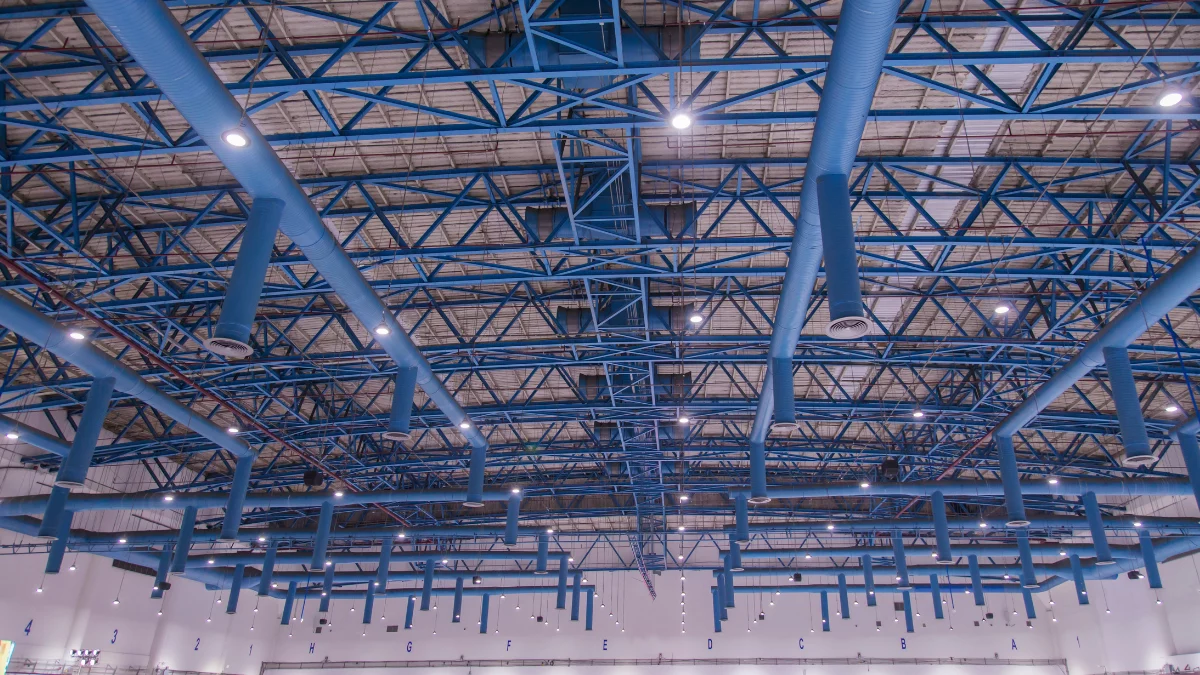
Key ventilation management practices for warehouse safety programs include:
- Install and maintain mechanical ventilation systems — fans, supply air vents, exhaust ducts, and local exhaust ventilation at point-of-source emission locations — sized to provide adequate air changes per hour for the facility’s occupancy and chemical inventory.
- Deploy calibrated gas detectors and air quality monitors for carbon monoxide (from propane forklifts), combustible gases, and any hazardous substances stored or used in the facility, with audible and visual alarms set below exposure action levels.
- Prevent obstruction of air supply and exhaust openings — storage arrangements should be planned to maintain required airflow paths throughout the facility.
- Provide respiratory protection (NIOSH-approved respirators) to workers in areas where engineering ventilation controls cannot reduce airborne contaminant concentrations to safe levels, following OSHA’s Respiratory Protection Standard (29 CFR 1910.134).
Assess storage racks
Storage rack failures are a serious and preventable warehouse hazard. Rack collapses can cause multiple simultaneous fatalities and destroy entire sections of inventory, creating catastrophic operational and financial consequences. OSHA addresses safe storage under 29 CFR 1910.176, and the Rack Manufacturers Institute (RMI) ANSI MH16.1 standard provides the industry benchmark for rack design, installation, inspection, and repair criteria that safety managers should reference when developing warehouse rack inspection programs.
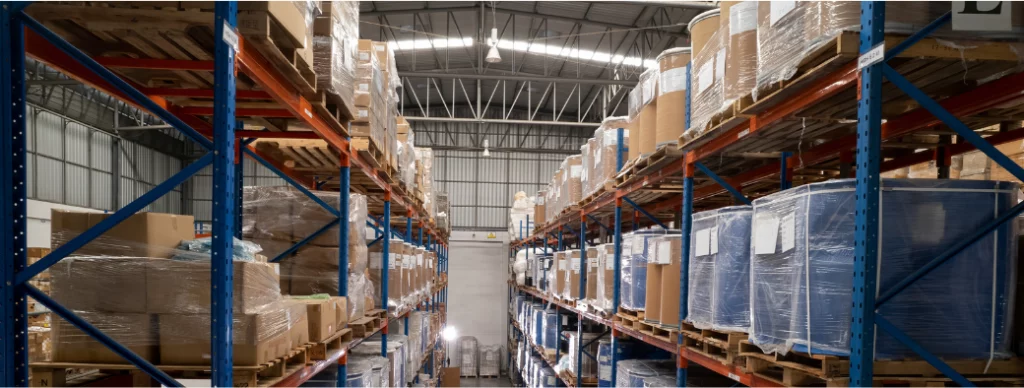
Effective rack safety management requires both regular formal inspections and daily visual checks by workers who are trained to identify damage indicators. Essential rack assessment practices include:
- Conduct formal rack inspections on a documented schedule — at minimum quarterly, and immediately following any forklift contact or seismic event. Inspect for cracks, bends, dents, deformation, rust, missing safety pins, and loose or missing base anchors. Damaged components should be taken out of service immediately and replaced before the rack is reloaded.
- Follow manufacturer installation, load capacity, and maintenance guidelines precisely. Post clearly visible load capacity placards on each bay, and enforce strict compliance with weight limits and beam level load distribution requirements.
- Train forklift operators and warehouse workers on proper loading techniques: even load distribution, correct pallet positioning within beam length, and prohibition of overhang beyond rated limits. Never overload, unbalance, or stack above the top beam level.
- Install column guards, end-of-aisle protectors, and rack netting or decking to prevent product from falling between levels — protecting both workers in aisles below and inventory integrity.
Enforce safe vehicle operation
Powered industrial truck safety is one of the highest-priority areas in OSHA’s warehouse inspection program and one of the most frequently cited safety violations across the industry. OSHA 29 CFR 1910.178 establishes comprehensive requirements for forklift operator training and certification, pre-shift equipment inspections, traffic management, and pedestrian separation that form the regulatory backbone of warehouse vehicle safety programs.
OSHA’s most recent estimates indicate that between 35,000 and 62,000 injuries each year are attributable to forklift incidents — making powered industrial truck safety one of the single highest-impact areas for warehouse injury prevention investment.
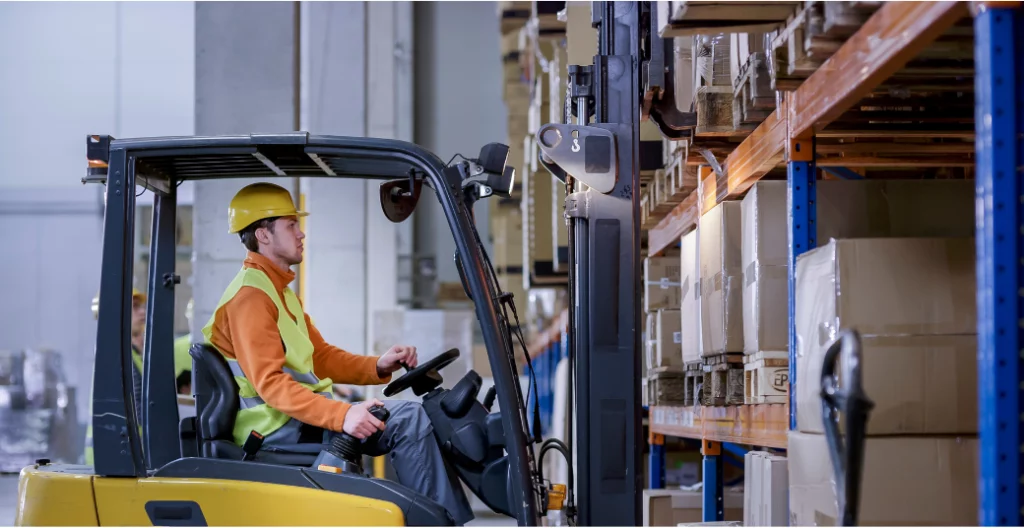
At minimum, warehouse vehicle safety programs should include these core practices:
- Ensure all powered industrial truck operators are formally trained and certified per OSHA 29 CFR 1910.178(l), with documented training records and refresher evaluations conducted every three years — or immediately when an operator is observed operating unsafely, is involved in a near miss or incident, or is assigned to a different type of truck.
- Conduct and document pre-shift forklift inspections before each use, covering brakes, tires, forks, hydraulic systems, lights, horn, and overhead guard — and remove any unit with defects from service immediately until repaired.
- Implement and enforce warehouse traffic management controls: marked pedestrian lanes, physical barriers separating foot traffic from vehicle travel aisles, posted speed limits, intersection warning mirrors, and floor markings at all forklift/pedestrian crossing points.
- Require active warning systems — horns at intersections, audible reversing alarms, and proximity warning devices in high-pedestrian-traffic areas — and maintain minimum safe following distances and visibility standards for all vehicle operators.
Implement ergonomic-focused working
Musculoskeletal disorders (MSDs) from overexertion are the most costly category of warehouse injuries in terms of direct workers’ compensation expense and lost productivity. Ergonomic hazard assessment and control — addressing manual material handling tasks, workstation design, and task scheduling — delivers measurable reductions in MSD incidence rates and is a foundational element of any high-performing warehouse safety program. While OSHA’s ergonomics standard was withdrawn in 2001, OSHA’s General Duty Clause requires employers to address recognized ergonomic hazards, and ANSI/ASSP A10.40-2018 provides voluntary ergonomics guidelines for construction and general industry.
Key practices for making warehouse operations more ergonomically safe include:
- Provide and maintain appropriate mechanical material-handling aids — carts, drum handlers, vacuum lift assists, pallet positioners, and team-lift protocols for loads exceeding safe single-person limits — and ensure these tools are accessible at the point of task.
- Design workstations, pick stations, packing benches, and conveyor heights to accommodate the range of worker heights and body dimensions, minimizing sustained reaching, bending, or twisting during repetitive tasks.
- Provide anti-fatigue matting at standing work stations, adequate lighting throughout all work areas, and climate controls to prevent heat or cold stress — all of which compound MSD risk when workers must exert additional physical effort to maintain balance or body temperature.
- Schedule structured micro-breaks and shift rotation to distribute high-repetition and high-force tasks across multiple workers, preventing cumulative overexposure that produces MSDs over days and weeks rather than in a single identifiable event.

Provide the proper safety training to employees
Safety training is the most direct investment an organization can make in converting regulatory requirements into actual worker competence. OSHA’s training requirements for warehouse environments span multiple standards — forklift operator certification (29 CFR 1910.178), hazard communication training (29 CFR 1910.1200), emergency action plan training (29 CFR 1910.38), fire extinguisher use training (29 CFR 1910.157), lockout/tagout training (29 CFR 1910.147), and walking-working surfaces training (29 CFR 1910.30) — and each requires documented delivery and evidence of worker comprehension. Effective warehouse safety training produces workers who can identify hazards, know the controls available to protect them, and can execute emergency procedures correctly without reference to posted instructions.
Essential elements of an effective warehouse safety training program include:
- Deliver a comprehensive initial training program covering all OSHA-required topics relevant to the specific job role: equipment operation, hazardous material handling, emergency response and evacuation, hazard identification and reporting, first aid access, and site-specific safety rules and procedures.
- Use varied delivery formats to maximize learning transfer: demonstrations, hands-on practice, scenario-based exercises, video, and toolbox talk discussions. Tailor content to the literacy level and language of the workforce, consistent with OSHA’s requirement that training be provided in a language workers understand.
- Assess comprehension through skills verification and knowledge checks — not just attendance records. Provide targeted follow-up coaching for workers who demonstrate gaps in understanding or application of safety procedures.
- Maintain current training records and implement a refresh training calendar that triggers re-training when regulations change, job duties change, new equipment is introduced, or following any incident investigation that identifies a training gap as a contributing cause.
Install warehouse safety signs
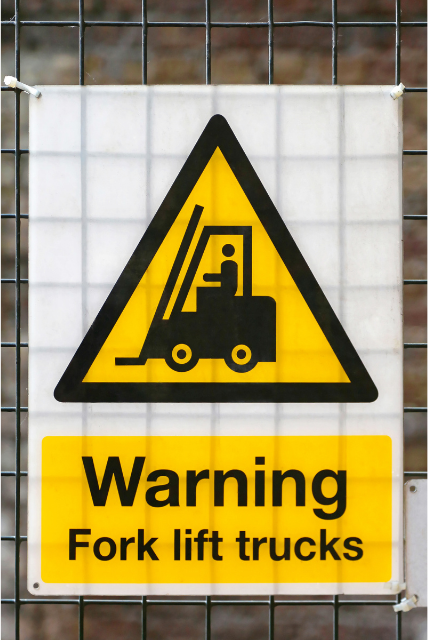
Safety signs and visual communication systems are a constant-presence administrative control that reinforces safe behaviors and communicates hazard information throughout the working day — including to workers who have completed formal training and those who have not yet received it, such as contractors and visitors. OSHA’s safety signs standard (29 CFR 1910.145) and ANSI Z535 series standards establish the design, color coding, and signal word requirements for safety signs across different hazard levels. In multilingual workforces, pictogram-based ANSI Z535 signs provide hazard communication that transcends language barriers and should be prioritized for high-risk areas.
Provide the proper safety equipment
Personal protective equipment (PPE) is the last line of defense in the hierarchy of controls — protecting workers from hazards that cannot be fully eliminated through engineering or administrative measures. OSHA’s PPE standard (29 CFR 1910.132) requires employers to conduct a workplace hazard assessment to determine appropriate PPE for each job task, provide that PPE at no cost to workers, and document the assessment and training. In warehouse environments, task-appropriate PPE typically includes: safety-toe footwear for manual material handling; hard hats in racking areas and loading docks; high-visibility vests where vehicle traffic is present; cut-resistant gloves for packaging and sharp material handling; chemical-resistant PPE for hazardous material handling; and hearing protection where noise exposures exceed OSHA’s action level of 85 dB(A) as an 8-hour time-weighted average.

Maintain a clean workspace and emergency exit paths
Housekeeping is a foundational warehouse safety practice that directly impacts incident rates across multiple hazard categories. OSHA’s housekeeping standard (29 CFR 1910.22) requires that all places of employment — including aisles, passageways, and emergency egress routes — be kept clean, orderly, and free of hazards at all times. Cluttered aisles create tripping hazards, obstruct emergency evacuation, block access to fire extinguishers and emergency stops, and conceal damaged flooring and electrical hazards. OSHA’s emergency egress requirements (29 CFR 1910.37) mandate that exit routes remain unobstructed and clearly marked at all times — a requirement that must be verified through regular safety inspections and included in shift-end housekeeping standards. Organizations that include housekeeping compliance as a scored element of their routine warehouse safety inspection programs see measurable, sustained improvement compared to facilities that treat housekeeping as informal expectation.
Build a culture of safety
Safety culture is the organizational environment that determines whether safety controls are consistently followed, whether hazards and near misses are reliably reported, and whether continuous improvement actually occurs between incidents. In warehouse environments — where high turnover, shift-based operations, productivity pressure, and workforce diversity create significant cultural challenges — building and sustaining a genuine safety culture requires deliberate leadership investment, not just policy statements.
The key components of a strong warehouse safety culture include:
- Establish and communicate a clear, consistent safety vision with measurable goals — such as target TRIR, inspection completion rates, and near-miss report volume — that are aligned with operational performance objectives and reviewed at every level of the organization, from the shop floor to the boardroom.
- Give workers and supervisors meaningful authority to identify and report hazards, recommend corrective actions, and exercise stop-work authority when unsafe conditions are observed — and respond to their input visibly and promptly so that the reporting culture is reinforced rather than eroded by inaction.
- Recognize and celebrate safety contributions at all levels — near-miss reports, completed inspections, hazard corrections, and safety innovation — creating positive reinforcement that makes safety an identity, not just a requirement.
Hold safety meetings
Regular safety meetings — including shift-start toolbox talks, weekly team safety reviews, and formal monthly EHS meetings — are a structured mechanism for maintaining safety awareness, communicating new hazard information, reviewing recent incidents and near misses, and reinforcing correct safety practices before work begins. OSHA’s Recommended Practices for Safety and Health Programs emphasize regular safety communication as a core element of effective safety management at any scale. Toolbox talks that cover specific warehouse hazards — forklift pedestrian interaction, rack loading limits, chemical handling procedures, or emergency response protocols — are particularly effective when delivered by frontline supervisors who can connect the topic to workers’ actual daily tasks. Document attendance and topics discussed at all safety meetings to create the ongoing evidence of hazard communication and worker engagement that supports ISO 45001 compliance and OSHA audit readiness.
Certainty’s Warehouse Safety Checklist
Managing warehouse safety comprehensively — across all hazard categories, compliance requirements, and operational shifts — is a complex undertaking that requires structured tools, not just good intentions. EHS managers and safety directors responsible for warehouse operations need inspection programs that are systematic, consistent, and capable of generating the real-time data needed to identify trends, close corrective actions, and demonstrate compliance readiness to OSHA inspectors and ISO 45001 auditors.
That is why Certainty Software has created a free Warehouse Safety Checklist — a comprehensive, practical inspection tool covering every major warehouse safety category: walking-working surfaces, racking and storage, powered industrial trucks, fire safety, emergency egress, PPE, hazardous materials, ergonomics, and housekeeping. The checklist is designed to be the starting point for a structured warehouse safety inspection program, providing consistent pass/fail criteria that generate actionable data rather than subjective impressions.
Our Warehouse Safety Checklist is more than just a checklist. When deployed through Certainty’s digital inspection platform, it becomes a powerful management tool — capturing inspection data in real time, automatically routing corrective actions to responsible owners, tracking closure rates, and feeding enterprise-level dashboards that give safety directors complete visibility into warehouse safety performance across every site. To get started with Certainty’s Warehouse Safety Checklist, download it from our website, or contact us for a free demo.
You might also be interested in:
Frequently Asked Questions (FAQs)
What OSHA standards apply to warehouse safety?
Warehouses are governed by OSHA’s General Industry standards under 29 CFR 1910. The most frequently cited OSHA standards in warehouse inspections include: 29 CFR 1910.178 (Powered Industrial Trucks / Forklifts), 29 CFR 1910.147 (Lockout/Tagout), 29 CFR 1910.1200 (Hazard Communication), 29 CFR 1910.22 (Walking-Working Surfaces / Housekeeping), 29 CFR 1910.303 and 1910.305 (Electrical Wiring and Equipment), 29 CFR 1910.132 (PPE), 29 CFR 1910.157 (Portable Fire Extinguishers), and 29 CFR 1910.38 (Emergency Action Plans). Warehouses that store specific regulated substances — flammable liquids, hazardous waste, or process chemicals — may also be subject to additional OSHA Process Safety Management (PSM) requirements under 29 CFR 1910.119.
How often should warehouse safety inspections be conducted?
Warehouse safety inspection frequency should be based on hazard severity, regulatory requirements, and operational risk. At a minimum: forklift pre-shift inspections must be conducted before each use per OSHA 29 CFR 1910.178(q); fire extinguisher inspections must be conducted monthly per NFPA 10; exit route inspections should be conducted monthly to verify clear egress; and general warehouse safety walkthroughs should be conducted weekly by supervisors and formally documented. Comprehensive site-wide safety audits should be conducted quarterly or semi-annually, using structured checklists that cover all major hazard categories. Following any incident or near miss, an immediate focused inspection of the incident area and related work tasks should be conducted as part of the incident investigation process.
What are the most common OSHA violations in warehouses?
The most frequently cited OSHA violations in warehouse inspections include: forklift operator training deficiencies and missing pre-shift inspection records (29 CFR 1910.178); blocked or improperly maintained emergency exits and exit routes (29 CFR 1910.37); missing or inadequate hazard communication — including incomplete SDS files and unlabeled chemical containers (29 CFR 1910.1200); improper use of extension cords as permanent wiring (29 CFR 1910.305); inadequate machine guarding on conveyor and packaging equipment (29 CFR 1910.212); and failure to maintain required aisle widths and walking-working surface conditions (29 CFR 1910.22). Addressing these areas through a systematic inspection program is the most direct path to reducing OSHA citation exposure.