Summary: A field level hazard assessment is a pre-task review completed at the job site to identify current hazards, evaluate risk, and define controls before work begins. The value of a field level hazard assessment is that it captures site-specific conditions that generic procedures often miss, especially in dynamic, high-risk environments. For frontline teams and EHS managers, FLHA supports safer decision-making, stronger worker involvement, and fewer preventable incidents.

A field level hazard assessment (FLHA) — also called a field level risk assessment (FLRA) — is a structured, pre-task process. Teams use it to identify, evaluate, and control hazards at a job site before work begins. As a result, it reduces the risk of injury, property damage, or regulatory non-compliance.
According to the National Safety Council (NSC), falls, slips, and trips account for more than 800 preventable workplace deaths annually in the United States. Furthermore, they cause hundreds of thousands of disabling injuries. A properly completed field level hazard assessment could help prevent many of these incidents.
For EHS managers, site safety managers, and frontline workers in construction, oil and gas, utilities, and other high-hazard industries, the FLHA is one of the most practical safety tools available. It is also one of the most legally important.
But what exactly is a field level hazard assessment? How do teams carry out these assessments, and how do businesses ensure employee buy-in? Here’s what you need to know.
What is a Field Level Hazard Assessment?
A field level hazard assessment (FLHA) is a pre-work evaluation that employees conduct directly in the field. In particular, its purpose is to collect relevant, site-specific information about the current condition of a job site. Specifically, it identifies potential hazards to people, property, the work environment, or materials.
The team then establishes a plan to eliminate or control those hazards before work begins. The central principle of a field level hazard assessment is “stop and think.” By coming together as a team before starting any task, workers can collectively pinpoint potential issues. As such, they agree on the safest way to proceed. Ultimately, this process directly supports OSHA’s General Duty Clause requirement to provide a workplace free from recognized hazards.
Once the team identifies hazards, they either implement field controls immediately or delay specific work tasks until proper mitigation is in place. For example, workers could barricade a visible hole on a job site with high-visibility materials to reduce the fall risk.
However, if the field level hazard assessment uncovers conditions that make work unsafe — such as flat tires on mobile equipment, live electrical hazards, or dangerously high temperatures in a confined space — the team must pause specific tasks. Workers must wait until they fully address those issues. Similarly, this aligns with OSHA 29 CFR 1926 construction safety requirements and ISO 45001:2018 hazard identification obligations.
Why Are Field Level Hazard Assessments Important?
Every active job site presents a dynamic mix of hazards. For example, some are obvious, such as heavy machinery and elevated work surfaces. On the other hand, others are concealed, such as buried electrical lines, stored energy in equipment, or accumulated toxic substances in poorly ventilated spaces.
A field level hazard assessment creates a structured moment before work begins to surface all of these risks. Moreover, it confirms that appropriate controls are in place. This directly reduces the likelihood of incidents and lowers a company’s Total Recordable Incident Rate (TRIR). Additionally, it helps demonstrate proactive compliance with OSHA regulations and ISO 45001 risk assessment requirements.
Beyond incident prevention, completing a field level hazard assessment also protects organizations from significant legal and financial exposure. For example, in the event of a workplace injury, documented FLHAs demonstrate that the team exercised due diligence. Specifically, they show that the team identified hazards, established controls, and informed workers of the risks.
This documentation can be critical in workers’ compensation proceedings, regulatory investigations, and litigation. Conversely, organizations that cannot produce FLHA records for completed work face elevated regulatory scrutiny and potential OSHA citations.
What are the Four Categories of Hazard Assessment?
A thorough field level hazard assessment addresses four primary categories of workplace hazards. Understanding each category ensures that no significant risk goes overlooked during pre-task planning. In particular, this is a critical requirement for organizations maintaining compliance with OSHA standards, ISO 45001, and industry-specific safety codes.
Physical hazards: These include electrical shock risks, open flames, extreme temperatures (heat stress and cold stress), hazardous radiation, and noise levels exceeding OSHA’s permissible exposure limits. Additionally, they encompass high-pressure systems and whole-body vibration. Organizations can measure and control physical hazards through engineering controls, administrative controls, and appropriate PPE. As such, the field level hazard assessment should verify all of these.
Chemical hazards: Gases, vapors, liquids, solids, dusts, and fumes that are toxic, combustible, explosive, corrosive, or reactive present significant risks on many job sites. Therefore, teams must confirm chemical hazard controls — including proper ventilation, chemical-resistant PPE, and compliance with Safety Data Sheet (SDS) requirements under OSHA’s Hazard Communication Standard (29 CFR 1910.1200) — before work begins.
Biological hazards: Fungi, bacteria, viruses, parasites, insects, plants, and animals that cause infections, allergies, or illness represent biological hazards. Workers in construction, environmental remediation, wastewater, and agricultural settings face elevated exposure. Consequently, teams should verify controls such as vaccination, proper hygiene, and respiratory protection as part of the field level hazard assessment in relevant environments.
Psychosocial hazards: ISO 45001:2018 explicitly recognizes psychosocial hazards as part of a complete occupational health and safety management system. These include workplace stress, bullying, harassment, discrimination, and excessive workload. Including psychosocial risk considerations in field level hazard assessments helps organizations build a more holistic safety culture. Furthermore, it can improve workforce productivity and retention alongside physical safety outcomes.
What is the Field Level Hazard Assessment Process?
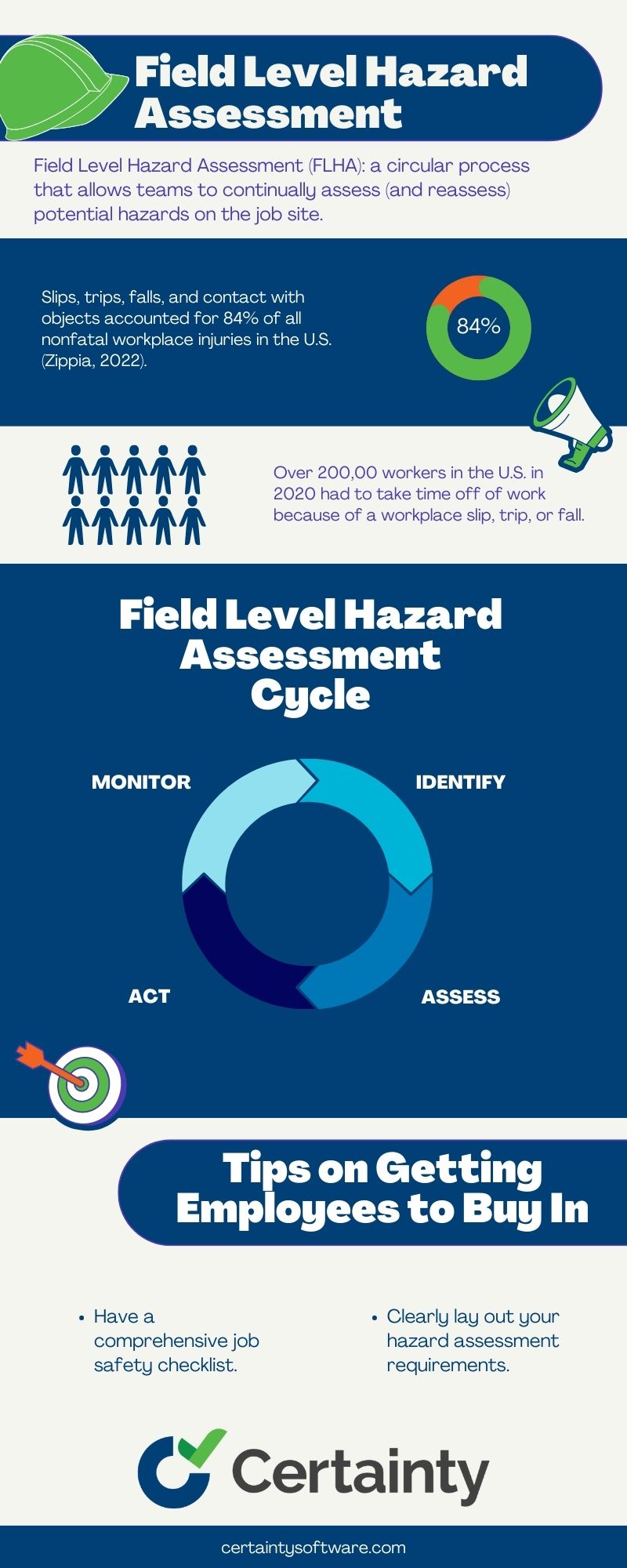
The field level hazard assessment is not a one-time event. Instead, it is a continuous, cyclical process that allows teams to identify, control, and monitor hazards throughout a project’s lifecycle. Organizations typically conduct in-depth assessments at key project milestones. Meanwhile, teams may complete shorter pre-task assessments at the start of each work shift.
This ongoing approach to hazard identification aligns with ISO 45001’s requirement for continual improvement in occupational health and safety performance.
The field level hazard assessment cycle contains four components:
Identify
The team examines the worksite to identify all potential hazards before work begins. For example, this includes slip, trip, and fall hazards, along with equipment defects and unsafe configurations. Additionally, it covers PPE gaps, stored energy risks, chemical exposure points, and any changed site conditions. Above all, a structured field level hazard assessment checklist ensures that no hazard category goes overlooked.
Assess
The team then evaluates each identified hazard for the severity and probability of potential harm. Notably, the assessment considers what injuries or property damage could realistically result. It also examines how many workers face exposure and how quickly harm could occur.
As a result, this risk ranking helps teams prioritize their control actions. They can then allocate resources to the highest-risk hazards first. This approach is consistent with the hierarchy of controls principle recognized by OSHA and ISO 45001.
Act
Once hazards are identified and ranked, the team implements corrective and preventive controls. They follow the hierarchy of controls: elimination, substitution, engineering controls, administrative controls, and PPE. Moreover, all control actions taken must be documented as part of the field level hazard assessment record. This creates a defensible audit trail showing who identified the hazard, what action was taken, when, and the expected impact on risk level.
Monitor
The final phase of each cycle is monitoring. In other words, teams verify that the controls they implemented are effective and that risk has dropped to an acceptable level. Specifically, they evaluate whether workers follow control measures consistently and whether new hazards have emerged. They also assess whether the current process is generating actionable findings. Continual monitoring drives improvement and ensures the field level hazard assessment remains a dynamic safety tool rather than a static compliance checkbox.
Once the monitoring phase is complete, the cycle begins again with the next field level hazard assessment. In this way, organizations build a culture of ongoing hazard identification, risk reduction, and continuous safety improvement.
30+ Audit and inspection checklists free for download.
How to Gain Field Level Hazard Assessment Buy-In
Creating a field level hazard assessment policy is only the first step. Achieving consistent employee buy-in is what determines whether the FLHA program actually reduces risk. If the evaluation, documentation, and reporting processes are cumbersome or time-consuming, frontline workers will treat the FLHA as a paperwork obligation. Consequently, the quality of hazard identification drops, controls become inconsistent, and the program loses its effectiveness.
To that end, building a high-adoption FLHA program starts with a comprehensive job site safety checklist. This checklist guides workers through a systematic hazard identification process quickly and clearly. Moreover, it enables real-time documentation without requiring extensive paperwork.
Beyond the checklist, organizations must establish clear FLHA requirements. How frequently should teams complete assessments? What level of detail is required for each hazard documented? How are completed assessments captured, reviewed, and shared with the broader safety program?
When workers understand exactly what is expected and have the right tools to meet those expectations efficiently, adoption rates improve significantly. Most importantly, when they see that management acts upon their FLHA findings, the quality of hazard data driving the safety program also improves.
Frequently Asked Questions (FAQs)
What is the difference between a field level hazard assessment and a Job Hazard Analysis (JHA)?
A Job Hazard Analysis (JHA) — also called a Job Safety Analysis (JSA) — is a formal, pre-planned document. It breaks a specific job task into steps and identifies the hazards associated with each step, along with prescribed controls. In contrast, a field level hazard assessment (FLHA) is a site-specific, real-time pre-task evaluation. Workers conduct it at the start of a shift or before beginning a new task.
While safety professionals typically prepare a JHA in advance, workers complete an FLHA in the field. It accounts for the actual conditions present at that moment. Both tools are complementary and recognized as best practices by OSHA and ISO 45001.
Is a field level hazard assessment required by OSHA?
OSHA does not mandate a specific “field level hazard assessment” by that exact name. However, the hazard identification and risk assessment activities it encompasses fall under multiple OSHA standards. These include the General Duty Clause (Section 5(a)(1) of the OSH Act), the Permit-Required Confined Spaces standard (29 CFR 1910.146), and the Excavation standard (29 CFR 1926 Subpart P). Additionally, OSHA’s Process Safety Management (PSM) standard (29 CFR 1910.119) applies. Furthermore, many provincial and territorial jurisdictions in Canada explicitly require FLHAs under their occupational health and safety regulations.
How does digital software improve field level hazard assessment programs?
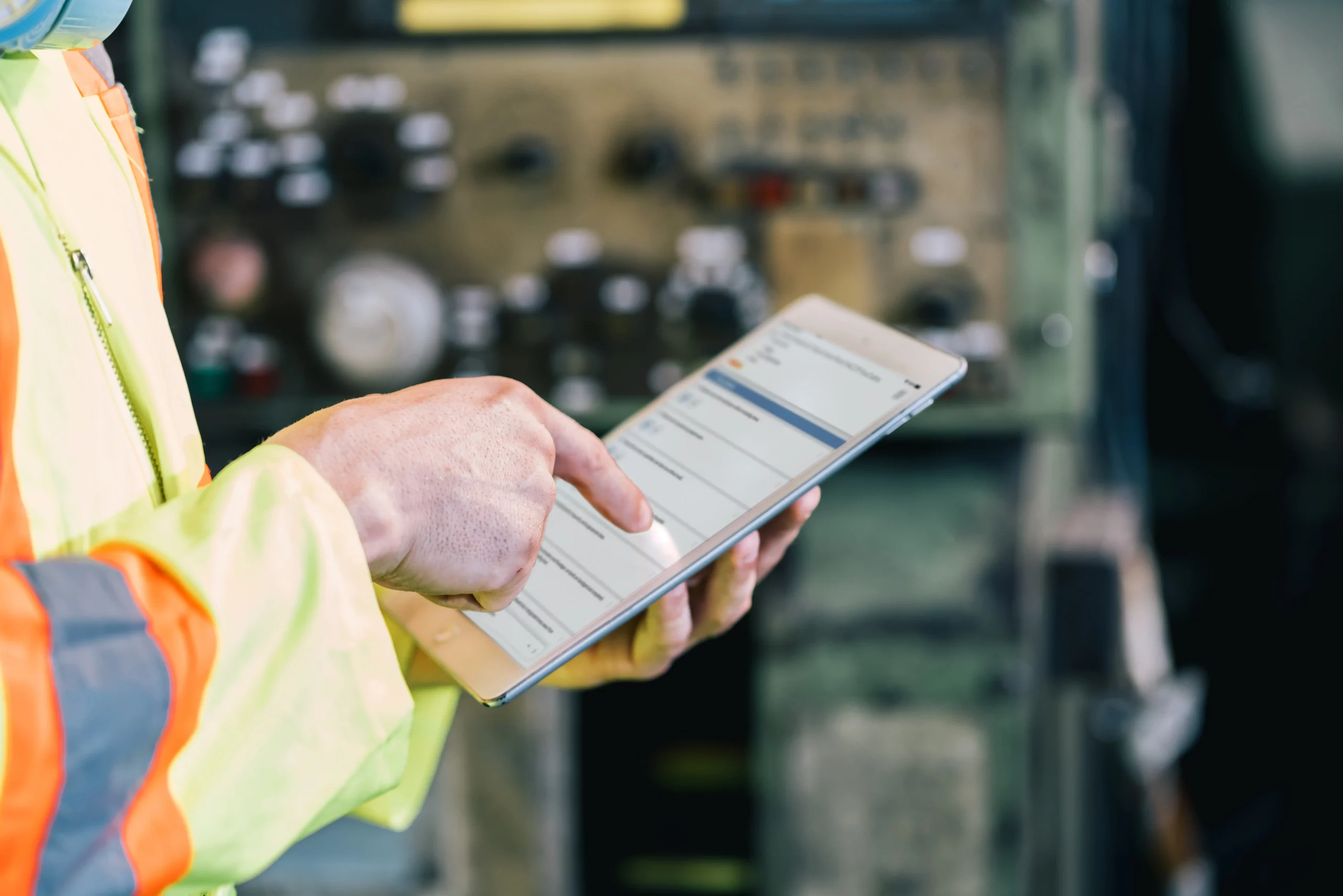
Digital field level hazard assessment software replaces paper-based FLHA forms with mobile-accessible checklists. Workers can complete these on smartphones or tablets directly at the worksite. This eliminates illegible handwriting, lost forms, and reporting delays.
Moreover, digital platforms allow workers to attach photos of identified hazards and instantly notify supervisors of critical risks. They also automatically route corrective actions to responsible parties. As a result, the time between hazard identification and corrective action closure drops dramatically. For EHS managers, real-time dashboards provide visibility into FLHA completion rates, recurring hazard trends, and site-level compliance status across all operations.
You may also be interested in:
Near Miss Reporting: What it is and Why it’s Important
Keep it Seen, Keep it Safe: The Importance of Construction Safety Observations