Summary: A hot work permit is a documented authorization that confirms welding, cutting, grinding, or other ignition-producing work can proceed only after the area has been checked and required fire controls are in place. For EHS and facility leaders, a strong hot work permit process reduces fire and explosion risk, protects contractors and employees, and demonstrates OSHA and NFPA compliance through clear pre-job verification and accountability.
Hot work is any task that generates sparks, open flames, or heat sufficient to serve as an ignition source. As a result, it is one of the leading causes of industrial fires and explosions worldwide. According to the National Fire Protection Association (NFPA), U.S. fire departments respond to thousands of structure fires from hot work each year. In fact, associated property losses reach hundreds of millions of dollars annually, with dozens of fatalities.
Hot work processes include welding, cutting, brazing, soldering, and grinding. Additionally, any other spark- or flame-producing operation falls under this category. For this reason, all such activities require a Hot Work Permit before work can begin in a facility or on a job site. This permit system is a foundational element of industrial fire prevention. Most importantly, both OSHA and the NFPA require it.
What is a Hot Work Permit?
A hot work permit is a formal, documented authorization. Specifically, it confirms that an evaluator has assessed the work area and deemed it safe for hot work activities. It also verifies that all required safety precautions are in place before work begins. The permit protects employees, contractors, and subcontractors. It does so by verifying that they understand the fire and ignition risks involved. Furthermore, it ensures they commit to following established fire safety practices throughout the task.
A properly administered hot work permit system also reduces an organization’s liability exposure. Moreover, it protects physical assets and lowers insurance and workers’ compensation costs. In addition, it helps demonstrate compliance with OSHA 29 CFR 1910.252 (welding, cutting, and brazing) and NFPA 51B (Standard for Fire Prevention During Welding, Cutting, and Other Hot Work).
The permitting system establishes that:
- All required PPE instructions are understood and followed by workers performing the hot work
- Employees and contractors are fully aware of all present ignition sources in and around the work area
- Isolation practices — including lockout/tagout (LOTO) procedures where applicable — are implemented in the work area before the job starts
- All combustible and flammable materials have been removed from the work area or adequately shielded before work begins
- Fire extinguishers and first aid kits have been properly inspected and are positioned nearby and accessible throughout the work duration
- Hot work areas are properly cleaned, inspected, and monitored for residual fire risk after the work is complete — including the required post-work fire watch period
- Any incidents, near-misses, or fire events relating to hot work are properly reported and documented through the organization’s incident reporting system
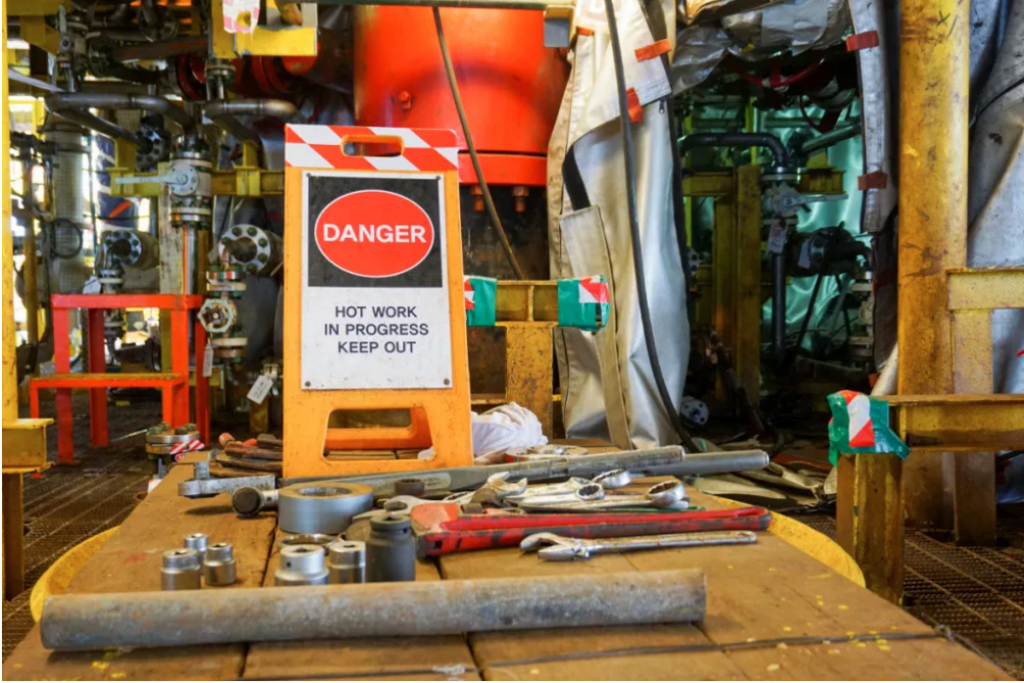
Does OSHA Require a Hot Work Permit?
Yes. Both OSHA (29 CFR 1910.252 for general industry and 29 CFR 1926.350–1926.354 for construction) and the NFPA under NFPA 51B require permits for hot work. Local fire codes add further requirements as well. Organizations that conduct hot work without a permit system face significant OSHA citation risk. They also face potential criminal liability if a fire-related fatality occurs. Additionally, insurers may deny claims when proper permitting procedures were not followed.
Who Issues the Permit?
In accordance with OSHA standards and NFPA 51B requirements, contractors and employees must apply for hot work permits through the facility’s designated permit-authorizing individual (PAI). Depending on the organization and facility type, this person is typically the Fire Prevention Officer (FPO), Fire Safety Manager, or EH&S representative. Notably, the PAI must be sufficiently trained in fire safety principles. This training ensures they can properly assess whether a work area meets hot work authorization requirements.
When is a Hot Work Permit Required?
A hot work permit is required any time a temporary operation introduces sparks, heat, open flames, or other ignition sources into a work environment. This is particularly important in areas not specifically designed for such activities. The permit must be obtained and reviewed before any hot work begins. Under no circumstances should hot work commence without a valid, signed permit in place. Consequently, this requirement applies to both routine operations and emergency work where hot work occurs on an unplanned basis.
The Hot Work Permit Process
The hot work permitting process has four general phases: application, evaluation, work, and sign-off. Organizations with digital permit management systems can execute this process faster and with greater consistency. In contrast, those relying on paper-based forms often experience delays and errors.
Application Phase
The process begins when the employee, contractor, or subcontractor submits a permit application. They send it to the on-site permit-authorizing individual, fire safety manager, or designated representative. Applications are typically submitted the day before the planned work start date. This lead time is critical for allowing the PAI to conduct a thorough site evaluation before authorization.
However, organizations relying on paper forms at this stage frequently encounter challenges. These include misfiled or lost applications, incomplete submissions, and last-minute requests that compress the evaluation timeline. As a result, fire risk increases. Digital permit management platforms resolve these issues by providing structured, standardized online forms. Workers can submit, track, and review these forms from any device. Therefore, no application is lost or overlooked.
Evaluation Phase
During the evaluation phase, the permit-authorizing individual conducts an on-site assessment. The goal is to determine whether the proposed hot work area meets all fire safety requirements established by OSHA and NFPA 51B. In particular, the PAI verifies that the team has cleared all combustibles. It also confirms that fire suppression equipment is present and serviceable, that ventilation is adequate, and that all required isolation measures are in place.
Paper-based evaluation forms create friction at this stage. Inspectors must manually record all observations, which can result in incomplete documentation and delayed permit issuance. On the other hand, digital solutions allow the PAI to record observations, attach photographs, and generate a completed evaluation report in real time. Consequently, this accelerates permit delivery while improving documentation quality. Use an online checklist like the Confined Space Hot Work Permit Checklist to standardize your evaluation process. This approach ensures your team does not miss any critical safety check.

30+ Audit and inspection checklists free for download.
Work Phase
After the PAI evaluates and confirms that the job site meets all permit requirements, workers receive authorization to begin. A copy of the permit — paper or digital — must be posted or accessible at the hot work area before any activities commence. Furthermore, all workers performing hot work must be aware of the permit conditions. They must also confirm by signature that they have reviewed and understood the requirements.
Upon completion of the work, the workers involved must sign off on the permit. This verifies task completion and the completion of a mandatory 30-minute post-work fire watch period. Notably, NFPA 51B requires this fire watch to detect and address any smoldering fire that might develop after hot work ends.
Sign-off Phase
The Fire Safety Manager, Fire Prevention Officer (FPO), or other permit-authorizing individual must return to the hot work site. This generally happens within a few hours after the team completes the work. The purpose of this final inspection is to confirm that the team completed all work as described in the permit. Additionally, the inspector verifies that the work area has been properly cleaned and restored.
Moreover, the inspector conducts a post-work fire hazard assessment. This assessment identifies any new fire risks that may have developed during or after the hot work activities. As such, the organization should retain the completed permit, including all sign-offs, as part of its compliance records.
Do you need a Hot Work Permit?
Whether the worker is an employee, contractor, or subcontractor, every individual performing hot work must hold a valid permit before beginning any task. The worker performing the hot work is responsible for initiating the permit process. However, ensuring the full permitting process is correctly followed is a shared responsibility. It involves the project team, the PAI, and the facility’s safety management function. For this reason, organizations managing multiple sites or high volumes of permits should consider digital permit management software. This ensures consistency, traceability, and regulatory compliance across all operations.
Hot Work Permit Training
All employees who perform, supervise, or authorize hot work must receive training on the permit system. This training should be part of their initial safety onboarding. Furthermore, trainers must refresh it regularly to reflect updates to OSHA requirements, NFPA standards, or internal procedures.
Effective hot work permit training ensures that workers know several critical things. Specifically, they must understand when a permit is required and how to apply for one. They must also know who the permit-authorizing individual is and what conditions require verification before work begins. In addition, training covers what to do if an unexpected fire hazard appears during work. Ultimately, the organization should document and retain all training records as part of its safety compliance documentation. These records must be available for review during OSHA inspections or ISO 45001 audits.
Frequently Asked Questions (FAQs)
What tasks require a hot work permit?
Hot work permits are required for any task that can produce sparks, open flames, or heat sufficient to ignite surrounding materials. For example, this includes welding (MIG, TIG, stick, and oxy-fuel), cutting (plasma, oxy-fuel, and abrasive wheel), brazing, soldering, grinding, and thermal spraying. In fact, any process that generates heat or sparks falls under this requirement. Notably, the permit requirement applies regardless of how long the task takes. Even brief hot work operations in non-designated areas require a permit.
What is a fire watch and how long is it required after hot work?
A fire watch is a post-work safety requirement. During this period, a trained worker monitors the hot work area for signs of fire or smoldering materials. NFPA 51B requires a minimum 30-minute fire watch after all hot work activities end. However, a longer watch period may be necessary when conditions increase the risk of delayed ignition. For example, this applies when hot work was performed near combustible materials, in confined spaces, or on metal surfaces adjacent to insulation. Additionally, fire watch personnel must have a working fire extinguisher and must know how to contact emergency services.
How can digital software improve hot work permit management?
Digital hot work permit management software replaces error-prone, paper-based forms with structured online workflows. These workflows guide the permit-authorizing individual through every required evaluation step. Furthermore, digital systems provide a complete, searchable audit trail of all permits issued. This includes evaluator observations, attached photographs, approval timestamps, and post-work sign-offs. For EHS managers and safety directors overseeing multiple facilities, real-time dashboards provide visibility into open permits and overdue sign-offs. Consequently, they can identify recurring hot work hazard patterns and inform targeted safety improvements.
You may also be interested in:
Keep It Seen, Keep It Safe: The Importance Of Construction Safety Observations