Salus Alternatives: Certainty for Safety Inspections & Audits
Top Safety Audit and Inspection Software Options Compared to Salus
 ★★★★½(18) 4.6
 ★★★★☆4.5 (58)
150,000+ Users | 6M+ Forms Annually | 20,000+ CAPAs Resolved Annually
Salus is a construction-focused safety platform aimed at field crews, foremen, and trades. In fact, Salus is widely used by general contractors and trade subcontractors for toolbox talks, JHAs, and field forms. Moreover, its mobile-first design, eSignatures, and pre-built construction templates make it easy to roll out fast.
However, as enterprise safety programs span multiple industries, teams often need more than a construction-only safety app. For example, manufacturers, energy, healthcare, and food & beverage organizations need flexible inspection programs covering many use cases beyond field forms. In addition, Salus’ template library and reporting depth is built around construction workflows rather than multi-discipline audit governance. As a result, where teams need simple mobile capture but also enterprise-wide risk management flexibility, multi-site rollups, and enterprise audit governance, they may consider alternatives to a construction-focussed safety app.
Salus Alternatives: How Certainty Compares
Based on public product documentation as of May 2026. In particular, where a feature is marked “Partial”, the feature is limited in scope, plan-restricted, or available via add-on. Where a feature is marked “Not verified”, the capability could not be confirmed from public sources; please contact the vendor for definitive information. In addition, all product names and trademarks are the property of their respective owners.
Key Differentiators: Salus Alternatives at a Glance
From construction-focused safety apps to multi-disciplinary audit platforms.
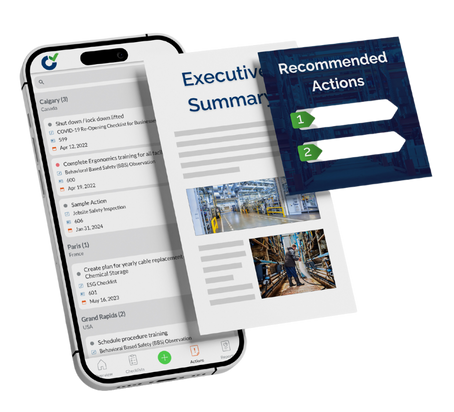
First, Salus targets construction safety with field forms, JHAs, and toolbox talks. As a result, contractors and trades can quickly digitize field paperwork. By contrast, Certainty takes a enterprise-wide, audit-first path. Specifically, it helps teams handle corrective actions, compliance workflows, and safety programs across many sites, units, and stakeholders in manufacturing, energy, healthcare, food & beverage, and construction. In addition, Certainty leans more on flexible workflows, audit-ready evidence, and enterprise integrations. Therefore, when teams move from a construction-only app to multi-disciplinary audit governance, these differences often drive the choice. For that reason, most Salus alternatives in this space split into two camps: construction-focused safety apps, and enterprise-wide risk management audit platforms like Certainty.
Why Teams Pick Certainty Among Salus Alternatives
In particular, here is why teams consider Certainty:
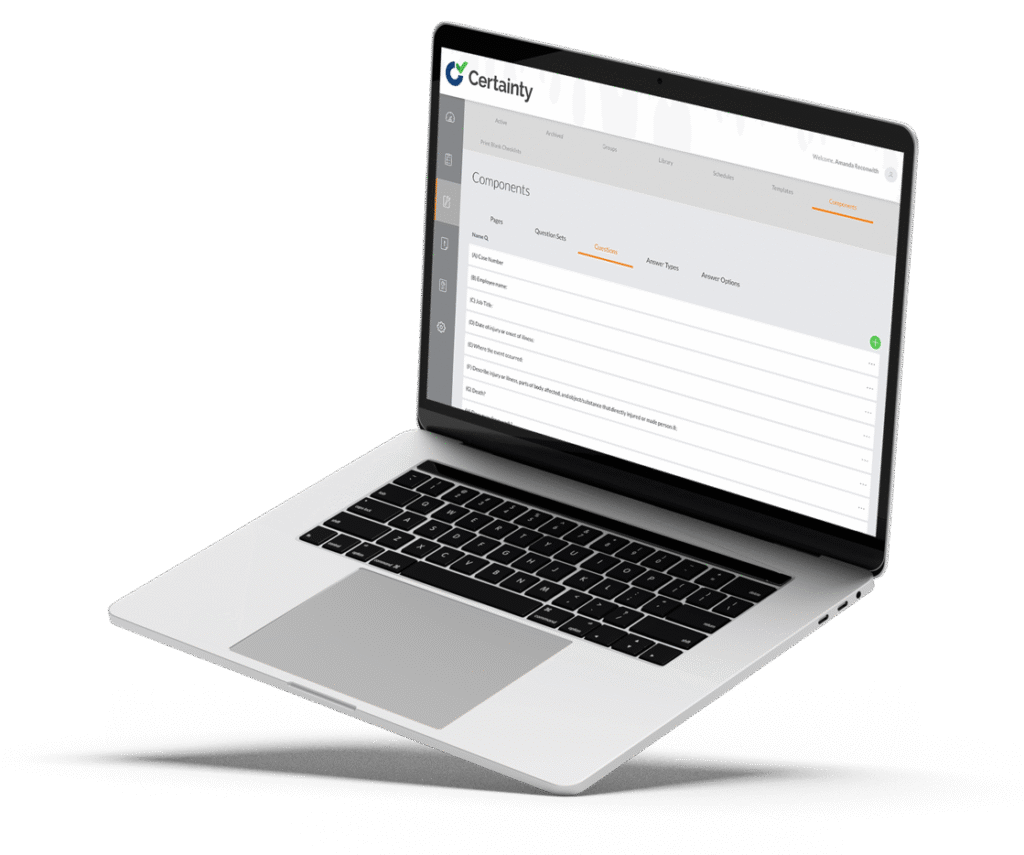
- ✓ First, move from task tracking to structured CAPA workflows: Certainty provides end-to-end corrective action management with automated assignment, approval workflows, and verified closure — supporting regulatory and audit requirements.
- ✓ Second, strengthen compliance and audit readiness: Certainty’s audit trails, signature capture, and evidence-based CAPA closure support documentation for audits and compliance processes.
- ✓ In addition, scale safety programs with governance and control: Certainty supports complex multi-site environments with configurable workflows, hierarchies, and oversight across business units and geographies.
- ✓ Moreover, reduce complexity in user management and integrations: Enterprise SSO and integration services enable seamless access for internal teams and external stakeholders with options that can simplify user access and participation depending on configuration.
- ✓ Furthermore, gain deeper insight into safety performance: Certainty’s Vision, Insights & Analytics engine supports identification of patterns and trends across inspection data, enabling more proactive decision-making.
- ✓ Finally, improve cost predictability at scale: Certainty’s pricing model provides a predictable approach for organizations evaluating alternatives to tiered seat-based pricing.
How Kellogg’s uses Certainty to run global safety inspections
PROOF — CERTAINTY WORKS IN ENTERPRISE SAFETY PROGRAMS
For example, with sites in many countries, Kellogg’s uses Certainty to standardize safety inspections, audits, and compliance across all global facilities. As a result, the team rolls out one inspection model across every site. In addition, they automate corrective actions and gain a clear view of safety performance.
Who Should Consider Certainty Instead?
Specifically, Certainty fits teams that need more than a construction-only safety app. In particular, it is a strong fit if you need structured CAPA workflows with proof of closure across multiple risk disciplines. In addition, it works well for teams that run safety programs across many sites, must meet strict rules, or want enterprise integrations like ERP, BI, and SSO. Moreover, if you need outside users or contractors to take part, Certainty makes that easy. Finally, if you want clear, flat pricing at scale without complex seat models, Certainty offers $18 per user per month — so costs stay predictable as you grow.
Who Should Stick with Salus?
On the other hand, Salus may be the better fit for general contractors and trade subcontractors. For example, if your scope is field forms, JHAs, and toolbox talks for construction crews, Salus works well. In addition, teams that need pre-built construction templates and eSignature workflows may prefer its specialized footprint.
The Bottom Line: Choosing Between Salus Alternatives
- ➤First, choose Salus for construction safety field forms, JHAs, and toolbox talks.
- ➤By contrast, choose Certainty for multi-discipline CAPA workflows, enterprise governance, and scalable safety management.
Frequently Asked Questions: Salus Alternatives
Is Certainty a good alternative to Salus?
Yes. In fact, Certainty is a strong alternative for teams that want more structured corrective action workflows and advanced CAPA management features, enterprise features like SSO, OData & SQL connections, integration services, and test instances, and better compliance proof. Of course, both platforms offer strong mobile inspection features.
How does Certainty compare to Salus for safety inspections?
In short, both platforms offer mobile inspections with offline mode, photo capture, and flexible checklists. However, Certainty stands out by including enterprise-grade OData/SQL connections and dedicated integration services as standard features. On the other hand, Salus offers a construction-focused field-form model suited to general contractors and trades.
Is Certainty more expensive than Salus?
Salus offers tiered seat-based pricing aimed at construction teams. By contrast, Certainty offers a clear pricing model with per-user pricing depending on configuration and scale. For example, Certainty pricing starts at $18 per user per month — so costs stay predictable as you grow.
Does Certainty support checklist workflows and enterprise reporting?
Yes. Specifically, Certainty’s checklist workflow routes inspections between internal teams, contractors, and third parties for review, feedback, and approval within a single inspection lifecycle. In addition, Certainty provides enterprise-wide safety compliance dashboards with roll-up reporting across sites, business units, and geographies.
Does Certainty support global, multi-lingual projects?
Yes. In fact, Certainty offers multi-lingual function, ships with 20+ languages, and lets teams import new languages as needed. Moreover, with Certainty you can provide translations for your safety inspections — so one checklist works in many languages while feeding the same standardized reporting.
Of course, Salus™ is a trademark of its owner. All product and company names are trademarks or registered trademarks of their respective holders. In addition, feature comparisons are based on publicly available information as of May 2026 and may be subject to change.
Enterprise Safety Governance with Frontline Simplicity
Flexible inspections · Automated corrective actions · Enterprise-wide visibility
Safety Inspections Solution · Kellogg’s Case Study · Product Features