Summary: ISO 14001 certification provides organizations with a structured framework for building an effective Environmental Management System (EMS) that identifies environmental impacts, improves operational efficiency, and demonstrates commitment to responsible manufacturing. For Quality Managers and Plant Managers pursuing ISO 14001 alongside ISO 9001 and other quality certifications, the standard's plan-do-check-act approach to environmental performance integrates naturally with existing quality management systems and internal audit programs.
Table of contents

What is ISO 14001?
Obtaining ISO 14001 (International Organization for Standardization) certification guides organizations in building an effective Environmental Management System (EMS). The ISO 14001 standards ensure a business’s scope of the environmental management system meets the ISO requirements for environmental management systems. For Quality Managers and Plant Managers, ISO 14001 certification is increasingly viewed alongside quality management certifications like ISO 9001 as a marker of operational maturity and responsible manufacturing.
What is an Environmental Management System (EMS)?
Incorporating an environmental management system (EMS) develops a set of standardized practices and processes that help an organization determine its environmental impact. Also, implementing EMS increases a business’s operational efficiency.
Companies implementing an EMS increase the likelihood of reaching their environmental performance objectives through management review, internal audits, and continual improvements strategizing to meet their environmental objectives.
Benefits of Being ISO 14001 Certified
This standard’s certification improves an organization’s capacity to identify and minimize its environmental impacts and helps to meet its ongoing environmental performance improvement objectives. Specific benefits include:
Reduce environmental impact
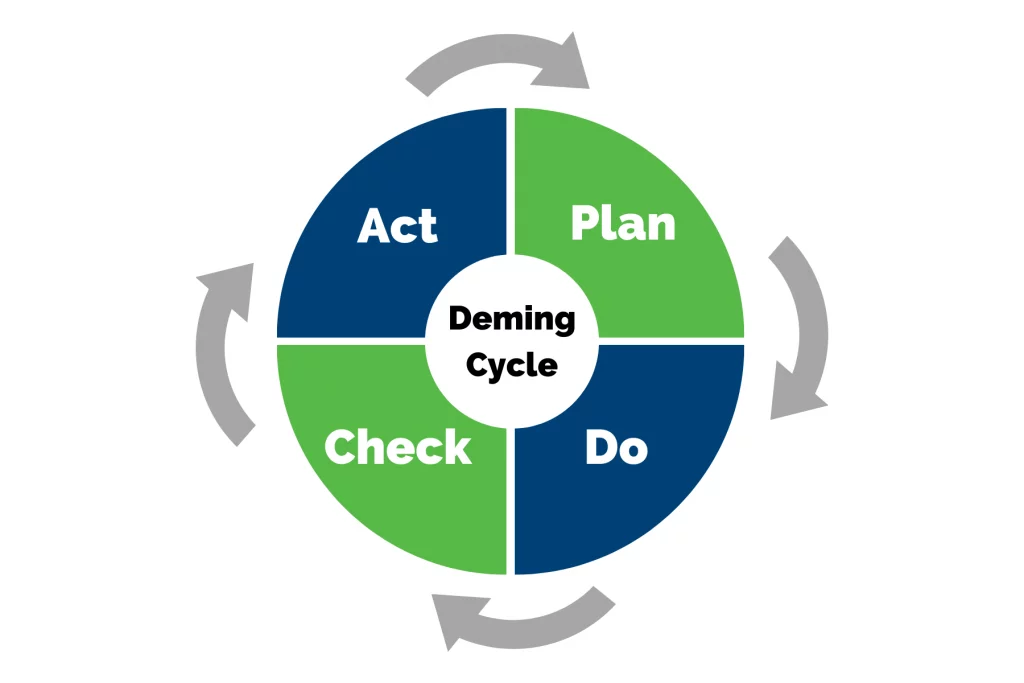
Having a systematic approach to identifying environmental impacts and continuously improving environmental performance is only possible with a functional corporate environmental management system. An EMS that follows the Deming cycle approach of plan, do, check, act – like the ISO standard 14001 – will provide an organization with the policies, procedures, and corresponding management system tools (i.e. objectives, targets, audits, and reviews) to actually improve environmental performance and reduce environmental impact over time.
Improved cost control
ISO standards for an environmental management system reduce significant environmental impacts and ultimately reduce waste, liability, and costs. Additionally, based on environmental management system requirements, cost savings are sought through the conservation of materials and energy. For Quality Directors tracking Cost of Poor Quality (COPQ), integrating environmental management with quality management creates a unified view of operational waste — both quality-related and environmental — that drives more effective cost reduction initiatives.
Stronger public image
Customers can appreciate the effort put forward by an organization seeking to eliminate its adverse environmental impacts which can lead to a greater public image of a business.
Better overall work culture
The standards set by ISO 14001 support a culture of continuous improvement through consistent review of business processes and reducing significant environmental aspects. From top management to floor staff, continuous evaluation, and idea generation can develop to search for ways to reach a company’s environmental objectives.
Integrated management system synergies
Organizations that already hold ISO 9001 quality management certification find significant advantages in pursuing ISO 14001. Both standards share the same high-level structure (Annex SL), which means that many management system elements — document control, internal audit programs, corrective action processes, and management review — can be integrated rather than duplicated. For QA Managers and Process Improvement Leads, this integration reduces audit fatigue by allowing combined quality and environmental audits, streamlines non-conformance tracking across both systems, and provides a more holistic view of organizational performance.
How to Become ISO 14001 Certified
Becoming certified involves numerous business requirements. The requirements of ISO and its expectations include:
- Meeting environment compliance requirements
- Showing strong internal communication
- Defining an environmental policy
- Defining operation criteria for environmental goals, targets, and objectives
- Operational planning of how to monitor progress
- A final EMS certification audit
Quality teams that have experience with ISO 9001 certification will recognize many of these steps, as the Plan-Do-Check-Act cycle and evidence-based approach to compliance are shared across both standards. Organizations pursuing ISO 14001 alongside existing quality certifications should leverage their established audit infrastructure — including audit scheduling, non-conformance management, and corrective action workflows — to accelerate the certification timeline and reduce duplication of effort.

30+ Audit and inspection checklists free for download.
The Steps to Perform an ISO 14001 Internal Audit
1. Schedule the Audit
While an obvious step, scheduling the audit process is a significant aspect of the beginning stage of an internal EMS audit. Typically, these audits can be conducted once a year, but of course, this is dependent on the context of the organization individually and its audit programs. Quality Supervisors should coordinate ISO 14001 audit scheduling alongside ISO 9001 and other management system audits to maximize efficiency and minimize disruption to production operations.
2. Perform the Audit
It’s important to recognize that the internal audit is not to recreate an external audit. Instead, an internal ISO 14001 internal audit verifies proper actions in collecting relevant information and data relating to the ISO standard. In turn, the audit will lead to new developments in corrective actions and preventative measures within relevant areas of operation. Lead Auditors should use standardized audit checklists and digital tools to ensure consistent evaluation criteria across sites and auditors, enabling meaningful cross-site comparability of results.
3. Communicate the Results
Audit results, both positive and negative, should be communicated to top management, as well as other relevant interested parties such as floor staff involved in the job tasks. Identifying improvements, process success, problems, and other relevant information that will support meeting a company’s environmental objectives need to be communicated to all parties. Quality Directors should ensure that findings are tracked in the same corrective action management system used for quality audits, creating a single source of truth for all non-conformities and enabling trend analysis across both quality and environmental domains.
You may also be interested in:
Quality Audit Software Solutions
Frequently Asked Questions (FAQs)
What is the relationship between ISO 14001 and ISO 9001?
ISO 14001 (environmental management) and ISO 9001 (quality management) are complementary standards that share the same high-level structure defined by Annex SL. This shared structure means organizations can integrate both management systems, combining audit programs, document control, corrective action processes, and management reviews. For Quality Managers already certified to ISO 9001, pursuing ISO 14001 leverages existing infrastructure and reduces the total audit burden on the organization.
How does ISO 14001 certification benefit manufacturing quality teams?
Manufacturing quality teams benefit from ISO 14001 because it reinforces the same continuous improvement disciplines — Plan-Do-Check-Act, root cause analysis, corrective action management, and internal auditing — that underpin quality management. An integrated approach reduces process duplication, enables combined audits that save time and reduce audit fatigue, and provides quality leaders with a broader view of operational performance that includes both product quality and environmental impact metrics.
Is ISO 14001 certification mandatory?
ISO 14001 certification is voluntary. However, many industries and supply chains increasingly expect or require it. Automotive OEMs, for example, often include environmental management requirements in supplier quality agreements. Organizations subject to IATF 16949 or other automotive quality standards may find that ISO 14001 certification strengthens their supplier status. Additionally, some government contracts and regulated industries require environmental management system certification as a condition of doing business.
How often must ISO 14001 internal audits be conducted?
ISO 14001 requires organizations to conduct internal audits at planned intervals, but the standard does not prescribe a specific frequency. Most organizations conduct internal EMS audits at least annually, with some performing more frequent audits for high-risk processes or sites. Quality Supervisors should align the ISO 14001 audit schedule with other management system audits to optimize resource allocation and avoid overburdening production teams with overlapping audit activities.
Can digital audit tools support both ISO 14001 and ISO 9001 compliance?
Yes. Modern audit management platforms are designed to support multiple management system standards within a single platform. Quality Directors and Lead Auditors can configure audit templates for both ISO 9001 and ISO 14001 requirements, track non-conformities and corrective actions across both systems in a unified dashboard, and generate trend reports that provide cross-standard visibility. This integrated approach eliminates the silos that arise from managing quality and environmental audits in separate spreadsheets or paper-based systems, and gives quality leaders the data they need to drive continuous improvement across the entire management system.

Spend Time On Prevention
Not Paperwork
Watch our overview video to see how your organization can benefit from Certainty.
Watch Video