Summary: Find out how digital tools, smarter reporting, and real-time visibility continue to change construction safety on modern job sites. This article explores how contractors use safety technology to improve training, inspections, hazard response, and compliance while reducing risk in a high-hazard industry.
How does technology change construction safety? By making inspections, hazard reporting, and corrective action tracking faster and easier to manage. For contractors and safety leaders, digital tools improve visibility across job sites, support compliance, and help crews respond to risk before incidents escalate.
Technology has fundamentally transformed construction safety. Specifically, it enables real-time incident reporting, digital safety audits, data-driven compliance management, and predictive hazard identification that paper-based systems simply cannot match. In this blog — our 7th in this series — we’ll look at how construction companies leverage safety technology today. Additionally, we’ll explore what advancements are on the horizon. We’ve spoken with industry professionals Steve Mellard, National Safety Director at Anning Johnson, and Desire’e Ropel, Safety Manager at Hermanson, to get an insider look into how to manage safety in the construction industry.
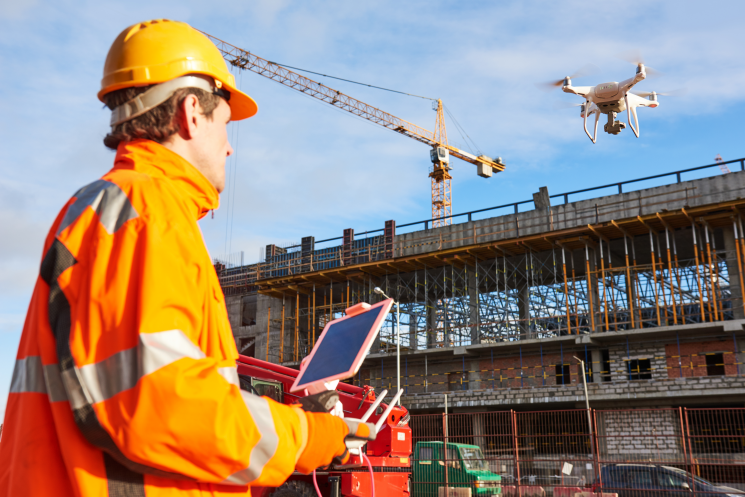
Technology has had a profound impact on the construction industry. From design and scheduling to supply chain logistics, it has revolutionized every phase of the build process. Notably, construction safety is no exception. According to the U.S. Bureau of Labor Statistics, construction consistently accounts for roughly 1 in 5 workplace fatalities annually. As a result, this makes it one of the most hazardous industries in the world.
OSHA’s Fatal Four — falls, struck-by incidents, electrocution, and caught-in/between hazards — remain the leading causes of construction worker deaths. In fact, together they account for more than half of all construction fatalities each year. However, technology has enabled more efficient safety training, digital audits and inspections, real-time incident reporting, enhanced personal protective equipment, and smarter site monitoring. Consequently, all of these contribute to safer job sites. But having technology available is only one part of the equation.
Today we’ll look at how technology has changed construction safety. Moreover, we’ll explore how you can leverage it to create a safer, more compliant work environment. As always, we’ll hear from safety experts and share their top insights.
Use Technology To Collect and Report Safety Information
Steve Mellard, National Safety Director at Anning Johnson, emphasizes a central pillar of a successful construction safety program. Specifically, organizations must systematically collect safety data and share it with all stakeholders — from field personnel to senior leadership. In addition, technology has made this vastly more efficient and accurate than paper-based systems ever could.
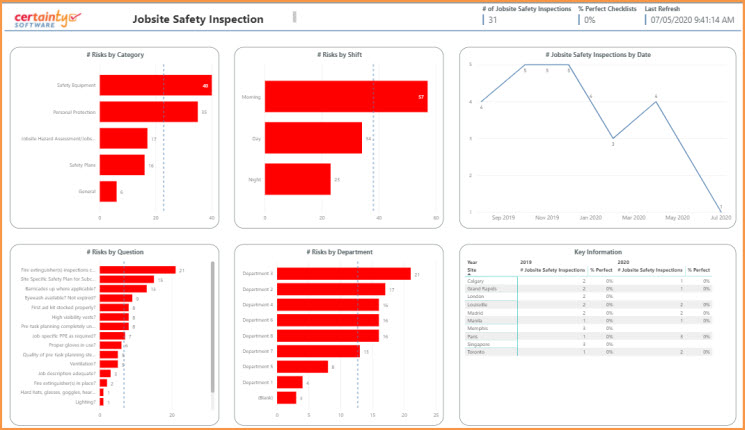
The ability to analyze overall trends across districts, divisions, and trades is a significant competitive and safety advantage. Similarly, generating custom compliance reports on demand provides valuable insight. Furthermore, sharing real-time safety metrics with management, on-site supervision, and field crews creates shared accountability. As a result, this can measurably improve inspection completion rates, near-miss reporting, and corrective action closure times.
Under OSHA’s Injury Tracking Application (ITA) requirements and ISO 45001 Clause 9.1, organizations must monitor, measure, and analyze safety performance data. Therefore, digital platforms make this far more defensible and audit-ready. [You can learn about how Certainty Software helps organizations collect and share data here!]
Use Technology To Work in Real-Time
Traditional safety reporting relied on paper-based inspection forms, manual data entry, and multi-day delays before hazards were escalated and corrected. In contrast, digital safety technology enables real-time reporting, instant hazard notifications, and live safety dashboards accessible from any device on the job site. Consequently, this accelerates the corrective action cycle dramatically. For example, what might have been a week-long paper trail now becomes same-day resolution.
Most importantly, real-time visibility is especially critical for construction sites operating under tight OSHA inspection schedules. Similarly, it is equally important when managing multiple concurrent trades, where unresolved hazards can compound quickly.
Use Technology To Gather Offline Data As Well
Desire’e Ropel, Safety Manager at Hermanson, points out that while technology dramatically streamlines safety processes, not every worker will have continuous access to it. For example, some workers will still rely on paper forms. Furthermore, some remote or underground work environments will have limited or no internet or cellular connectivity.
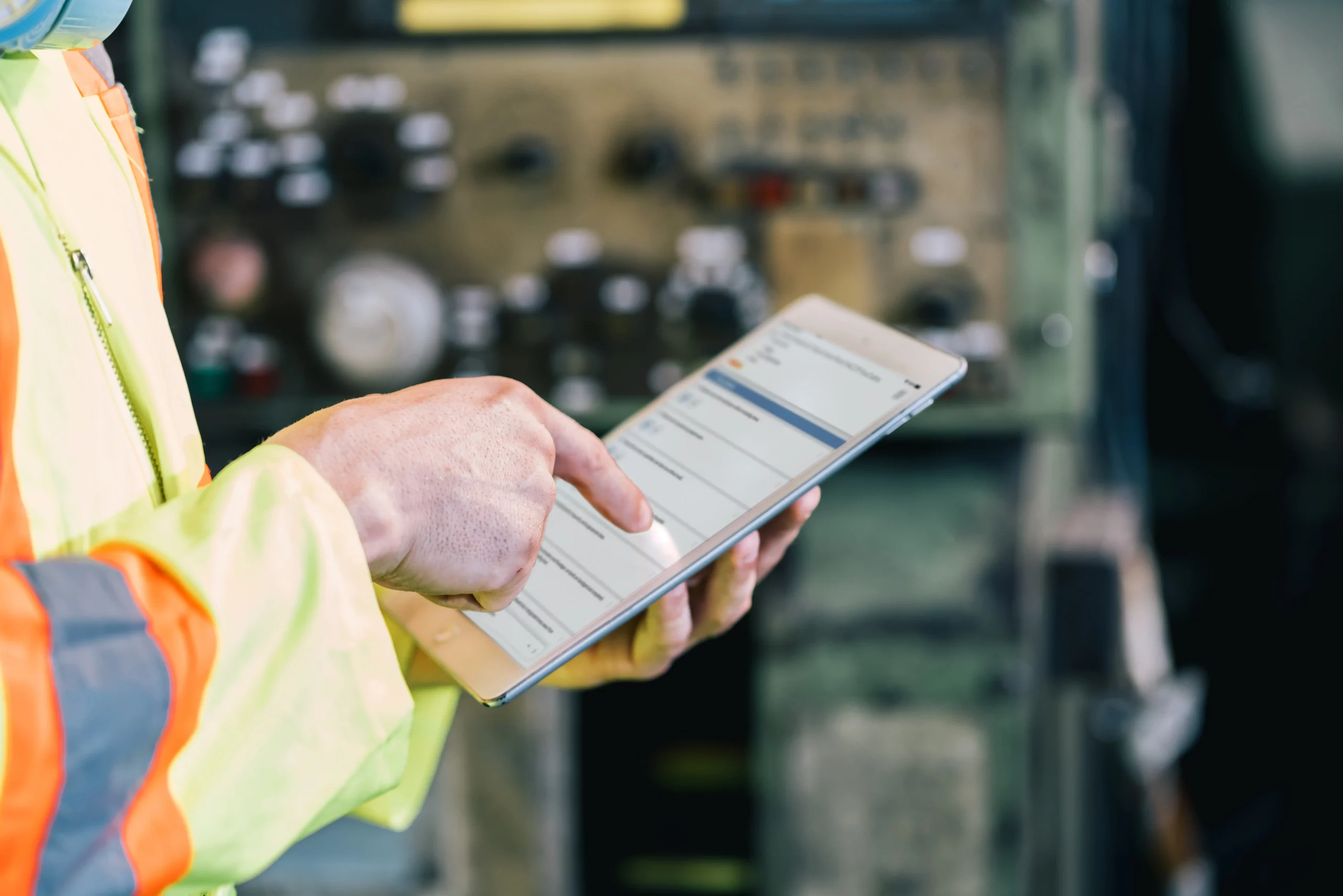
A robust construction safety technology solution must account for this reality. Specifically, it should support offline data capture that automatically syncs when connectivity is restored. As a result, this hybrid approach ensures that no inspection, observation, or incident report falls through the cracks. Ultimately, it works regardless of where on the site work is taking place.
When implementing technology in your safety management program, select a solution purpose-built for the demands of the construction industry. In particular, it should work both online and offline, scale across multiple sites, and integrate with your existing reporting and compliance workflows.
Safety Technology Advancements of the Future
The construction industry has made remarkable strides in safety technology. Moreover, the pace of innovation continues to accelerate. Here is what EHS professionals can expect in the coming years:
- Wider deployment of drones for site surveying, aerial inspection, progress monitoring, and worker safety oversight in hard-to-access areas
- Virtual reality (VR) and augmented reality (AR) platforms that immerse workers in high-fidelity safety training simulations — including fall protection, confined space entry, and LOTO procedures — before they encounter real hazards
- Wearable technology and smart PPE that continuously monitor vital signs, body temperature, fatigue indicators, and environmental exposures, alerting supervisors to at-risk workers in real time
- Autonomous and remotely operated heavy equipment that physically separates operators from the most dangerous ground-level hazards, reducing struck-by and caught-in fatality risks
- IoT environmental sensors that continuously monitor noise levels, dust concentrations, chemical exposure, and temperature extremes — triggering automatic alerts when OSHA permissible exposure limits (PELs) are approached
- AI-powered predictive analytics that identify leading-indicator patterns in inspection and observation data to forecast where incidents are most likely to occur before they happen
30+ Audit and inspection checklists free for download.
In this series, we’ve explored the full spectrum of construction safety management. Notably, we’ve covered everything from leadership and employee buy-in to the transformative role of technology. Ultimately, creating a genuinely safe construction work environment requires integrating all three elements: strong safety leadership, an engaged workforce, and technology that makes data collection, reporting, and corrective action as frictionless as possible. Do you have questions about building a more effective, technology-enabled safety management program? Certainty Software can help.
More than 100,000 professionals use Certainty Software to complete over 2,000,000 audits and inspections annually. In fact, it is a flexible, powerful, and trusted enterprise-level audit and inspection management platform. Additionally, some of the world’s largest construction companies trust Certainty to help manage workplace safety, OSHA compliance, and ISO 45001 certification readiness. Find out more and start a free trial today!
In the next blog in our series on construction safety, we’ll discuss the most significant construction safety issues to watch over the next five years.
Stay tuned!
Other blogs in this series you may be interested in:
4 Considerations When Improving Safety In The Construction Industry
What Must A Construction Safety Program Include To Be Effective?
How Leadership Style Affects Safety Performance in Construction
Boosting Employee Buy-In To Your Safety Culture and Construction Safety Program
7 Significant Safety Issues Facing The Construction Industry
#1 Safety Issue In Construction As Told By Top Safety Management Industry Leaders
Mobile reporting tools show how Technology Change Construction Safety by reducing delays between finding hazards and correcting them. Connected data helps Technology Change Construction Safety outcomes by giving managers a clearer view of repeat risks across projects. When adoption is consistent, Technology Change Construction Safety efforts become easier to measure and improve.
Frequently Asked Questions (FAQs)
How Does Technology Change Construction Safety on Site?
Technology has improved construction safety by enabling real-time hazard reporting, digital safety inspections and audits, automated corrective action tracking, and data-driven leading-indicator analysis. In other words, these capabilities replace slow, error-prone paper processes. As a result, they give EHS managers the visibility needed to prevent incidents rather than just react to them.
What OSHA requirements does construction safety software help address?
Construction safety software helps organizations meet a range of OSHA requirements. For example, these include 29 CFR 1926 (Construction Standards), OSHA’s Injury and Illness Recordkeeping Rule (29 CFR 1904), and the electronic reporting requirements of the Injury Tracking Application (ITA). Additionally, digital platforms support documentation for OSHA inspections. Moreover, they provide instant access to inspection records, corrective action logs, and safety training histories.
What Is the Best Way to Use Technology Change Construction Safety Results?
The most effective implementation starts with selecting a platform built for construction-specific workflows. Specifically, it should support offline data capture, mobile inspection forms, and multi-site reporting. Similarly, securing buy-in from site supervisors and field workers early is also critical. Furthermore, providing adequate training and setting measurable participation targets — such as weekly inspection completion rates — are essential to successful adoption.