Summary: A Food Safety Management System (FSMS) provides the structured framework that food production organizations need to ensure products are safe, compliant, and produced to consistent quality standards under FDA FSMA, ISO 22000, and FSSC 22000 requirements. For QA Managers and Quality Engineers, building a robust FSMS directly reduces non-conformance rates, improves audit completion metrics, and establishes the preventive controls needed to protect public health while lowering cost of poor quality.
A Food Safety Management System (FSMS) is a documented, systematic framework. It defines the policies, procedures, and controls a food business uses to keep its products safe. Specifically, it ensures food meets required quality standards and complies with applicable regulations.
According to the CDC, foodborne illnesses affect an estimated 48 million Americans every year. As a result, these illnesses cause 128,000 hospitalizations and 3,000 deaths annually. Moreover, more than 250 known foodborne diseases stem from bacteria, viruses, parasites, toxins, and chemical contaminants. For this reason, establishing a robust FSMS is not optional. It is a regulatory and operational necessity for any food business that wants to manage risk, protect consumers, and maintain compliance.
Not sure where to get started building your own FSMS? We’ve got you covered.
What is a Food Safety Management System?
As noted by Science Direct, an FSMS “is a set of written procedures which define the range of actions taken by the food business operator to ensure that the food produced is safe to eat, of the required quality, and legally compliant.” In practice, an effective FSMS integrates several critical elements. These include hazard analysis, preventive controls, traceability, and verification activities. Additionally, it incorporates corrective action processes into a cohesive system. Organizations can then implement this system consistently across all food production and handling activities.
There is no single universal FSMS framework. However, these systems take shape from both domestic and international regulatory requirements. In the United States, the FDA’s Food Safety Modernization Act (FSMA) establishes science-based requirements. These cover produce safety, preventive controls for human food, food transportation, and third-party accreditation. Most importantly, FSMA shifts the focus from reactive response to proactive prevention.
Globally, ISO 22000 provides a harmonized standard for food safety management. It helps companies identify hazards and implement effective controls. Furthermore, it facilitates the safe movement of food products across international supply chains.

30+ Audit and inspection checklists free for download.
In practice, a well-designed FSMS leverages multiple regulatory frameworks. This helps food manufacturers build a plan that systematically reduces food safety hazards. It also improves food hygiene without disrupting operations. To that end, an FSMS plan must be reliable, repeatable, and thoroughly documented. Above all, it must remain accessible to all staff across the organization — from the production floor to senior management.
What are the Key Components of FSMS?
There is no one-size-fits-all approach to an FSMS. However, four components are universally recognized as foundational:
- Prerequisite practices
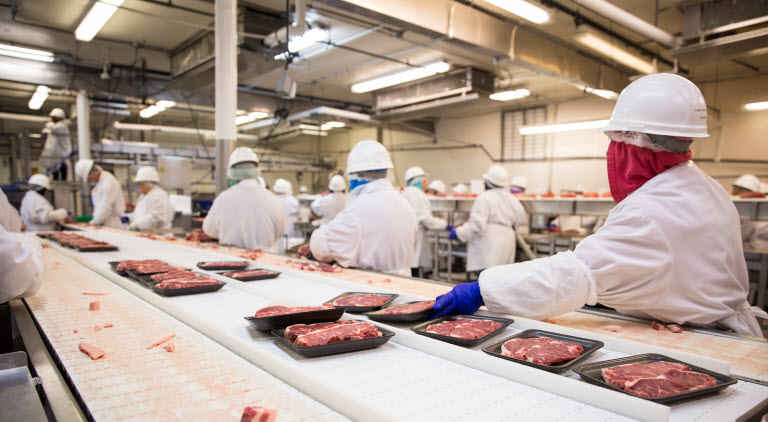
An effective Food Safety Management System food safety policy begins with prerequisite programs (PRPs). These are baseline operational conditions and activities necessary to maintain a hygienic environment for food production. Specifically, they include Good Agricultural Practices (GAP), Good Hygienic Practices (GHP), and Good Manufacturing Practices (GMP) as defined under ISO 22000 and the Codex Alimentarius. Establishing these practices creates a culture of food safety compliance. As a result, they serve as the operational foundation for every other element of your FSMS.
- Comprehensive management
Regardless of your specific FSMS framework, comprehensive and continuous management is critical for long-term effectiveness. This means ensuring active staff engagement at every level. It also means setting continual improvement as an organizational goal. In addition, all corrective actions must be fully documented with assigned owners and defined closure timelines.
Comprehensive management also establishes standard operating procedures (SOPs) and consistent safety practices across your organization. Consequently, this creates a reliable defense against specific food safety risk factors — from contamination events to allergen cross-contact.
- Ongoing communication
Food safety does not begin or end at your facility’s walls. An effective FSMS requires open, documented lines of communication with suppliers upstream. Similarly, it requires communication with customers or distributors downstream in your supply chain. This ensures that food safety standards function as a continuum across the entire food supply chain rather than in isolation.
Furthermore, ISO 22000 explicitly requires both internal and external communication as part of a compliant FSMS. The standard recognizes that supply chain transparency is essential. In particular, it helps manage hazards that originate outside your immediate operations.
- Hazard Analysis and Critical Control Points
HACCP (Hazard Analysis and Critical Control Points) principles are the analytical backbone of any effective FSMS. Notably, HACCP helps food safety teams identify critical control points (CCPs) in their production process. These are specific steps where a preventive control can eliminate or reduce a food safety hazard to an acceptable level.
Establishing critical limits, monitoring procedures, and corrective actions at each CCP creates a defensible, auditable food safety system. Moreover, verification activities and record-keeping strengthen this system further. Use a structured Hazard Analysis and Critical Control Point (HACCP) Food Safety Checklist to ensure your hazard analysis is systematic and complete.
Why Does Effective FSMS Matter to Your Business?
An effective Food Safety Management System delivers dual value. It protects public health while simultaneously reducing operational, financial, and reputational risks. By establishing a reliable, repeatable process for food safety management, you ensure that all staff work from the same documented procedures. Additionally, deviations are quickly identified and corrected. Your food production lines also receive continuous monitoring for both emerging hazards and improvement opportunities.
As a result, this systematic approach allows food businesses to scale safely. They can expand production or enter new markets without compromising food safety standards or inspection compliance rates.
An FSMS is also essential for regulatory audit readiness. When local health authorities, the FDA, or international certification bodies conduct an audit, your documented compliance makes the difference. Specifically, demonstrating compliance with FSMA preventive controls, ISO 22000 requirements, or HACCP plan implementation separates a straightforward audit from a disruptive deep dive.
Therefore, a well-maintained FSMS with complete documentation and a robust corrective action history simplifies compliance demonstrations. Ultimately, it helps maintain the certifications your business needs to operate and compete in regulated markets.
Frequently Asked Questions (FAQs)
What is the difference between FSMS and HACCP?
HACCP (Hazard Analysis and Critical Control Points) is a specific methodology for identifying and controlling food safety hazards — it is one component within a broader FSMS. An FSMS is the overarching management framework that incorporates HACCP alongside prerequisite programs, management responsibilities, communication protocols, and continual improvement processes. ISO 22000:2018 integrates HACCP principles into a full management system standard that aligns with other ISO frameworks such as ISO 9001 and ISO 14001.
What regulations govern food safety management systems?
Food safety management systems are governed by a combination of national and international regulations and standards. In the United States, the primary regulatory framework is the FDA Food Safety Modernization Act (FSMA). Internationally, ISO 22000 and the Codex Alimentarius provide globally recognized FSMS standards. Additional standards such as the British Retail Consortium (BRC) Global Standard for Food Safety, Safe Quality Food (SQF) certification, and the International Featured Standards (IFS) Food may also apply depending on your sector and customer requirements.
How does software support food safety management?
Food safety management software centralizes inspection checklists, HACCP documentation, corrective action tracking, supplier audits, and compliance reporting in a single digital platform. This eliminates the inefficiency and audit risk associated with paper-based systems, ensures that all food safety records are accurate and retrievable at any time, and provides real-time visibility into inspection completion rates and outstanding corrective actions across all facilities.
You may also be interested in:
Food Safety Handling: Taking a Bite Out of Operational Risk
Essential Ingredients in Food Safety: Making the Most of GMP and HACCP