Summary: Workplace safety becomes credible only when leadership treats it as a constant organizational value rather than a slogan that competes with production and cost targets. Safety-first cultures show up in agendas, metrics, staffing, and daily decisions, not just posters or policy language. For EHS managers, the real test is whether safety performance receives the same visibility, urgency, and accountability as financial performance.
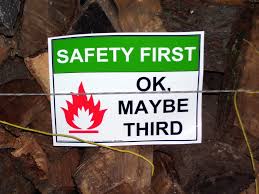
Do we really put safety first? In most workplaces, the honest answer is: not consistently. Safety slogans cover the walls and induction programs repeat the message. Moreover, every EHS policy document declares safety the number one priority. However, actual behavior at every level often tells a different story.
The research is clear: safety cannot function as a shifting priority that competes with production schedules and cost targets. Under ISO 45001 and OSHA’s General Duty Clause, safety is a non-negotiable obligation. Therefore, turning that obligation into genuine organizational behavior requires more than signage. Specifically, it requires measurement systems, leadership commitment, and a culture where safety performance is as visible as financial performance.
Where Safety Falls on Leadership Agendas
The gap between safety rhetoric and safety reality often starts at the top. For example, consider where safety appears on the monthly board agenda. In many organizations, it sits at the bottom of the page. As a result, safety gets discussed last, after every financial and operational item has taken up the room’s time.
If safety is genuinely the top priority, it should be the first topic on every leadership agenda. Similarly, organizations should give safety the same planning depth as production and operations. In contrast, most organizations spend hours in production planning meetings but allocate only minutes to toolbox talks or JSA/JHA reviews.
This imbalance sends a powerful and unambiguous message to the entire workforce about where safety actually ranks. In fact, the absence of visible leadership action on safety is a far stronger signal than any poster in the break room. Consequently, workers learn to read organizational behavior rather than organizational slogans.
Why Good People Still Make Unsafe Choices
A critical question for EHS managers and safety directors is this: why do people who genuinely care about safety still behave in ways that undermine it? A large part of the answer lies in how organizations measure safety. Specifically, lagging indicators — Total Recordable Incident Rate (TRIR), Lost Time Injury Rate, and similar metrics — dominate most organizations.
However, these indicators reveal how many people suffered injuries and how severely. They provide almost no information about how effectively the organization prevents accidents. This limitation is not a matter of opinion. In fact, it is a statistical reality.
Statisticians refer to this as “natural variation.” For instance, if the number of unsafe conditions in a given period stayed constant, an organization could still see very different incident counts in the first and second halves of the year. Therefore, incident rates can improve or deteriorate with no corresponding change in the actual safety of the work environment.
As a result, businesses can operate in genuinely hazardous conditions for extended periods without recording a reportable incident. This creates false confidence and reduces the urgency managers feel to act on safety. Notably, this dynamic almost certainly contributed to the systemic failures cited by the Maritime Union of Australia and similar regulatory bodies.
The Measurement Gap Between Safety and Production
Productivity and quality, by contrast, receive much more frequent and sensitive measurement. Production output gets tracked daily or hourly. Quality defect rates receive real-time review. Furthermore, these measures are immediate, visible, and directly linked to management behavior.
Meanwhile, safety measured only through annual or quarterly incident rates simply cannot compete for management attention. It is structurally disadvantaged as a priority — not because leaders don’t care. Instead, the measurement system does not create the same urgency or feedback loop that operational metrics do.
How to Make Safety a True Priority
Making safety a genuine organizational priority requires a fundamental shift in measurement. Lagging indicators remain important for OSHA recordkeeping compliance. However, organizations must supplement them with leading indicators that track daily and weekly prevention activities.
For example, a robust behavior-based safety (BBS) program generates continuous records of safety observations and unsafe act corrections. Additionally, it tracks near-miss reports, inspection completion rates, and corrective action closure times. These are the metrics that tell EHS managers whether the safety system is functioning — not just whether it has produced a reportable outcome yet.
When organizations measure safety with the same frequency and granularity as production, it can achieve equal standing as a business priority. Specifically, daily safety inspection completion rates, real-time corrective action dashboards, and structured observation programs create the visibility that lagging indicators alone cannot provide. Most importantly, these tools create the accountability needed to sustain a genuine safety-first culture.
To learn more about Certainty Software, click here.
Frequently Asked Questions (FAQs)
Why do organizations struggle to make safety a genuine priority?
Organizations struggle to prioritize safety for three interconnected reasons: measurement gaps, competing pressures, and reinforcement failures. When organizations measure safety only through lagging indicators like incident rates, managers receive infrequent and unreliable feedback. Consequently, safety loses ground to metrics — like production output or cost performance — that provide daily, visible feedback. Therefore, structural fixes include measuring leading indicators such as inspection rates and observation completions. Additionally, organizations should place safety on leadership agendas ahead of operational items. Most importantly, they should link management accountability to proactive safety behaviors rather than just incident outcomes.
What is the difference between lagging and leading safety indicators?
Lagging safety indicators — such as TRIR, Lost Time Injury Frequency Rate (LTIFR), and OSHA recordable incident counts — measure outcomes after harm has occurred. However, they are poor drivers of proactive safety behavior. In contrast, leading indicators measure the activities and conditions that prevent incidents. For example, these include safety inspection completion rates, corrective action closure times, and near-miss submission rates. Furthermore, ISO 45001 and modern EHS best practice recommend using a balanced set of both indicator types to get a complete picture of safety performance.
How can safety inspection software help make safety a measurable priority?
Safety inspection software like Certainty Software makes safety measurable at the same frequency as operational KPIs. Specifically, real-time dashboards show inspection completion rates by site and team. Additionally, they flag overdue corrective actions and track near-miss trends over time. As a result, EHS managers and senior leaders get the same kind of immediate, actionable feedback on safety that operations managers have always had on production. Ultimately, this makes it structurally possible to treat safety as an equal priority rather than a periodic reporting exercise.