Summary: A safety observation report is a structured record of unsafe conditions, unsafe behaviors, or near misses that allows organizations to start corrective action before an injury occurs. For EHS managers, the value of a safety observation report lies in making frontline risk visible, measurable, and actionable at scale, which strengthens OSHA compliance, supports ISO 45001 systems, and helps prevent both incidents and repeat hazards.
A safety observation report is a structured document used by safety officers and EHS managers. It can take physical or digital form. Organizations use it to identify unsafe conditions and behaviors, record near-miss events, and start corrective action before workers get injured. Effective safety observation reporting is a foundational requirement of OSHA’s injury and illness prevention framework. Additionally, it serves as a core element of ISO 45001:2018 occupational health and safety management systems.
However, many organizations struggle to implement safety observation programs that deliver consistent, actionable results. According to the U.S. Bureau of Labor Statistics, employers reported approximately 2.6 million nonfatal workplace injuries and illnesses in 2023. Furthermore, OSHA first-instance violations now carry penalties of up to $16,131 per citation. Willful or repeated violations can reach $161,323. As a result, a well-executed safety observation program is the first line of defense against both worker harm and regulatory exposure. Building one at scale, however, requires overcoming five common, persistent challenges.
In this post, we tackle those five challenges head-on. Moreover, we offer practical, actionable solutions to help your organization build a safety observation program that actually works.
What is a Safety Observation Report?
A safety observation report is a physical or digital document that safety officers and EHS professionals use. Its purpose is to identify potential risks in the work environment and start corrective action before staff gets injured. These reports typically combine structured checklists for initial hazard observations with open-ended documentation fields. Specifically, they allow safety teams to describe concerns in detail, including photographic evidence, location data, and worker behavior notes.
Furthermore, safety observation reports support Behavior-Based Safety (BBS) programs. They capture both safe and at-risk behaviors. In turn, this provides the data safety leaders need to recognize positive practices. It also helps them address unsafe behaviors through coaching and corrective action rather than reactive discipline.
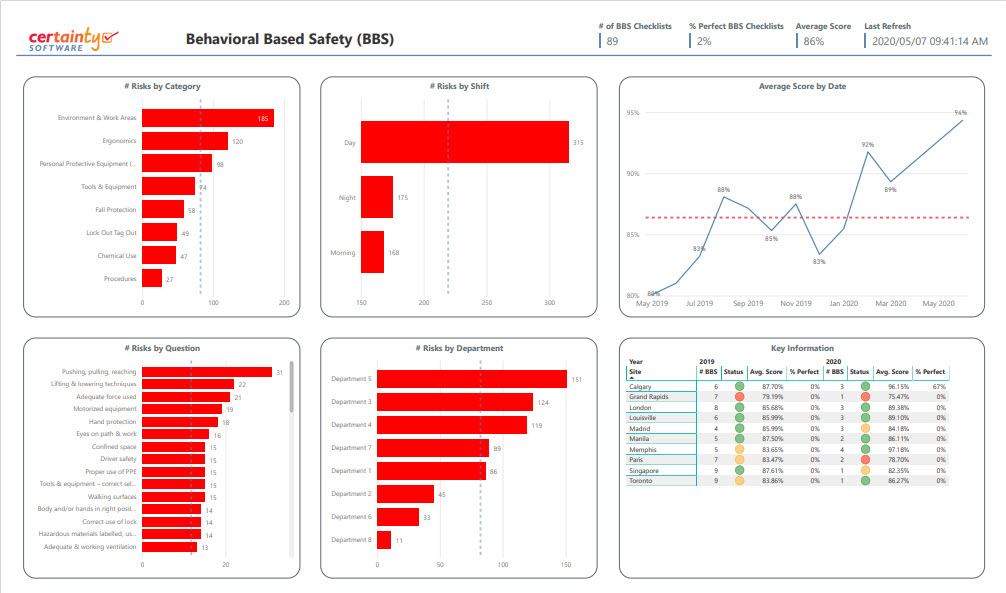
Regardless of format — paper form, mobile app, or digital platform — consistency is non-negotiable. Every team member must have access to the most current version of the report. They also need a shared understanding of what to document. Most importantly, they need a clear protocol for what action to take following each observation. Without this consistency, safety data becomes fragmented. Consequently, corrective actions stall, and the program loses credibility with both workers and leadership.
Why Use a Safety Observation Report?
Using a structured safety observation report delivers multiple operational, cultural, and compliance benefits for organizations across industries:
Enhanced compliance
Complete and accurate safety observation documentation supports compliance with OSHA’s recordkeeping requirements (29 CFR Part 1904). In addition, it demonstrates due diligence in hazard identification and correction. OSHA is the primary regulatory obligation for most U.S. employers. However, companies in specific sectors may also need to meet safety standards from other federal agencies. For example, the Federal Aviation Administration, the Department of Energy, and the Mine Safety and Health Administration (MSHA) all issue relevant standards. Moreover, ISO 45001:2018 requires documented hazard identification and risk assessment as part of a certified occupational health and safety management system.
Improved staff morale
According to the CDC, workplace health and safety (EHS) programs that address the “needs, risks and interests of employees can improve the retention of current workers and create long-term employee loyalty to the organization.” When workers see that safety observations lead to visible improvements, they gain confidence. For instance, they notice hazards corrected, equipment replaced, and procedures updated. This trust is a key driver of both employee retention and voluntary participation in safety programs.
Consequently, organizations with strong safety cultures consistently outperform their peers. Specifically, they achieve better Total Recordable Incident Rate (TRIR) and Days Away, Restricted, or Transferred (DART) metrics.
Reduced operational risk
Safer worksites mean reduced operational and financial risk. Comprehensive safety observation reports help EHS teams identify workplace hazards and at-risk behaviors before they cause incidents. For example, safety observations might reveal that workers in a specific production zone consistently bypass machine guarding procedures. In that case, team leaders can intervene through targeted retraining, engineering controls, or process redesign. This prevents a serious injury, workers’ compensation claim, or OSHA citation. Ultimately, early identification and correction of hazards is always less costly than incident response.
Increased performance
Proactively documenting and addressing unsafe behaviors, equipment deficiencies, or near-miss events drives measurable performance improvements over time. Correcting identified issues requires some upfront investment. For instance, organizations may need to retrain staff, repair or replace equipment, and update procedures. However, the long-term benefits are substantial. These include reduced incident rates, lower insurance costs, improved inspection completion rates, and a safer, more confident workforce.
Additionally, organizations that track safety observation data over time can identify trends. They can also measure the effectiveness of safety interventions. As a result, they can demonstrate continuous improvement to regulators, insurers, and customers.
Solving the Top Five Safety Observation Report Challenges
Safety observation reports are essential tools for compliance, workforce protection, and operational improvement. However, organizations consistently encounter the same five challenges when building and scaling these programs. Here is how to solve each one:
1) Targeting Key Hazards
Every facility presents a broad landscape of potential hazards. Safety teams cannot observe everything simultaneously. Therefore, the challenge is prioritizing observations so that limited safety resources focus on the highest-risk activities, locations, and behaviors. Without a structured approach to hazard prioritization, teams can feel overwhelmed. Consequently, they end up conducting unfocused observations that miss the most critical risk areas.
To solve this challenge, anchor your observation program to a formal Job Hazard Analysis (JHA) or Job Safety Analysis (JSA) process. First, map your facility’s primary operational areas. Then identify the tasks in each zone, determine required PPE and safety procedures, and use this baseline to prioritize where and what to observe.
Moreover, mobile inspection technology makes this significantly more manageable. Supervisors can complete structured observation forms on a smartphone or tablet in real time. They can also attach photos or video evidence and immediately assign corrective actions to responsible parties. In addition, all data syncs to a central dashboard. This gives EHS managers an accurate, up-to-the-minute picture of where hazards exist across the site.

30+ Audit and inspection checklists free for download.
2) Taking Immediate Action
Identifying an unsafe condition is only the first step. The value of a safety observation lies in the speed and quality of the response it triggers. Specifically, organizations must ensure that corrective actions are timely, appropriately prioritized, assigned to the right person, and tracked to completion. Organizations that rely on paper-based or spreadsheet-driven safety programs frequently experience significant delays between observation and corrective action. As a result, this creates windows of ongoing risk exposure.
To close this gap, establish clear protocols that categorize observations by severity. For instance, distinguish between conditions that require immediate shutdown versus those you can schedule for correction within 24, 48, or 72 hours. Furthermore, digital safety platforms can automatically route observation findings to the appropriate corrective action owner, set deadline alerts, and escalate overdue items. This dramatically reduces action closure times. Additionally, tracking corrective action completion rates and average closure time as KPIs gives EHS leaders visibility into program performance.
3) Integrating Human Behavior
No matter how well-engineered a workplace is, human behavior remains an uncontrollable variable. Research consistently shows that behavioral factors contribute to the majority of workplace incidents. Therefore, building a people-centered safety observation program that influences behavior is the most effective long-term strategy.
Not sure how to get your behavioral safety program off the ground? Lead with positive reinforcement. Recognize and celebrate workers who consistently demonstrate safe behaviors. In addition, use safety observations as coaching opportunities rather than enforcement tools. Similarly, involve frontline workers in identifying hazards and developing solutions. When workers see that observations lead to recognition and improvement — not blame — program participation and buy-in increase significantly.
4) Tracking Critical Concerns
As organizations grow in headcount, site locations, and operational complexity, managing the volume of safety observations manually becomes increasingly difficult. Critical findings can get buried in spreadsheets or email chains. Meanwhile, patterns across sites go unrecognized. Furthermore, high-priority corrective actions stall without visibility. This data management challenge is one of the most common reasons safety observation programs fail to deliver on their promise.
To address this, organizations managing safety at scale should use software platforms that automatically collect, categorize, and analyze safety observation data. Specifically, these platforms handle near-miss reports, corrective action status, PPE compliance observations, and recurring hazard patterns. They then surface trends through real-time dashboards and scheduled reports. As a result, this transforms raw observation data into actionable safety intelligence. EHS managers can then direct resources where the risk is highest and demonstrate continuous improvement to leadership and regulators.
5) Conducting Regular Assessments
A single safety inspection can catch acute hazards. However, sustainable safety performance requires regular, scheduled assessments. These verify compliance over time, track the effectiveness of corrective actions, and identify newly emerging risks as operations evolve. Many organizations conduct initial assessments in response to an incident or regulatory pressure. They then allow the frequency to lapse once immediate concerns are addressed. This reactive pattern leaves organizations perpetually behind the curve.
The solution is to embed regularity into the program architecture. Build observation schedules directly into your safety management calendar. Specifically, set frequency by site, department, shift, and observation type. Furthermore, use digital scheduling tools to generate automated reminders, track completion rates against targets, and flag overdue assessments for supervisor follow-up. Organizations that establish a predictable rhythm of safety assessments build the safety-first culture that ISO 45001 requires and OSHA rewards. In other words, they identify and resolve hazards continuously rather than sporadically.
Safety observation reports are far more than a compliance checkbox. They are a strategic tool for continuously improving your safety management program, reducing incident rates, boosting employee engagement, and demonstrating regulatory readiness. Not sure where to start? Gain compliance confidence with Certainty Software. Let’s talk.
Readers may also be interested in:
Behavior-Based Safety Observations
Where Do BBS Programs Typically Fail?
What Impact Will Technology Have on Your Behavior Based Safety Program?
Frequently Asked Questions (FAQs)
What should be included in a safety observation report?
A comprehensive safety observation report should include several key elements. These are the date, time, and location of the observation, along with the name and role of the observer. Additionally, it should contain a description of the observed condition or behavior, relevant photographs, and the hazard category and severity rating. The report must also list the corrective action required, the assigned responsible party, the target completion date, and verification of corrective action closure. Standardizing these fields across all observation forms ensures data consistency and makes trend analysis meaningful.
How is a safety observation different from an incident report?
A safety observation report documents hazards, unsafe behaviors, or near-miss events before an injury or incident occurs. In other words, it is a proactive, preventive tool. In contrast, an incident report documents the circumstances, causes, and consequences of an injury, illness, or property damage event that already happened. Both are important components of a complete safety management program. Specifically, safety observations feed hazard prevention, while incident reports drive root-cause analysis and corrective action to prevent recurrence.
How does safety observation software improve program outcomes?
Digital safety observation platforms like Certainty enable organizations to standardize observation forms across all sites. They also allow teams to capture observations on mobile devices in the field, including photos and GPS location. Moreover, these platforms automatically assign corrective actions and track them to closure. They generate real-time compliance dashboards and produce trend analysis reports that identify recurring hazards. As a result, this eliminates the delays, data gaps, and visibility limitations of paper-based programs. Ultimately, it provides EHS managers with the actionable intelligence they need to drive continuous safety improvement.