Summary: Multilingual Enterprise Inspection Software is essential when inspection and compliance workflows span teams that speak different languages. Giving workers and managers forms, instructions, and corrective actions in their preferred language improves adoption, reduces misunderstandings, and strengthens reporting quality across sites.
We’ve been involved in the design, development, and implementation of enterprise-level software for over 20 years, which is why our team of experts put together this 10-part series on evaluating enterprise-level software. We cover topics ranging from security and data collection to reporting requirements, implementation resources, and pricing models — to ensure your next enterprise software deployment is a success. You can also download the entire Evaluating Enterprise-level Software whitepaper here.
____________
Last week we looked at the importance of discovering whether the new enterprise software you’re considering meets your reporting requirements. Does the solution you’re evaluating meet those requirements? Now let’s explore the language requirements of your organization — and why multilingual capability is a non-negotiable feature for global and multi-site enterprises.
Why Multilingual Enterprise Inspection Software Matters
Does my organization need multilingual enterprise software? If your company operates in more than one country, employs workers who speak different languages, or conducts audits and inspections across diverse regional teams, the answer is almost certainly yes. Multilingual capability is not simply a feature — it is a foundational requirement for ensuring that every employee can use the system effectively, that data collected in the field is accurate, and that your organization can demonstrate compliance with local regulatory requirements regardless of language.
Officially — or unofficially — most companies have a designated corporate operating language used for company-wide communication and reporting. However, that doesn’t mean the entire organization operates in a single language. For organizations using enterprise safety inspection and audit software like Certainty Software, this has direct implications: if workers cannot read, complete, or understand an inspection form in their own language, data quality suffers, compliance gaps emerge, and the value of the entire safety management program is undermined.

In practice, many organizations — large and small — operate across numerous countries, cultures, and languages. The most common business languages globally include English, Mandarin Chinese, Spanish, Arabic, French, German, Portuguese, and Japanese, among others. Large enterprises have been embracing the multilingual imperative in their technology stacks for years. As an example, Amazon has made multilingual operation a priority even in consumer products, launching multilingual mode for Alexa in the US, Canadian, and Indian markets. For enterprise EHS software, the stakes are even higher: an inspection completed in the wrong language — or not completed at all because of a language barrier — represents a genuine compliance and safety risk.
So, when evaluating an enterprise software solution that will be used by employees across your company, verify that it works for all users regardless of their language. A multilingual user interface is the minimum requirement — but it is not sufficient on its own.
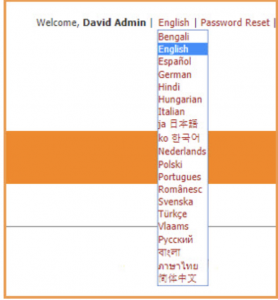
Make sure the solution is truly multilingual — meaning it allows your team to use the platform end-to-end in their own language. For safety inspection and audit software, this means workers in the field can complete inspections, submit observations, and report near misses in their native language, while safety directors and EHS managers can view, analyze, and report on that data in the corporate operating language. This is particularly important for organizations managing OSHA compliance, ISO 45001 certification, or other regulatory obligations across international operations, where language barriers in safety documentation can create audit vulnerabilities.
When evaluating an enterprise-level solution for your business, ask yourself these questions:
- Is the product interface available in multiple languages — including all languages your workforce uses?
- Can you add your own languages and custom translations to the solution to meet organization-specific terminology needs?
- Can data be collected — including audits, safety inspections, and near-miss reports — in any language used by your workforce?
- Can data be reported and analyzed — including audit results, corrective action summaries, and compliance dashboards — in the corporate operating language, regardless of the language in which it was collected?
- Does the vendor have proven experience deploying multilingual deployments for global enterprises in regulated industries?
For organizations in safety-critical industries — construction, manufacturing, oil and gas, healthcare — multilingual capability is not a nice-to-have. It is a requirement for ensuring that every worker, on every site, in every country, can participate fully in the safety management program. When language barriers prevent workers from completing inspections accurately or reporting hazards in real time, the entire safety system is compromised. Selecting an enterprise platform with robust, proven multilingual support is one of the most important decisions an EHS Director or Chief Compliance Officer can make when building a scalable safety program.
Multilingual Enterprise Inspection Software helps frontline teams complete forms accurately without relying on informal translation. For global operations, Multilingual Enterprise Inspection Software supports more consistent audits and corrective action tracking. Choosing Multilingual Enterprise Inspection Software can improve user adoption across facilities in different regions.
Frequently Asked Questions (FAQs)
Why Does Multilingual Enterprise Inspection Software Improve Compliance?
Enterprise safety software must be multilingual because safety inspection and compliance processes are only effective when every worker can participate fully in their own language. If workers cannot read, understand, or complete safety inspections in their native language, data quality degrades, hazards go unreported, and the organization’s ability to demonstrate regulatory compliance — whether to OSHA, ISO 45001 auditors, or other bodies — is weakened. For global and multi-site organizations, multilingual support is a foundational requirement, not an optional feature.
What should organizations look for in multilingual enterprise software?
Organizations should look for enterprise software that offers a multilingual user interface, supports data collection (inspections, audits, observations) in any language, allows reporting and analysis in the corporate operating language regardless of the input language, and permits the addition of custom languages and translations. Vendors with proven multilingual deployments in regulated industries — and support teams who can assist with implementation across languages — are significantly lower risk than vendors offering only basic interface translation.
How does Certainty Software support multilingual safety inspections?
Certainty Software is built to support global enterprise deployments with multilingual capability throughout the platform. Users can complete safety inspections, audits, and observations in their local language, while safety directors and EHS managers can view, filter, and report on all data in the organization’s operating language. This enables consistent, standardized safety management across geographically distributed teams — ensuring that language barriers never compromise inspection quality, corrective action follow-up, or regulatory audit readiness.
Next week, we’ll continue our series on evaluating enterprise software by exploring the central administration capabilities of the software.