Summary: A corrective action plan is important because it turns a safety issue or compliance gap into a controlled process for finding root cause, assigning fixes, and preventing recurrence. Instead of relying on temporary workarounds, a corrective action plan creates accountability, documentation, and follow-up that stand up to OSHA inspections and ISO 45001 audits. For EHS managers, it is a practical tool for durable risk reduction and continuous improvement.
A Corrective Action Plan (CAP) is a structured, step-by-step document that identifies the root causes of a nonconformance, safety incident, or compliance gap and defines the specific actions required to eliminate those causes, restore compliance, and prevent recurrence. In the context of workplace safety and EHS management, a well-executed CAP is a core requirement of both OSHA enforcement processes and management system standards such as ISO 45001:2018 — where clause 10.2 mandates organizations to determine root causes, implement timely corrective actions, and evaluate their effectiveness.
Why is a Corrective Action Plan Important?
One of the most critical benefits of a formal Corrective Action Plan is the structure it brings to problem resolution. Rather than implementing reactive, ad hoc fixes that address symptoms while leaving root causes intact, a CAP provides a disciplined reference framework for driving durable improvement while maintaining operational continuity. For EHS managers, a documented CAP also demonstrates regulatory due diligence — showing OSHA inspectors, ISO auditors, and insurance assessors that incidents are being addressed systematically rather than informally. Additional benefits include:
- Discovering improved processes — root cause analysis frequently surfaces inefficiencies and procedural gaps that were invisible before the triggering incident
- Increasing efficiency — eliminating the defective practices or process breakdowns that caused the nonconformance reduces rework, downtime, and resource waste
- Constructing more cost-effective solutions — a structured approach enables cost-benefit analysis before committing to a corrective action, ensuring resources are directed toward the highest-impact fixes
- Identification of ineffective standards — the CAP process routinely reveals that existing procedures, training materials, or equipment specifications are inadequate and require updating
How to Make a Corrective Action Plan?
Whether building from scratch or adapting an existing template, a robust Corrective Action Plan follows a proven six-step process that spans the investigation, planning, implementation, and verification stages — ensuring the response is thorough, accountable, and measurably effective.
Step 1: Build a corrective action program team
Assemble a cross-functional team that brings diverse perspectives to the investigation. Members should include individuals directly involved in the process where the nonconformance occurred — from front-line workers who have firsthand operational knowledge to supervisors, safety officers, and HR representatives. This diversity of viewpoint is essential for accurate root cause analysis: people closest to the work often hold critical context that management-only teams miss. Under ISO 45001, worker participation in corrective action processes is explicitly required, not merely recommended.
Step 2: Identify fault(s) of problem
With a diverse team engaged, collectively document all nonconformances, unsafe conditions, and procedural failures associated with the triggering event. It is essential to capture not only the primary fault — the most visible failure — but also the contributing factors and latent conditions that created the environment in which the problem could occur. Thorough fault identification at this stage directly determines the accuracy of the root cause analysis that follows. Incomplete problem identification is one of the most common reasons corrective actions fail to prevent recurrence.
Step 3: Find the root cause(s)
After documenting all identified faults, the team conducts a formal root cause analysis (RCA) to distinguish between surface-level symptoms and the underlying systemic causes. Common RCA techniques include the 5 Whys, fishbone (Ishikawa) diagrams, and fault tree analysis. Without this analytical step, corrective actions risk addressing only what was visible — leaving the root cause intact and the organization vulnerable to recurrence. For OSHA incident investigations and ISO 45001 nonconformance management, demonstrating a rigorous root cause analysis is a key indicator of program maturity.

30+ Audit and inspection checklists free for download.
Step 4: Determine possible corrective action(s)
With root causes confirmed, the team brainstorms all potential corrective actions without initially filtering by feasibility — broadening the solution space before narrowing it. A cost-benefit analysis then evaluates each option for effectiveness, implementation cost, speed, and sustainability. This step must define not only the primary corrective action but also the follow-up actions and verification steps that will confirm the fix has been successfully implemented and that the root cause has been eliminated.
Examples of corrective and preventative actions (CAPA) in a safety context might include:
- Updating an outdated work procedure or job safety analysis (JSA) to reflect current best practices and regulatory requirements
- Improving alarm systems — including testing protocols and response procedures — to ensure timely detection of hazardous conditions
- Increasing the frequency of scheduled inspections and preventive maintenance to catch equipment deficiencies before they create incidents
- Retraining staff on specific procedures, reinforcing competency verification and documenting completion for regulatory compliance
Step 5: Create a SMART goal
Ensure that the corrective action plan is governed by a clearly defined SMART goal — giving the team a measurable, time-bound target that makes it possible to assess whether the intervention has been effective:
Specific
The CAP goal must clearly answer who is responsible, what action will be taken, when it will be completed, where it applies, and why it addresses the identified root cause. Vague goals lead to inconsistent implementation and disputed closure.
Measurable
Define the specific metrics that will confirm success — for example, zero recurrence of the identified hazard over a 90-day monitoring period, or a documented reduction in the associated inspection finding rate. Measurable outcomes are essential for demonstrating effectiveness to auditors and regulators.
Attainable
Corrective action targets must be realistic given the organization’s current resources, capabilities, and operational constraints. An ambitious goal that cannot be resourced will stall, leaving the root cause unaddressed. Where resource limitations exist, phase the actions accordingly and document the rationale.
Relevant
Every element of the corrective action must trace directly back to the confirmed root cause — not to secondary symptoms, related improvement opportunities, or unconnected organizational priorities. Relevant actions prevent the common failure mode of doing a lot of work that does not actually fix the underlying problem.
Time-bound
Assign a specific due date to every corrective action and each associated follow-up step. Time-bound deadlines create accountability, enable progress tracking, and are required by ISO 45001 clause 10.2 and most OSHA settlement agreements. Use your action closure time as a leading indicator KPI — organizations with faster average closure rates consistently achieve better safety outcomes.
Step 6: Continue to evaluate the progress
Implementing a corrective action does not close the CAP — verification does. Schedule regular progress reviews with the team to confirm that actions have been completed as planned, assess whether the root cause has been effectively eliminated, and determine whether any adjustments to the plan are warranted. If monitoring data indicates the corrective action is not producing the expected result — for example, a recurring inspection finding or a repeat near miss in the same process area — return to Step 2 and conduct a deeper investigation. The ability to recognize and respond to ineffective corrective actions is itself a hallmark of a mature EHS management system.
You may also be interested in:
The Gemba Walk: The First Step Toward Continuous Improvement
How To Avoid ‘Pencil Whipping’ With BBS Programs?
Using Certainty for Corrective Action Plan.
Frequently Asked Questions (FAQs)
What is the difference between a corrective action and a preventive action?
A corrective action addresses a nonconformance or incident that has already occurred — eliminating its root cause to prevent recurrence. A preventive action addresses a potential nonconformance that has not yet occurred — proactively removing conditions that could lead to future failures. Together, CAPA (Corrective and Preventive Action) forms the backbone of continual improvement under ISO 45001 and ISO 9001.
How long should a corrective action plan take to complete?
Completion timelines depend on the complexity of the root cause and the resources required. Immediate containment actions should occur within 24–48 hours of the triggering event. Full root cause elimination may take days to weeks. The critical metric is not the total duration but the action closure rate — whether assigned actions are being completed on time against committed due dates.
What happens if a corrective action plan does not work?
If monitoring data shows the corrective action has not eliminated the root cause — evidenced by recurrence of the incident or finding — the team should return to the root cause analysis step (Step 2 or 3) for a deeper investigation. Repeat nonconformances are a signal that the original root cause was not fully identified or that the corrective action was not implemented as intended.
How does Certainty Software support corrective action management?
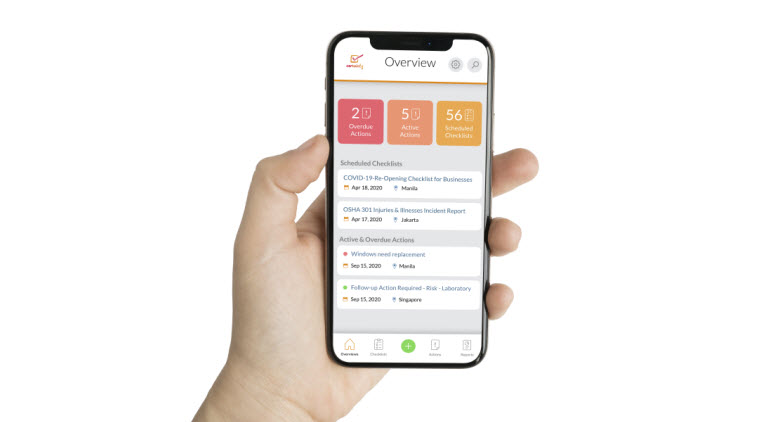
Certainty Software automates the assignment, tracking, escalation, and closure of corrective actions generated from inspections, audits, and incident reports. With real-time dashboards showing open actions, overdue items, and closure rates by site and responsible party, EHS managers gain the visibility needed to drive accountability — and the audit trail required to demonstrate compliance to OSHA, ISO auditors, and insurers.