Summary: Corrective actions are the mechanism that closes the gap between a hazard identified and a hazard eliminated, whether triggered by an OSHA inspection, an internal audit, a near-miss report, or a recordable incident. Effective corrective action management requires structured workflows for root cause analysis, accountability assignment, implementation tracking, and verification — ensuring that safety findings translate into lasting workplace improvements rather than recurring citations.
Table of contents

In any safety-driven organization, corrective actions are the mechanism that closes the gap between a hazard identified and a hazard eliminated. Whether triggered by an OSHA inspection finding, an internal audit, a near-miss report, or a recordable incident, corrective actions are what translate safety data into tangible workplace improvements. Without a structured corrective action process, organizations risk repeat incidents, regulatory non-compliance, and escalating liability — the same hazards resurfacing again and again because root causes were never addressed.
In this article, we examine five corrective action examples across common business scenarios — from workplace accident prevention and product quality to supply chain disruption, ESG compliance, and ergonomic injury. For each scenario, we outline practical corrective measures, implementation strategies, and the role a Corrective Action Plan (CAP) plays in driving lasting resolution.
What is a Corrective Action?
Before exploring specific corrective action examples, it is important to establish a clear definition of what a corrective action is and how it functions within a structured safety and compliance management system.
Defining Corrective Action
A Corrective Action (CA) is a structured response to an identified nonconformity, unsafe condition, compliance gap, or quality deficiency. It is a systematic process for identifying the root cause of a problem, implementing a solution, and verifying that the solution is effective and sustained over time. Under ISO 45001 Clause 10.2 and ISO 9001 Clause 10.2, corrective actions are a mandatory component of any compliant management system — required whenever a nonconformity occurs. OSHA inspections, internal safety audits, incident investigations, and near-miss reports are all common triggers for corrective action in workplace safety contexts.
The Purpose of Corrective Action
Corrective Actions serve two primary purposes:
- Resolution: Corrective actions address the immediate problem — stopping the harm, fixing the nonconformity, and eliminating the root cause to prevent recurrence. This includes both containment actions (stopping the bleeding) and root cause elimination (ensuring the bleeding doesn’t start again).
- Prevention: Beyond resolving the immediate issue, corrective actions identify systemic weaknesses in processes, equipment, or management systems that allowed the problem to occur in the first place. Addressing these systemic factors is what distinguishes a true corrective action from a temporary fix — and is what reduces TRIR and incident recurrence rates over time.
The Role of Corrective Action Plans (CAPs)
The Corrective Action process must include a Corrective Action Plan (CAP). A CAP provides a structured roadmap that documents the specific steps, assigned responsibilities, target completion dates, required resources, and verification criteria needed to resolve the identified problem. In the context of OSHA compliance and ISO 45001 audits, a well-documented CAP demonstrates due diligence and provides auditors with evidence that the organization is managing nonconformities systematically and in good faith.
Now, let’s explore five corrective action examples with practical workplace safety implications.
Corrective Action Example 1: Preventing Workplace Accidents
Scenario
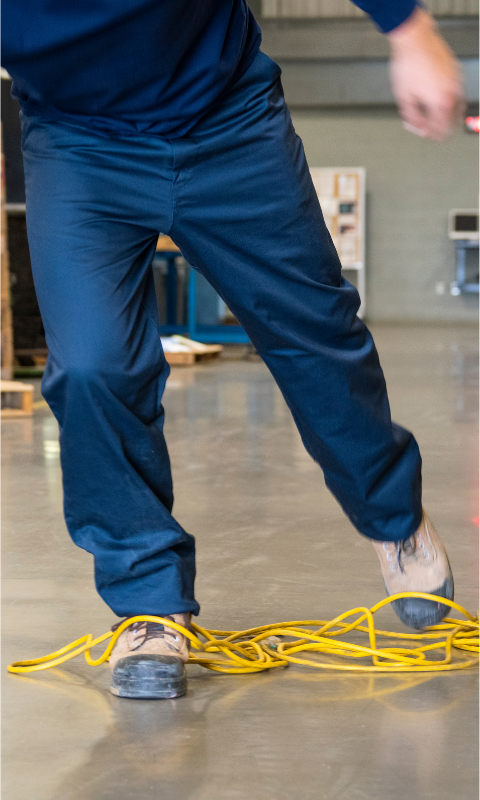
A manufacturing organization has experienced a significant increase in workplace accidents due to inadequate safety protocols and inconsistent hazard controls. Incidents include electric shocks, lacerations, burns, and slip-and-fall injuries. These events have resulted in recordable injuries, lost workdays, workers’ compensation claims, OSHA citations, and increased insurance costs — with the company’s Total Recordable Incident Rate (TRIR) trending upward over three consecutive quarters.
Corrective Actions
The business could implement several corrective actions to strengthen its safety culture and reduce recurring incidents, including:
- Deliver role-specific safety training programs for all workers that address the identified hazard categories — electrical safety, slip-and-fall prevention, burn hazards, and proper PPE use — aligned with OSHA training requirements under 29 CFR 1910 General Industry Standards.
- Implement a routine hazard assessment and safety audit schedule to systematically identify and eliminate unsafe working conditions before they result in incidents. Audits should be documented, tracked, and reviewed for trend patterns.
- Upgrade safety equipment and PPE including gloves, cut-resistant sleeves, arc flash protection, non-slip footwear, goggles, helmets, and fire extinguishers to ensure workers have adequate protection aligned with the specific hazards present in their work areas.
- Establish a safety committee and a multi-channel reporting mechanism — including anonymous reporting options — to encourage workers to surface safety concerns, near misses, and hazard observations without fear of repercussion.
- Review, update, and communicate safety policies and procedures to ensure they are complete, clearly written, accessible to all workers, and fully compliant with current OSHA standards and any applicable ISO 45001 requirements.
Implementation Tips
A corrective action plan template should be used to formally document, communicate, and track the organization’s safety improvement initiatives. A complete CAP for this scenario includes:
- A clear description of the nonconformity or problem (e.g., increasing workplace accident frequency, elevated TRIR)
- A documented root cause analysis identifying the underlying systemic causes (e.g., inadequate hazard controls, gaps in safety training, inconsistent PPE use)
- Specific corrective action steps with assigned owners (e.g., safety manager, training coordinator, department supervisors)
- Required resources including budget allocations, personnel time, and equipment procurement
- Target completion dates for each corrective action step, with escalation triggers if deadlines are missed
- Expected outcomes and measurable success criteria (e.g., TRIR reduction target, inspection completion rate improvement)
- Verification methods to confirm effectiveness (e.g., follow-up inspections, incident rate monitoring, worker surveys)
- Monitoring and review schedule including periodic reporting to safety leadership
Corrective Action Example 2: Addressing Product Defects
Scenario
A food processing company’s flagship ready-to-eat salad product has experienced recurring quality defects across multiple production batches. Identified defects include spoiled dressing, wilted produce, foreign object contamination, and mislabeling. The defects have generated customer complaints, product returns, refund demands, regulatory inquiry, and measurable reputational damage — representing both a quality management failure and a potential food safety compliance risk under applicable food safety standards.

Corrective Actions
To address quality failures and restore customer confidence, the business should implement corrective measures including:
- Conduct a full root cause analysis of the production process to identify where defects are originating — covering raw material selection, processing steps, packaging, and labeling — and implement targeted process controls at each identified failure point.
- Deploy enhanced quality control measures including in-process inspections, sampling protocols, foreign object detection systems, and pre-shipment quality checks to identify and quarantine defective product before it reaches customers.
- Establish a structured customer feedback intake and analysis process to systematically incorporate complaint data into product development and quality improvement cycles.
- Communicate transparently with affected customers about identified quality issues and the corrective steps being taken — including issuing any required product alerts, recalls, or replacement offers.
- Implement customer retention measures such as service recovery programs or loyalty incentives to rebuild trust among customers who experienced defective product.
Implementation Tips
A Quality Management System (QMS) aligned with ISO 9001 provides the structural framework needed to implement and sustain these corrective actions. A QMS formalizes quality controls at every stage of the production lifecycle and ensures that corrective actions are documented, verified, and continuously improved. A comprehensive QMS for this scenario includes:
- A quality policy that defines the organization’s quality commitments, accountability structure, and performance expectations across all production functions.
- A quality manual documenting the scope, structure, roles, responsibilities, and key processes of the quality management system.
- A quality plan specifying the actions, resources, timelines, and measurable metrics for achieving quality objectives and regulatory compliance targets.
- A quality record system that tracks and documents all quality activity results — inspection data, test reports, corrective action status, and customer complaint outcomes.
- A periodic quality audit process that evaluates system effectiveness, compliance status, and identifies improvement opportunities — with corrective actions triggered for any identified gaps.

30+ Audit and inspection checklists free for download.
Corrective Action Example 3: Managing Disruptions
Scenario
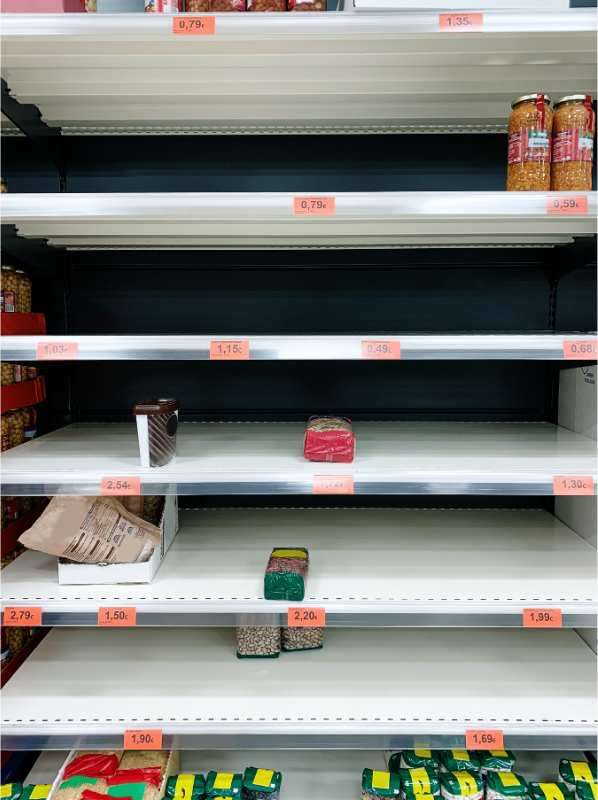
A retail chain’s primary supplier is severely disrupted by a natural disaster, triggering a supply chain crisis across the organization. Several of the chain’s top-selling product lines face inventory shortages and delivery delays, directly impacting sales revenue, customer satisfaction scores, and operational continuity. The disruption exposes the organization’s over-reliance on a single-source supplier model and the absence of documented supply chain risk controls.
Corrective Actions
To manage the supply chain disruption and limit its business impact, the organization should implement corrective actions including:
- Diversify the supplier network immediately by qualifying backup suppliers for critical product categories, reducing single-source dependency, and building supply chain resilience for future disruptions.
- Implement cloud-based supply chain visibility platforms, AI-assisted demand forecasting, or blockchain-based supplier tracking to improve real-time visibility and coordination across the supplier network.
- Optimize inventory management practices using data analytics, demand forecasting models, and inventory optimization tools to maintain appropriate safety stock levels for high-velocity product lines.
- Communicate proactively with customers about supply constraints and expected delivery timeframes, offering alternative product options or delivery solutions where available to minimize customer experience impact.
- Renegotiate supplier contracts to include force majeure provisions, alternative sourcing clauses, and performance guarantees that reduce exposure to supply disruption risk.
Implementation Tips
A risk-based approach to supply chain management provides the structured framework needed to implement and sustain these corrective actions. This methodology systematically identifies, assesses, prioritizes, and mitigates supply chain risks before they escalate into operational crises. A risk-based supply chain corrective action framework includes:
- A risk identification process that maps the sources, causes, and potential consequences of supply chain disruption across the supplier network.
- A risk assessment methodology that evaluates the likelihood and business impact of each identified supply chain risk against organizational objectives.
- A risk prioritization procedure that ranks identified supply chain hazards by severity and time sensitivity to guide corrective action resource allocation.
- A risk mitigation and management process that develops, implements, and monitors controls to reduce supply chain risk exposure — including documented contingency plans for high-severity scenarios.
Corrective Action Example 4: Navigating ESG Concerns
Scenario
A production company faces mounting public criticism over its environmental practices and social responsibility record. Allegations include contributing to greenhouse gas emissions, generating electronic waste, labor rights violations, and perpetuating the digital divide. These ESG failures have damaged the company’s reputation with investors, regulators, customers, and employees — creating both compliance risk and strategic brand vulnerability as ESG disclosure requirements continue to expand globally.

Corrective Actions
To align operations with ESG principles and demonstrate authentic commitment to ethical business conduct, the company should implement corrective measures including:
- Adopt and formalize environmental improvement programs — including energy consumption reduction targets, renewable energy sourcing, product recycling programs, and waste minimization initiatives — with measurable milestones and public reporting commitments.
- Implement social responsibility programs that address the specific allegations raised, including fair labor practice audits, diversity and inclusion initiatives, community investment programs, and supply chain human rights due diligence.
- Strengthen governance frameworks through updated ethics policies, compliance monitoring systems, third-party ESG audits, and accountability structures that demonstrate credible commitment to ESG standards.
- Proactively engage stakeholders — including investors, employees, regulators, customers, and media — to communicate ESG improvement goals, report progress transparently, and solicit feedback that informs ongoing program development.
Implementation Tips
A Corrective and Preventative Action (CAPA) system provides the structured process needed to implement ESG corrective actions systematically and verifiably. A CAPA system is widely used in regulated industries and is particularly valuable when organizations need to demonstrate corrective action credibility to external auditors, regulators, and investors. A CAPA system for ESG corrective action includes:
- A CAPA request that formally initiates the process by documenting the identified ESG nonconformity, its source (e.g., regulatory finding, stakeholder complaint, audit gap), and its business impact.
- A CAPA investigation that analyzes the root causes of the identified failures and determines the specific corrective actions required to resolve them at the systemic level.
- A CAPA implementation phase that executes corrective actions with clear ownership, timelines, and documented evidence of completion and effectiveness verification.
- A CAPA closure process that documents the outcomes of corrective actions, confirms their sustainability, and evaluates whether additional improvements are needed.
- An ongoing CAPA review process that monitors ESG performance, identifies emerging risks, and triggers new corrective action cycles as needed to sustain continuous improvement.
Corrective Action Example 5: Preventing Employee Injuries
Scenario
A warehousing facility is experiencing a surge in musculoskeletal injuries and employee pain complaints linked to poor workplace ergonomics. Workers report back pain, neck strain, and repetitive stress injuries resulting from manual lifting, extended reaches, awkward postures, and inadequate workstation configuration. These injuries are generating workers’ compensation claims, reducing productivity, and increasing absenteeism — with OSHA’s ergonomics guidelines and the General Duty Clause providing the regulatory framework against which the facility’s inadequate controls are being evaluated.
Corrective Actions
The organization should implement the following corrective actions to improve workplace ergonomics and prevent musculoskeletal injuries:
- Conduct comprehensive ergonomic assessments of all warehouse workstations, storage areas, and material handling tasks — evaluating workstation height, reach distances, lifting weights, task repetition, and equipment ergonomics to identify specific injury-causing conditions.
- Invest in ergonomic equipment and engineering controls tailored to identified warehouse hazards, including adjustable workstations, conveyor systems, mechanical lifting aids, pallet jacks, and ergonomic hand tools that reduce manual exertion and awkward body positions during lifting, packing, and stocking tasks.
- Deliver targeted ergonomics training that teaches workers how to configure their workstations for their specific tasks, maintain optimal body mechanics during lifting and repetitive movements, and recognize early symptoms of musculoskeletal strain before they progress to reportable injuries.
- Introduce ergonomic personal protective equipment including back braces for workers performing heavy manual lifting, anti-fatigue mats at standing workstations, and wrist supports for tasks with high repetition — complementing engineering controls with personal protection as part of a layered hazard control strategy.

Implementation Tips
A structured problem-solving methodology provides a repeatable framework for planning and executing ergonomic corrective actions across a warehouse environment. Effective problem-solving frameworks used in workplace safety contexts — including 5-Why Analysis, Fishbone (Ishikawa) diagrams, and PDCA (Plan-Do-Check-Act) cycles — share a common structure:
- A problem definition process that precisely characterizes the ergonomic issue — its nature, affected job tasks, injury type, frequency, and business impact — to ensure corrective actions are appropriately scoped.
- A root cause analysis process that maps the contributing factors — equipment design, workstation layout, task design, worker training gaps, and management oversight — to identify intervention points that will produce durable improvement.
- A solution development process that generates, evaluates, and selects corrective actions based on effectiveness, feasibility, cost-benefit ratio, and alignment with OSHA ergonomic guidelines.
- An evaluation and verification process that monitors post-implementation injury rates, worker feedback, and ergonomic assessment scores to confirm that the selected corrective actions have achieved the intended outcomes — and triggers additional corrective cycles where gaps remain.
Preventative Actions and the Role of Certainty Software
Each of the corrective action examples above illustrates the power of structured problem-solving. But the most effective safety programs go beyond responding to problems — they prevent them from occurring in the first place. Preventative Actions are the proactive counterpart to corrective actions: systematic steps taken to eliminate the conditions that produce nonconformities before a near miss, incident, or audit finding forces the issue.
Organizations that invest in preventative action programs — conducting routine hazard assessments, analyzing near-miss data for emerging patterns, and proactively auditing compliance against OSHA standards and ISO 45001 requirements — consistently achieve lower TRIR, shorter corrective action closure times, and stronger regulatory audit readiness than organizations that rely on reactive corrective action alone.
Certainty Software: Your Partner in Excellence
Certainty Software is purpose-built to support both corrective and preventative action management across safety, quality, compliance, and risk functions. Our flexible, cloud-based platform provides the tools EHS managers, safety directors, and compliance officers need to close corrective action gaps quickly and eliminate the systemic hazards that create them.
- Corrective Actions: Certainty enables you to respond to identified issues rapidly and effectively. The platform streamlines Corrective Action Plan creation, task assignment, progress tracking, automated follow-up reminders, and verification workflows — ensuring that every corrective action is executed on time and documented for regulatory audit purposes. With Certainty, no corrective action falls through the cracks.
- Preventative Actions: Certainty gives safety teams the data and analytical tools to identify emerging hazard patterns before they produce recordable events. Advanced dashboards, trend analysis, inspection completion tracking, and leading indicator reporting enable EHS professionals to implement preventative controls proactively — reducing the root causes of incidents before they reach the corrective action stage.
The corrective action examples in this guide represent a fraction of the scenarios organizations encounter across their safety, quality, and compliance programs. What matters most is that your corrective action process is documented, consistent, and built to address root causes — not just symptoms. Certainty Software gives your team the platform to do exactly that, at scale and in real time.
If you’re interested in learning more about how Certainty Software can improve your preventative and corrective action management, book a quick demo here.
You might also be interested in:
Frequently Asked Questions (FAQs)
What is the difference between a corrective action and a preventative action?
A corrective action responds to a nonconformity, incident, or compliance gap that has already occurred — it addresses the root cause to prevent recurrence. A preventative action is proactive: it identifies and eliminates potential failure modes before they produce a nonconformity or incident. ISO 45001 and ISO 9001 both require organizations to maintain processes for both corrective and preventative actions as part of their management system continual improvement obligations. In practice, the most effective safety programs use near-miss data, hazard assessments, and audit findings to drive preventative actions that reduce the overall volume of corrective actions needed.
How quickly should a corrective action be completed after an OSHA inspection finding?
OSHA specifies an abatement deadline for each citation issued during an inspection — the date by which the employer must correct the identified violation. Abatement periods vary by violation severity: serious violations typically carry 15-30 business day correction windows, while willful or repeat violations may carry immediate abatement requirements or longer structured timelines. Employers who cannot meet the stated abatement deadline must submit a Petition for Modification of Abatement (PMA) to OSHA before the deadline passes. Safety management platforms like Certainty help organizations track OSHA-mandated corrective action deadlines and automate follow-up to ensure timely compliance.
What tools do EHS managers use to manage corrective actions?
EHS managers increasingly use purpose-built safety management software to manage corrective actions at scale. Key capabilities include: digital corrective action plan creation with assigned ownership and due dates, automated email reminders for approaching and overdue actions, real-time dashboards showing corrective action status across all sites, root cause categorization and trend analysis, and integration with inspection and audit workflows that auto-generate corrective actions when findings are recorded. Certainty Software provides all of these capabilities in a single platform, giving EHS teams full visibility into their corrective action pipeline and the data needed to demonstrate continuous improvement to auditors and senior leadership.