From evidence capture to verified closure, get defensible compliance at enterprise scale.
The Certainty software platform is an enterprise-level system of record for audits, inspections, and assessments. Capture evidence where work happens (online or offline), route findings into CAPA-forward actions (Corrective and Preventive Action), and prove verified closure with reporting leaders trust.
Providing evidence for our users that holds up when scrutiny arrives























Which program are you responsible for?

Safety Inspections
Close the CAPA trust gap. Standardize inspections across sites and shifts — including offline capture — and track every finding from hazard found to hazard fixed with verified closure. So when regulators arrive, your evidence is already audit-ready.
Explore safety inspections
Supplier Compliance
End the supplier chase. Reduce participation friction with frictionless access (no portals, no login walls), collect comparable supplier assessment data across tiers, and keep non-compliance rectification closed-loop. Due diligence is provable and supplier reliability improves over time.
Explore supply chain compliance

Quality Audits
Escape Spreadsheet Hell. Replace manual audit cycles with comparable data in real time. Run LPAs (Layered Process Audits) and standards-based audits consistently across every site and shift, so quality teams stop merely compiling reports and start preventing drift.
Explore quality audits
How does Certainty turn audits and inspections into prevention?
Certainty connects evidence capture → comparable reporting → CAPA-forward action management so leaders can see risk patterns early and verify closure before issues repeat.
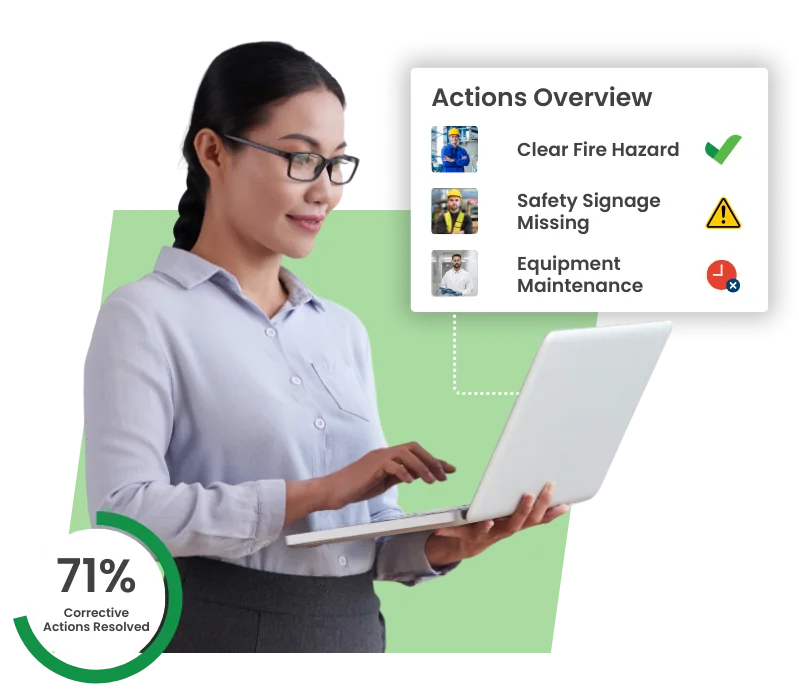
- Capture defensible evidence where work happens — Collect results on web or mobile, attach photos and documents, and preserve the audit trail in one system of record, even when connectivity is unavailable. Multilingual capability supports global teams.
- Standardize what "good" looks like — Use shared checklists and scoring to create comparable data across sites, suppliers, and shifts so that performance can be measured consistently, and variance is visible in real time.
- Drive CAPA-forward actions to verified closure — Delegate actions with owners and due dates, require evidence for closure, and keep the record audit-ready from finding to fix. Actions route through workflows so nothing gets lost; leaders can verify completion, not just check a box.
- Report what leaders actually need — Move from anecdote to insight with risk summaries, trends, anomalies, data confidence scoring, and variability assessments. In this way, prevention becomes measurable and leadership decisions are grounded in comparable data.
What takes enterprise audit evidence from documented to defensible?
Defensible Evidence
Evidence captured in context, preserved with audit trails, and organized into an evidence-grade system of record so you can prove what happened, when, and by whom.
Outcome
Audit readiness you can demonstrate with traceable records, not assembled after the fact.
Verified Closure (CAPA-forward)
Findings don't end at submission. Certainty is built to confirm closure through actions and workflows so leaders can verify that fixes were completed and sustained.
Outcome
Fewer repeat issues tied to verified corrective and preventive action.
Comparable Data at Scale
Standardization across sites and suppliers creates consistent metrics so leaders can compare performance, target interventions, and reduce repeat issues.
Outcome
Faster leadership decisions grounded in real-time visibility into risk patterns and closure status.
Built for enterprise-level projects.
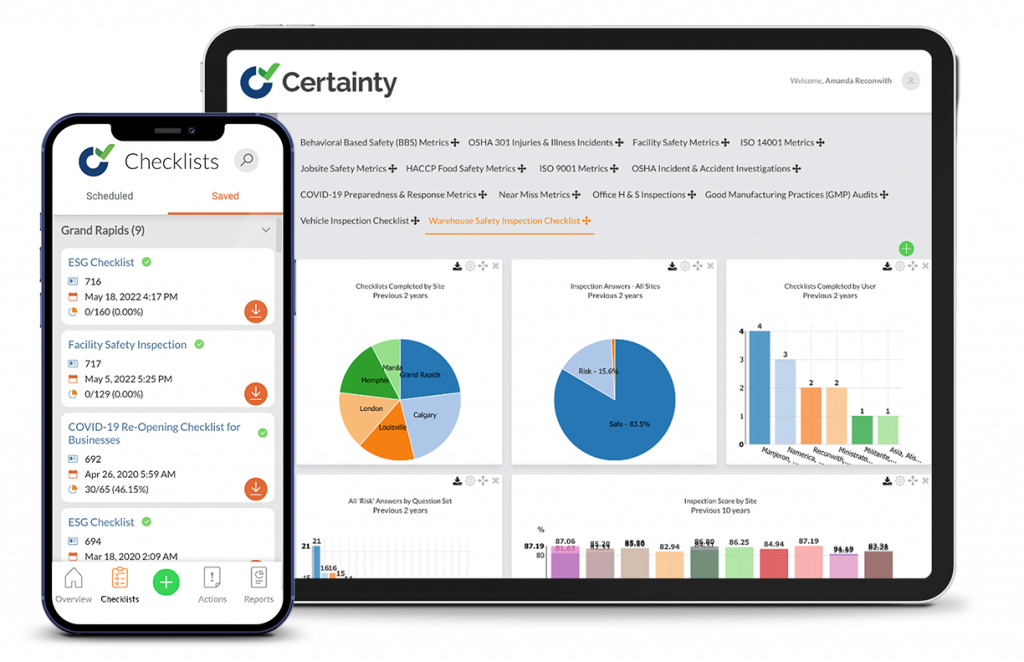
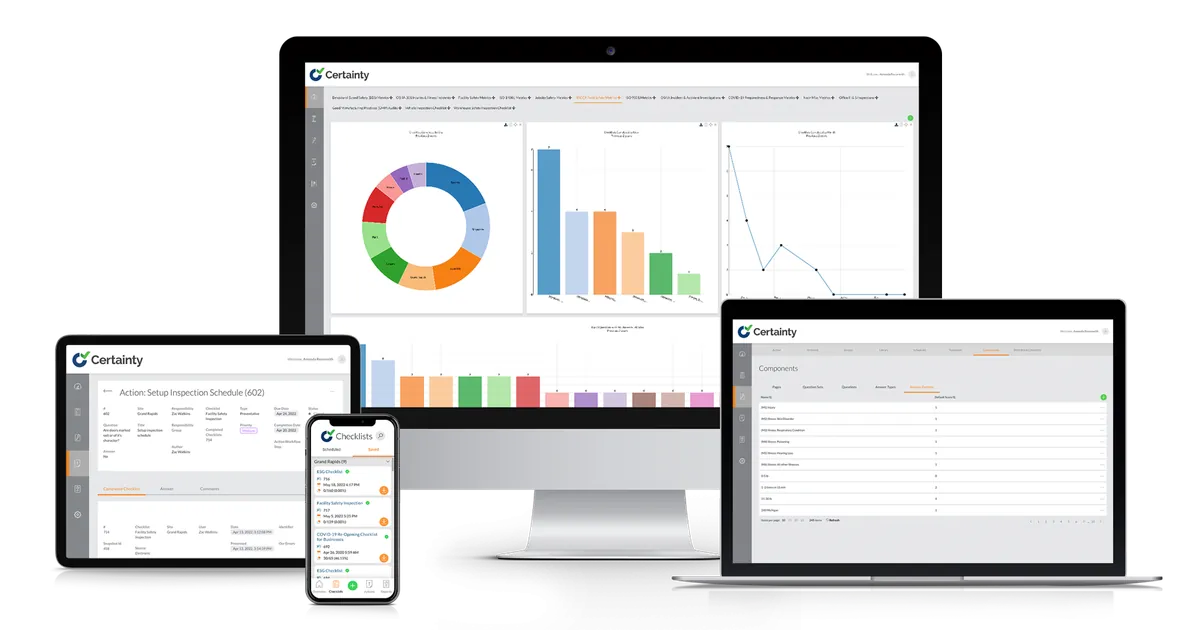
Designed for multi-site operations: online/offline capture, multilingual deployment, configurable access controls, and data integration options (including exports, OData feeds, and Power BI reporting) for enterprise reporting.
More about reporting
What does enterprise scale look like in practice?
+
corrective actions completed annually
+
forms completed annually
+
Certainty users served


How do you get started without disrupting operations?
Start with a guided proof of concept, then expand in phases, beginning with 1–2 high-value checklists and scaling across additional sites, suppliers, or audit types.
Align on program and evidence requirements
Define what "audit-ready" means for your organization, whether that's regulatory defense, internal governance, or supplier due diligence.
Configure and validate with a small set of checklists
Start with your highest-value inspection or audit type. Add your checklist, configure workflows, and validate before expanding.
Scale standardized reporting and verified closure
Roll out across additional sites, suppliers, or programs with comparable data and enterprise reporting from day one.
Migrating from spreadsheets or paper?
Most enterprise teams start there. Certainty supports Excel import for checklists and historical data, phased rollout so operations aren't disrupted, and a dedicated implementation path designed for teams making the shift from manual to digital — without requiring a big-bang deployment.
Ask us about this
FAQs about Certainty audit and inspection software.
A system that preserves the full evidence trail — results, context, attachments, audit trails, and corrective actions — so you can verify work and prove it during audits. Unlike checklist tools that capture data, an evidence-grade system connects findings to actions and closure.
Documentation records what was observed. Verified closure confirms the corrective and preventive work was completed with accountability and required evidence — reducing repeat issues. The distinction matters when regulators ask not just "did you find it?" but "did you fix it, and can you prove it?"
Yes. Teams can capture audit and inspection data offline — on mobile devices in the field, on the shop floor, or at remote supplier sites — and sync it when connectivity returns. The evidence trail is preserved without running separate systems.
Certainty connects findings to delegated actions with ownership, due dates, and evidence requirements. Actions route through CAPA-forward workflows so corrective work is tracked, verified, and reportable — not buried in email threads or shared folders.
Standardization comes from shared checklists, scoring, and governance — creating comparable data and consistent reporting across teams and locations. Multilingual capability enables global deployment without breaking the standardization framework.
Yes. Certainty supports ESG (Environmental, Social, and Governance) assessments and due diligence workflows with structured, auditable evidence and remediation tracking — grounded in the same evidence-grade system of record used for safety and quality programs.
By maintaining a defensible evidence trail that connects every inspection to its findings, corrective actions, and verified closure. Certainty captures evidence in context (including photos and documents), preserves audit trails aligned to standards like OSHA, BRC, and ISO 45001, and provides reporting that demonstrates compliance on demand — not assembled after the fact.
Participation friction is the number one barrier. Certainty supports frictionless access — including options that reduce login complexity for suppliers — paired with structured data collection that makes it faster for suppliers to respond. The result is higher participation rates and comparable audit data across tiers, without chasing suppliers through email.
Most Certainty customers start from Excel or paper — the platform is designed for that migration path. Import existing checklists, start with 1–2 high-value audit types (like safety inspections, CSDDD assessments or Layered Process Audits), and expand in phases. The goal is real-time visibility and comparable data across sites and shifts — replacing the "black hole" of manual report compilation.
Ready to move from paperwork to prevention?
Get defensible evidence, verified closure, and comparable data at enterprise scale.

Certainty Software is a proven solution for any audit/inspection based performance improvement program in virtually all sectors of the economy from global Fortune 500 multinationals in food manufacturing to leading national companies in the hospitality sector.
Email: info@certaintysoftware.com
Tel (Canada): + 1 888 871 0027
Quick Links
Download the app